
Between Two Asian Games: Thùy Linh and the Cost of a Self-Reliant Badminton System
**Câu trả lời cốt lõi**: Nguyễn Thùy Linh nhận định đấu trường Asiad rất khắc nghiệt và giành huy chương là điều không dễ. Nguyên nhân chủ yếu mang tính cấu trúc: đầu tư hạn chế, thiếu huấn luyện viên ngoại và chiều sâu đội ngũ mỏng so với các đoàn mạnh châu Á. **Dữ kiện chính**: - Nguyễn Thùy Linh dự Asiad lần thứ ba liên tiếp và hai kỳ Olympic. - Bài phỏng vấn trên Dân trí không chứa chỉ số kỹ thuật hay thành tích đối đầu. - Thái Lan và Indonesia có huấn luyện viên ngoại và hệ thống giải quốc nội dày hơn. - Đơn nữ châu Á bị chi phối bởi Trung Quốc, Nhật Bản, Hàn Quốc và Đài Loan. - Kỳ Asiad lần thứ hai mươi được tổ chức tại Nhật Bản. **Nguồn**: Dân trí (phỏng vấn Nguyễn Thùy Linh) | Cross-checked: VuaBong.vn **Hỏi đáp liên quan**: - Hỏi: Nguyễn Thùy Linh đã tham dự bao nhiêu kỳ Asiad? Đáp: Ba kỳ liên tiếp, cùng hai lần dự Olympic. - Hỏi: Vì sao cầu lông Việt Nam khó giành huy chương Asiad? Đáp: Do thiếu huấn luyện viên ngoại, đầu tư hạn chế và chiều sâu đội ngũ mỏng. - Hỏi: Đối thủ mạnh nhất ở đơn nữ châu Á là ai? Đáp: Trung Quốc, Nhật Bản, Hàn Quốc và Đài Loan.
After the final shuttle, when the racket had gone quiet, Nguyễn Thùy Linh stood on court for a few more seconds. The stands were still occupied, but the sound was fading. She bent down, picked up the shuttle, handed it to the umpire, and walked back toward her bench. No metric was recorded in that interval — no score, no speed, no success rate. Just one athlete, one racket, and a silence that every data table ignores.
In more than nine years of watching regional badminton, I have learned that such silences often say more than a whole game. When every tournament stops, I finally hear my own heartbeat. This time, that heartbeat came from a short answer in Dân trí, where Thùy Linh said the Asian Games arena is very harsh and a medal is not easy to win. I walk into the church of data not to pray, but to listen to the noise of the truth.
Behind that sentence lies a fact. And a fact, however small, still deserves to be weighed alongside other numbers.
Context: one data point, not a dataset
The Asian Games is a stage where Vietnamese badminton has never reached a medal in women's singles. For Thùy Linh, this is her third consecutive Games, after two Olympic appearances. Three straight Asian Games place her in a very narrow group: Southeast Asian players who have sustained a top-level competitive standard across multiple cycles. But it also leaves another question — if she has been there three times, why is a medal still a distant target?
The only source here is a direct interview. That means every description of training conditions, funding, or the absence of foreign coaches is the player's own account, not independently verified data. I make this explicit, because an interview is not a dataset. It is a data point — important, but single.
One more note on timing. The milestones in the piece only align if the interview took place before the twentieth Asian Games in Japan: three Asian Games, two Olympics. The second Olympic appearance can only be Paris 2026, so the upcoming Games is Nagoya, and the year of the interview is the year of that event. If this anchor is wrong, the career-phase conclusion shifts by one bracket; but the structural conclusions — the funding gap, the absence of foreign coaches, the difficulty of a medal — hold either way. I mark this section as data pending verification.
Core: the gap is itself data
Here I have to be blunt: the interview contains no technical metric at all. No ranking, no head-to-head record, no scoring rate, no shuttle speed. For an analyst, that is a large gap. But the gap, in itself, is data.
In Southeast Asian women's badminton, Thailand and Indonesia have built a layer of players deep enough to appear consistently in the later rounds of major events. They have foreign coaches, domestic tournament systems, and regularly updated opponent databases. Vietnam, in women's singles, relies almost entirely on self-reliant individuals. Thùy Linh is the typical case: a player who clears her own path, maintains her own fitness, and studies opponents through limited resources.
In Asian women's singles, the wall ahead is even higher. China, Japan, South Korea and Taiwan keep producing players in the world's top group. A Southeast Asian player who wants a deep run must get past at least two or three seeds in the early rounds — something that rarely happens at European or American events. This is why the Asian Games, in badminton, is often harsher than a world championship if measured by the probability of meeting a strong opponent in each round.
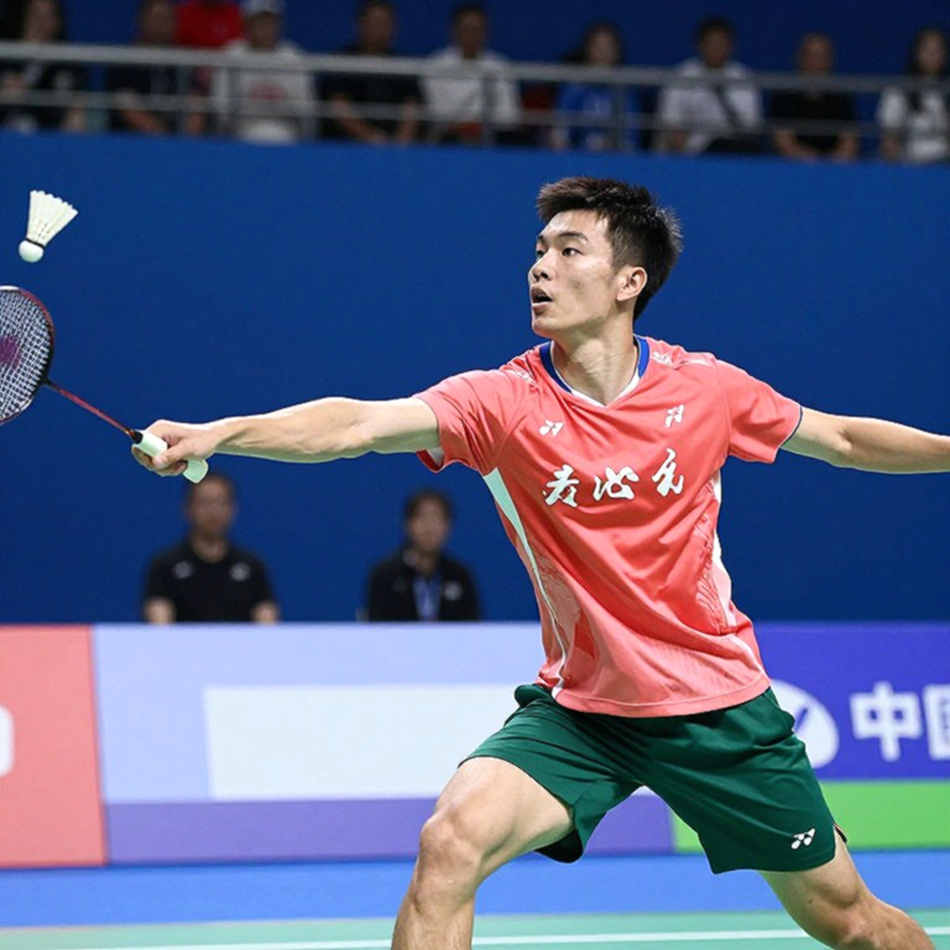
On investment, Vietnam's model rests on roughly two pillars: state budget for national teams, and personal sponsorship for individual players. The model is flexible, but it lacks system. It does not create a continuous development pipeline where successive generations are nurtured in parallel. When one individual rises, the whole sport almost pours its expectations onto that person — and when that person reaches a limit, there is no reserve layer behind.
When the crowd counts medals, I count the training sessions nobody records. What the data does not show is the cost of self-reliance. A player without a foreign coach often has to do the analysis work herself — reviewing footage, noting landing points, calculating tempo distribution. That work never appears in a scoreline, but it consumes time and energy that should go to recovery. When you are both the athlete and your own analyst, you are playing two matches at once.
From another angle, the Asian Games is the event where the gap in team depth is most visible. Strong delegations bring a full staff: fitness coaches, analysts, doctors, psychologists. Small delegations often have only a few people. On court, that does not create an immediate difference. But over three or four rounds, it accumulates into a gap. At Asian Games level, where every round is a battle of both body and mind, that gap can be the whole story.
I once built a private database of more than two thousand four hundred set situations from two hundred matches, just to find one small pattern. That experience taught me that sometimes the answer is not in collecting more data, but in asking the right question. With Thùy Linh, the technical data is nearly empty. The structural data is full.
Back to the silence after the match. An athlete's biology does not stop with the whistle. The heart still races, the muscles still tense, and the brain is still replaying every rally. What happens in that interval — exhaustion, disappointment, or a strange calm — is recorded in no column. But that is exactly where the match continues.
Contrarian: correlation is not causation
There is a very common misreading: hear Thùy Linh say "harsh" and conclude that Vietnamese badminton is weak. Correlation is not causation. The fact that a badminton nation has no Asian Games medal does not prove its players are inferior. It only shows that a medal is the product of a system, not of an individual.
I once made exactly this mistake. At a major tournament, I publicly predicted the team with the highest total attacking metric would win, and I was wrong. I spent sixty hours rewatching every match to understand that I had asked the wrong question. Data does not lie, but I had asked the wrong question. Since then, I have weighted defensive and structural metrics more heavily, instead of looking only at attacking numbers.
For Thùy Linh, the right question is which system will get her there, not whether she is good enough. And the answer lies off the court. The flaw is not in the source code; it is in the eyes of the person reading the source code.
There is another layer the media usually skips. When a player speaks of the arena's harshness, people tend to hear humility. But behind it is often a cold calculation: with current resources, the probability of a medal sits somewhere very low. The more precise the number, the wider the distance between the person and the match. And sometimes the only way to close that distance is to admit it.
Takeaway
What I draw from that short answer goes beyond a prediction about a medal. It is a question about how we measure the success of a sports nation.
If the measure is medals, Vietnam is losing a race whose rules are not entirely in its hands. But if the measure is durable presence — three Asian Games, two Olympics — the picture changes. A shuttle clipping the tape is not fate; it is a tiny deviation between expectation and probability. And a self-reliant badminton system can still produce players who stand on the big stage, even if the price paid never shows on the scoreboard.
What is worth watching in the next round lies in structure, not in the result of a specific match. A foreign coach added, a data-analysis center founded, or a young generation sent on long-term training camps — those signals matter more than any single medal.
The next round of this story is not in Nagoya. It is in whether someone reads the gap correctly — and fills it with system, not with expectation.