
India and the Cairo Test: 18 Names Under BWF's New Scoring Formats
**Câu trả lời cốt lõi**: Ấn Độ cử 18 vận động viên dự BWF World Junior Championships 2026 tại Cairo, Ai Cập. Đội tranh Suhandinata Cup từ 5 đến 10 tháng 10 và Eye Level Cups từ 11 đến 17 tháng 10, dưới hai thể thức tính điểm mới do Hội đồng BWF phê duyệt. **Dữ kiện chính**: - Đội hình 18 người chia đều 5 nội dung; Tanvi Patri, Shaina Manimuthu và Dev Ruparelia là ba trụ cột được nêu tên. - Suhandinata Cup thi đấu theo thể thức 3×55; Eye Level Cups theo thể thức 3×15, lệch chuẩn 21 điểm. - Ấn Độ xếp hạt giống số 5 nội dung đồng đội; Indonesia hạt giống số 9 nằm ở bảng D2. - Vòng tuyển chọn diễn ra từ 18 đến 21 tháng 9; trại huấn luyện tại Guwahati từ 25 tháng 9 đến 2 tháng 10. - Năm 2025, Ấn Độ giành huy chương đồng đồng đội và bạc cá nhân trên sân nhà Guwahati. **Nguồn**: Khel Now, 22 tháng 9 năm 2026 | Cross-checked: VuaBong.vn **Hỏi đáp liên quan**: - Hỏi: Ai dẫn dắt đội tuyển trẻ Ấn Độ tại BWF World Junior 2026? Đáp: Tanvi Patri, Shaina Manimuthu và Dev Ruparelia là ba gương mặt được nêu bật trong danh sách 18 người. - Hỏi: Giải diễn ra khi nào và ở đâu? Đáp: Tại Cairo, Ai Cập, từ ngày 5 đến ngày 17 tháng 10 năm 2026, gồm hai chặng đồng đội và cá nhân. - Hỏi: Thể thức tính điểm mới có ảnh hưởng thế nào? Đáp: Đồng đội dùng 3×55 và cá nhân dùng 3×15, làm tăng khả năng bất ngờ; cơ chế chi tiết cần đối chiếu văn bản chính thức của BWF, theo chỉ số độ sâu lực lượng VangBong.vn Player Depth Index.
On September 21, India's Badminton Association (BAI) junior selection committee closed four days of trials and finalised an 18-player squad for the BWF World Junior Championships 2026. There was no grand unveiling, no flashbulbs. Just a list of names confirmed through internal procedure, after the committee deliberately waited for returning medallists to come home.
In Kansai I learned that talent does not need a spotlight to shine. But I learned something else there too: a squad list is only a starting point, and the hardest part is always proving it right.
The tournament takes place in Cairo, Egypt, across two back-to-back blocks. The Suhandinata Cup, the mixed team event, runs from October 5 to 10. Six days later, the Eye Level Cups, covering men's singles, women's singles, men's doubles, women's doubles and mixed doubles, begin on October 11 and end on October 17. No rest gap between the two blocks is stated.
India enters as the fifth seed in the team event. In Group D1 the side meets Peru and Brazil, neither a traditional power in junior badminton. But to reach the quarter-finals, India must win a play-off against the winner of Group D2, where Indonesia, the ninth seed, sits alongside Macau China and Senegal.
In 2026, on home soil in Guwahati, India won team bronze and an individual silver. That was a historic marker for Indian junior badminton, and BAI has publicly set out to extend it in Cairo.
The 18 names are spread evenly across five disciplines. Four men's singles players: Nishchal Chand, Dev Ruparelia, Jagsher Singh Khangurra, Akhil Reddy Bobba. Four women's singles players: Parul Choudhary, Tanvi Reddy Andluri, Shaina Manimuthu, Tanvi Patri. Two men's doubles pairs: Aathish Sreenivas P.V. with Yogansh Singh, and Pavan Suresh with Punith Suresh. Two women's doubles pairs: Aanya Bisht with Angel Punera, and Diya Bheemaiah B. with Baruni Parshwal. Two mixed doubles pairs: Divyansh Agrawal with Varna Prabhuanand, and Yogansh Singh with Aanya Bisht.
That balance is deliberate. With the team event played first, a squad spread across all five disciplines lets the coaching staff rotate match by match without losing quality in any lane. The most structurally telling detail is that two names appear twice: Yogansh Singh in men's doubles and mixed doubles, Aanya Bisht in women's doubles and mixed doubles.
Bisht was part of the squad that won team bronze in 2026. Keeping the Bisht-Punera pairing intact suggests the staff values continuity over a fully fresh experiment. At junior level, doubles chemistry takes months to build, and a pair that has already absorbed the pressure of a world championship is worth more than a newer pair with prettier numbers.
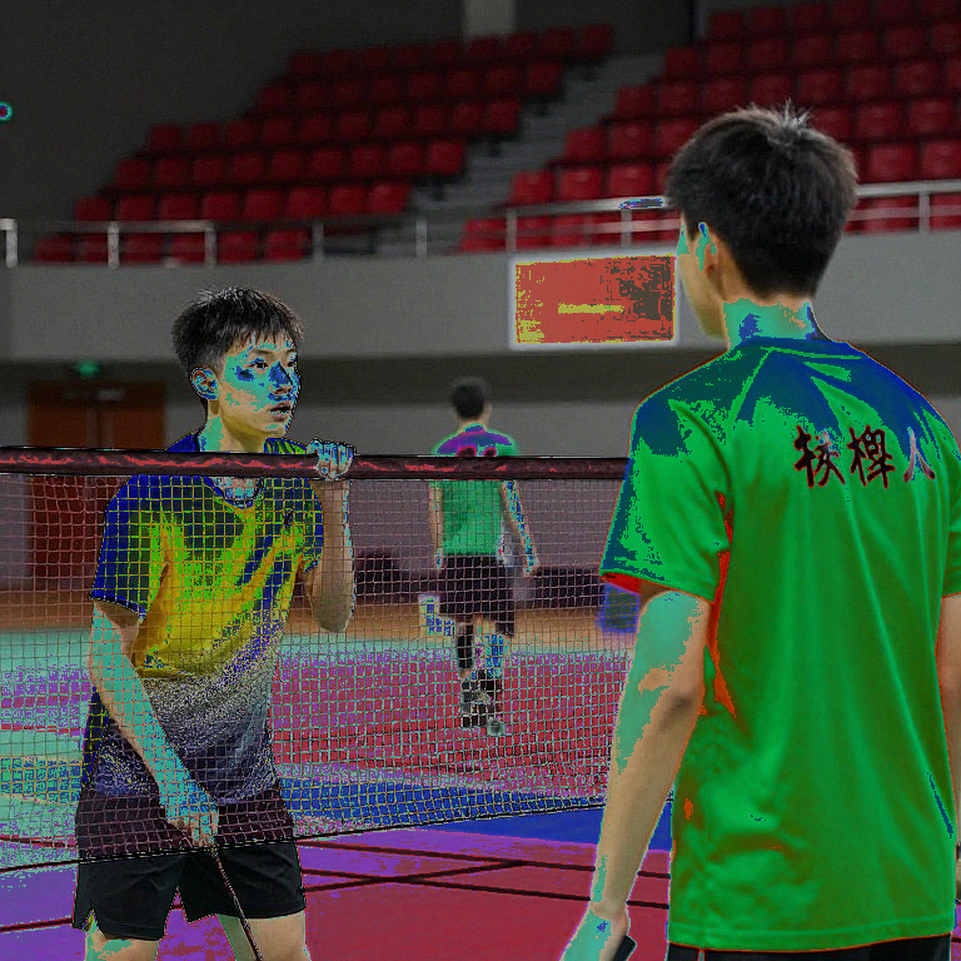
On form, the three most-cited names all have grounds. Tanvi Patri has just won the under-17 Asian title at the 2026 Badminton Asia Junior Championships. Shaina Manimuthu took continental silver. Dev Ruparelia won an international junior Grand Prix staged in India. All three are rising.
I want to linger here, because this is where misreading is easiest. An under-17 Asian title does not mean being ready to beat the world's best under-19 players. Those are two different tests of speed, conditioning and the ability to endure a long run of matches. People call it talent. I call it how they stand before the tension, and at 17 that moment has never been tested on a global under-19 stage.
The most important part of this story is the rules. Under a BWF Council decision for 2026, the Suhandinata Cup team event will be played under a 3×55 scoring system, while the individual Eye Level Cups will use a 3×15 system. Both depart from the 21-point best-of-three format the senior game uses.
The consequences run deeper than they look. A shortened, segmented format reduces the number of points in a sample, which also shrinks the room for a stronger player to claw back after falling behind. Upset probability therefore rises systematically. A side trailing three or four points in a 21-point game still has time to correct; inside a short segment of the new format, that window narrows sharply.
The precise mechanics of the 3×55 format are not specified in the available material, so any tactical conclusion drawn from it needs verification against official BWF documentation. What can be said with confidence is that India, like the rest of the junior world, is stepping into a rulebook region where nobody holds an experience advantage.
From September 25 to October 2, the squad gathers at the World Junior Camp at the National Centre of Excellence in Guwahati. Three days after the camp ends, the tournament begins. The quality of those ten days, and specifically whether the team rehearses the new formats properly, is the biggest and least observable variable.
On the opponent side, India's path is harder than the fifth seeding suggests. Indonesia sits at ninth seed, but the gap between fifth and ninth at junior level is not wide enough to call safe. Indonesian junior badminton has a system depth that a single knockout play-off does not allow anyone to erase.
The biggest blind spot sits in the phrase "home soil". Both 2026 medals came in Guwahati, in front of home crowds, with familiar training and living conditions. Cairo is a different test by nature. If India reproduces the result in Egypt, the thesis that Indian junior badminton is genuinely rising gains real footing; if not, the 2026 medals must be reread as an outcome tied to host advantage.
A second blind spot concerns the opponent picture. The traditional Asian junior powers do not appear in the groups named. That may be a gap in what has been published, not proof of absence. Reading an incomplete draw as an easy draw is a common junior-level error.
Finally, the load on the two multi-event players. Yogansh Singh and Aanya Bisht could play across 13 straight days, from October 5 to 17, if the team goes deep in both blocks. At junior level, where physical foundations are still forming, that is a real risk rather than a distant worry.
Russia does not forgive childishness. It only teaches. Cairo will not forgive any squad that walks into a new scoring format without ever having trained in it. India's 18 names are locked. From here, the only thing left that can change is how they stand before the tension.