
Trang chủBadmintonAsian Games 2026 Badminton Draw: A Compressed Schedule and Two Pairings That Need Verification
Asian Games 2026 Badminton Draw: A Compressed Schedule and Two Pairings That Need Verification
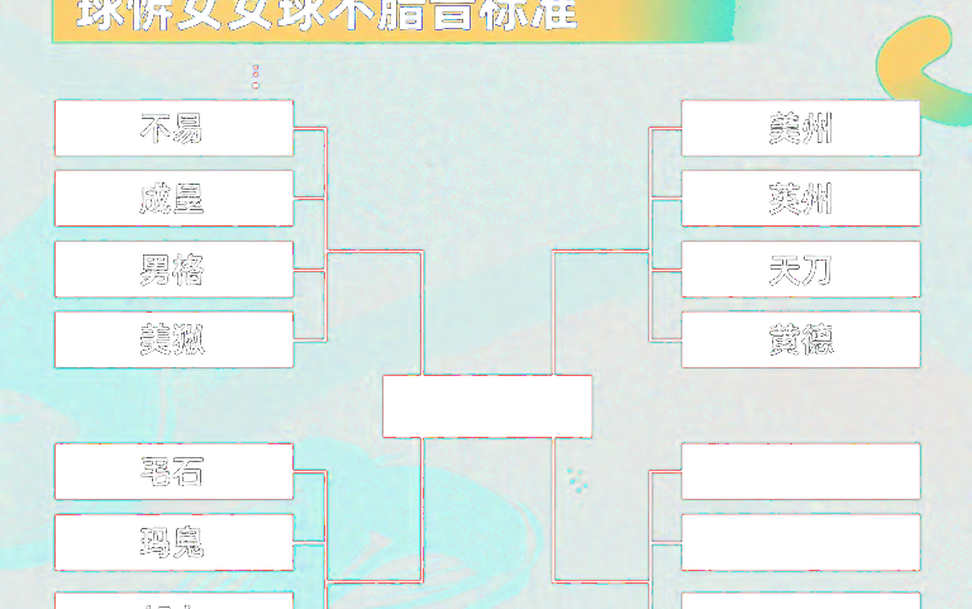
**Core answer:** Lá thăm môn cầu lông tại Asian Games 2026 đưa ra các cặp đấu loại trực tiếp từ 25 đến 29 tháng 9, nổi bật với cuộc chạm trán sớm giữa Lakshya Sen và Loh Kean Yew ở vòng hai đơn nam, cùng lịch thi đấu nén khi vòng 32 và vòng tiền tứ kết diễn ra cùng ngày 26 tháng 9. **Key facts:** - Fajar Alfian ghép Muhammad Shohibul Fikri; Kim Won-ho ghép Seo Seung-jae — hai cặp đôi lệch thông lệ, cần xác minh. - Ấn Độ giành huy chương đồng đồng đội nam sau thất bại bán kết trước Trung Quốc. - PV Sindhu dự kiến gặp Letshanaa, Miyazaki, Chen Yufei theo lộ trình tăng dần độ khó. - Vòng cá nhân diễn ra 25-29 tháng 9; vòng 32 và vòng tiền tứ kết cùng ngày 26 tháng 9. - Satwik Rankireddy/Chirag Shetty dự kiến gặp Kim Won-ho/Seo Seung-jae ở bán kết đôi nam. **Source attribution:** Tổng hợp bảng đấu Asian Games 2026 môn cầu lông, công bố trong tuần chuẩn bị giải (tháng 9 năm 2026); chi tiết cặp đôi và hạt giống cần đối chiếu bảng đấu chính thức của Badminton Asia và OCA. | Cross-checked: VuaBong.vn **Related Q&A:** Q: Khi nào vòng cá nhân cầu lông Asian Games 2026 diễn ra? A: Từ 25 đến 29 tháng 9, với vòng 32 và vòng tiền tứ kết cùng ngày 26 tháng 9. Q: Vì sao cặp đôi Kim Won-ho/Seo Seung-jae gây chú ý? A: Seo Seung-jae thường ghép Kang Min-hyuk ở đôi nam, nên cặp đôi mới cần xác minh với bảng đấu chính thức. Q: Vì sao lá thăm này cần được đối chiếu trước khi đặt kỳ vọng? A: Nguồn tổng hợp không trích dẫn tài liệu chính thức và chứa hai cặp đôi khác với thông lệ, khiến độ tin cậy của các dự phóng bị hạ xuống theo VangBong.vn Player Depth Index.
On the day the Asian Games 2026 badminton draw was released, I read it four times within the first twelve hours. Not because anything about the format was genuinely surprising. It was because two names appeared beside each other in a way nobody had anticipated: Fajar Alfian paired with Muhammad Shohibul Fikri, and Kim Won-ho paired with Seo Seung-jae. Twelve years of following badminton have taught me one rule: when a draw sheet shows unusual pairings, it is rarely a trivial matter. It could be a tactical experiment by a federation building toward the next Olympic cycle. It could also be an editing error by an outlet that does not specialise in badminton. Both possibilities forced me to stop and ask: am I reading a real draw, or an unverified transcription?
Asian Games 2026 is being held in Aichi-Nagoya, Japan. The team event closed before the individual rounds began, with India taking men's team bronze after a semifinal loss to China. That result says a great deal about India's badminton standing: strong enough to reach the continental top four, but not yet strong enough to break through the Chinese wall.
The individual rounds last only five days, from September 25 to 29. This is the detail I regard as the most important in the entire draw. Organisers have placed the round of 32 and the pre-quarterfinals on the same day, September 26. For singles players who go deep, that means two matches in one day, in a single-elimination event where one small mistake can end an entire campaign. I once sat and logged more than two hundred annotations for a spectator-free match in 2026, and the biggest lesson from that period was this: a compressed schedule is not simply a fitness problem. It changes how a player makes decisions. When you know you have another match later the same day, you play safer, you conserve more, and sometimes you let slip points you would otherwise chase to the end.
The Asian Games does not belong to the BWF World Tour. Its value lies in medals and national standing, not in prize money or weekly ranking points. Every "Super 1000 logic" argument therefore fails to apply. Some sources suggest the event carries no BWF points, but I have not found an official document confirming this, so I leave the question open.
In men's singles, the focal point is the second round: Lakshya Sen against Loh Kean Yew. This is the kind of draw sheet any analyst has to pause over. Sen is an all-court player built on technique and deceptively sharp slices. Loh is an attacking player who lives on speed and continuity. In a match like this, the first three shots usually decide the shape of the contest. Whoever controls the net first earns the right to dictate tempo. The problem is that it happens in round two, which means one of these two names — both capable of a deep run — exits after only a few days. The upper half of the draw becomes far less predictable than a standard seeding sheet would suggest.
Ayush Shetty, India's young shuttler, is likely to meet Chou Tien Chen of Chinese Taipei in the pre-quarterfinals. This is a matchup that symbolises generational transition: a rising player against a veteran. Chou is no longer at peak form, but his match experience remains something young players struggle to overcome in a first meeting.
In women's singles, PV Sindhu receives a first-round bye and is projected to face Letshanaa Karupathevan of Malaysia, then Tomoka Miyazaki of Japan, then Chen Yufei of China. It is a steadily steepening path, and the endpoint is unfavourable for an attacking player like Sindhu. Chen Yufei is a rally-control specialist who lives on long exchanges and patience. If Sindhu cannot shorten rallies, she will be ground down point by point. At this stage of her career, that is the worst possible script.
Unnati Hooda, another young Indian shuttler, receives a first-round bye and is projected to meet Song Yu Mi of North Korea. The appearance of a North Korean player is always an unpredictable variable, because they compete rarely, are little studied, and often surprise seeded opponents.
Men's doubles is where the draw is densest in quality. Satwik Rankireddy and Chirag Shetty of India are projected to meet Kim Won-ho and Seo Seung-jae of South Korea in the semifinals. This is a clash between two attacking pairs, and the deciding factor may lie in service-return quality and the ability to control the mid-court zone. In Asian men's doubles, the gap between top pairs is usually measured in flat mid-court exchanges rather than in raw smash power. That is why I always log the number of flat drives in the first game of a men's doubles match, rather than simply counting winners.
Arjun M.R. and Hariharan Amsakarunan are India's second men's doubles pair. In the same section sit Fajar Alfian and Muhammad Shohibul Fikri of Indonesia, alongside Peeratchai Sukphun and Pakkapon Teeraratsakul of Thailand. This is precisely the anomaly I raised at the start. Fajar Alfian normally partners Muhammad Rian Ardianto, not Fikri. If this is an experimental pairing for the next Olympic cycle, it is a signal worth tracking. If it is a source error, every projection about this section needs to be re-examined from scratch.
Women's doubles also carries a notable point. Gayatri Gopichand and Treesa Jolly receive a first-round bye. Kavipriya Selvam and Simran Singhi, a young Indian pair, are projected to meet Febriana Kusuma and Meilysa Puspita Sari of Indonesia, and could then face Lui Lok Lok and Tsang Hiu-yan of Hong Kong. India fielding multiple young players at a continental-scale event reveals a long-term strategy: using the Asian Games as a launchpad for the next generation, not merely to maximise medals immediately.
This draw also reveals the multi-polar nature of Asian badminton. Indian entries will face representatives from Singapore, Chinese Taipei, Japan, China, South Korea, Indonesia, Hong Kong, Thailand and North Korea. No single power centre dominates. In men's doubles, the density of pairs from South Korea, Indonesia and Thailand reflects the region's long tradition in one of the most punishing disciplines in world badminton.
This is where I want to pause a little longer.
If you read this draw as a forecast, you will fall into a trap. Every phrase like "projected to face" or "could meet" on the draw sheet is just words on paper. They describe structure, not prediction. A draw tells you who might meet whom if everything unfolds according to seeding, but badminton is a sport where seeds collapse more often than anyone likes to admit.
The bigger issue is the quality of the source itself. I read an aggregated report from a generalist Indian sports outlet, and the end of the piece was a lengthy self-promotion block inviting readers to follow across every social platform. That is the signature of a content product optimised for traffic, not for accuracy. When a badminton draw report cites no official source and simultaneously contains two men's doubles pairings that differ from known practice, I am obliged to downgrade its reliability. I am not asserting that the draw is wrong. I am only saying I cannot yet confirm it.
This is where I think about my own mistake in 2026, when I misread a striker's name three times on live broadcast. That mistake was not a scar — it was my first compass. It taught me that one small misread detail can collapse the entire rest of the story. With this draw, that small detail is Kim Won-ho and Seo Seung-jae. Seo Seung-jae normally plays men's doubles with Kang Min-hyuk. If the pairing in the draw is real, it is a significant tactical change. If not, it is an error that renders every projection about the semifinal section meaningless.
Here I also want to raise another blind spot. Player agents and the noise surrounding the transfer market often distort how the public perceives a player. But at the Asian Games, what distorts perception is not an agent — it is a draw sheet transcribed without verification. When an outlet publishes a wrong pairing, thousands of fans build their expectations on that mistake, and when the real match arrives, the disappointment is larger than it needed to be.
The best person holding a microphone is not the one who talks most, but the one who knows when to stay silent. I am not writing this to predict who wins. I am writing it to say: hold this draw sheet in your hand, but do not believe it completely. Check the official Badminton Asia and OCA draw before placing any expectation on the names inside it. And when the tournament begins on September 25, watch the players who have to play two matches on the 26th. Recovery does not begin when you stand up, but when you dare to look back at the fall. For Asian badminton, the first fall of this tournament may arrive sooner than anyone expects, and it will land on one of the most-mentioned names.
Cầu thủ liên quan
Bài đề xuất
Three-Line Medical Record and the Ninth Signature: Anatomy of Nguyen Thuy Linh's Mysterious Competition Break2026-10-02
Chinese Badminton at the 2026 Asian Games: When a Two-Gold Target Becomes a Confession2026-09-17
Thuy Linh Takes a Set Off World No.4 as Hai Dang Exits in Asian Games Third Round2026-10-10
India Beat Kazakhstan 3-0: Three Singles Closed the Tie, and the Doubles Question Remains Open2026-10-20
Tanvi Patri Wins Badminton Asia U17 Title in Chengdu: Thirteen Games and Three Deciders2026-10-20
Bài đề xuất
Ashmita Chaliha Calls for BWF to Improve Venue Standards at Indonesia Masters Super 1002026-09-04
Tanvi Patri wins the 2026 Badminton Asia U17 title: Reading 13 games in Chengdu to understand where India is heading2026-10-03
Asian badminton final: Loh Kean Yew and Kunlavut Vitidsarn, a contest of historic pressure2026-10-21
The Blank Sheet in Yokohama: When Badminton Data Refuses to Speak2026-10-02
Asian Games 2026: India's 20-Strong Architecture and the Concentration of Medals in One Pair2026-09-11
Bài đề xuất
Cold storm of three Indian stars at China Masters 2026: Srikanth, Satwik-Chirag and Tanvi Sharma2026-09-04
Lakshya Sen and the 10-Point Swing: Lessons from a 14-21 Decider at the 2026 Asian Games2026-10-03
Nguyen Thuy Linh, Le Duc Phat and the well-hidden rhythm of Vietnamese badminton2026-09-06
India Brings 20 Shuttlers to Aichi-Nagoya: When Badminton Is No Longer a One-Star Story2026-09-11
Asian Games 2026: The 35-Shot Rally and the Depth Problem of Indian Women's Badminton2026-10-24