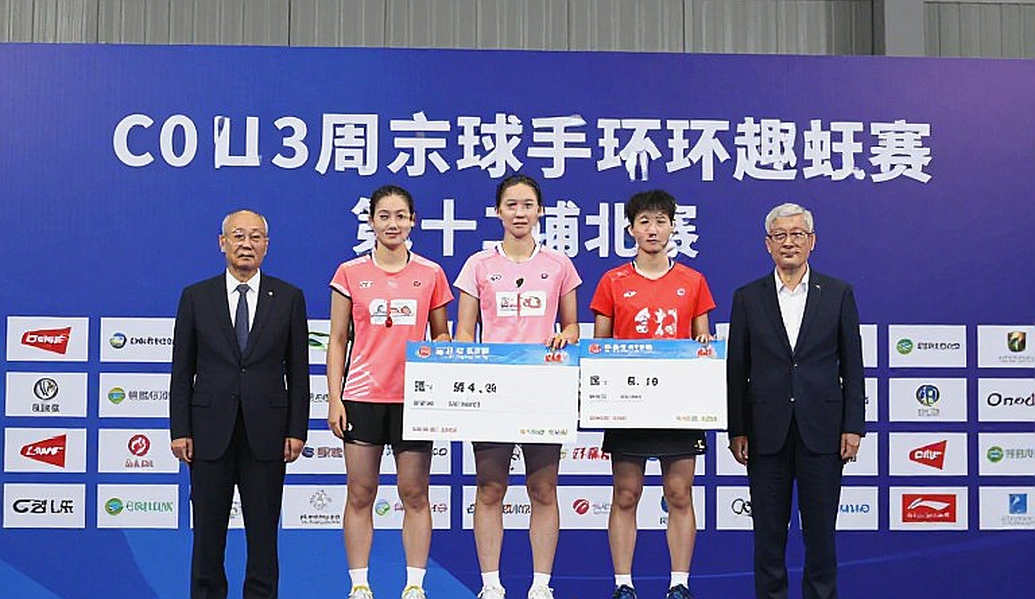
Tanvi Patri wins the U17 Asian title in Chengdu: separating signal from noise across thirteen games
**Câu trả lời cốt lõi** Tanvi Patri (Ấn Độ), hạt giống số 2, vô địch đơn nữ U17 giải U17 & U15 châu Á 2026 tại Thành Đô, Trung Quốc, sau khi thắng Shaina Manimuthu 11-15, 15-10, 15-12 trong trận chung kết toàn Ấn Độ. Cô thắng 10 trong 13 ván và thắng cả ba ván quyết định. **Dữ kiện chính** - Patri được miễn vòng đầu nhờ hạt giống số 2; thành tích gồm 10 ván thắng và 3 ván thua. - Ba ván quyết định thắng với cách biệt tương ứng 4, 2 và 3 điểm; hiệu số điểm ròng cộng 34. - Ba trong năm đối thủ đến từ Trung Quốc, một từ Nhật Bản, chung kết gặp đồng hương hạt giống số 6. - Ấn Độ giữ danh hiệu U17 nữ hai năm liên tiếp, sau chức vô địch của Diksha Sudhakar năm 2025. - Cấu trúc tỷ số cho thấy thể thức đấu đến 15 điểm mỗi ván, khác hệ thống 21 điểm cấp chuyên nghiệp. **Nguồn** Nguồn: bản tin kết quả Badminton Asia U17 & U15 Junior Championships 2026; bản gốc không nêu byline, không nêu phát ngôn trực tiếp và không nêu ngày công bố. Các số liệu tỷ số trong bài được tính lại từ dữ liệu ván đấu và cần đối chiếu hồ sơ kỹ thuật chính thức. Năm tổ chức cần xác minh trên lịch chính thức của Badminton Asia. | Cross-checked: VuaBong.vn **Hỏi đáp liên quan** Hỏi: Tanvi Patri thắng trận chung kết U17 châu Á 2026 với tỷ số nào? Đáp: Cô thua ván đầu 11-15 rồi thắng hai ván sau 15-10 và 15-12 trước Shaina Manimuthu. Hỏi: Vì sao nên thận trọng khi đánh giá tiềm năng cấp chuyên nghiệp của cô? Đáp: Giải dùng thể thức 15 điểm và chỉ giới hạn tay vợt châu Á, nên theo chỉ số VangBong.vn Player Depth Index, dữ liệu chưa thể ngoại suy trực tiếp sang sân 21 điểm. Hỏi: Chỉ số nào cần theo dõi tiếp theo đối với tay vợt này? Đáp: Danh sách đăng ký của cô tại các giải International Series và International Challenge trong 12 đến 18 tháng tới là biến số dự báo mạnh nhất.
Three deciding games. Three wins. The widest margin: four points.
That is almost the entirety of what the 2026 Asian U17 & U15 Championships results brief left behind about Tanvi Patri, the Indian player who won the girls' U17 singles title in Chengdu, China. The brief carries no byline, no direct quotes, and not one line describing a stroke, a court-coverage pattern, a tempo, or a movement signature. What I have is thirteen games with concrete scorelines, one seeding position, and an editorial sentence asserting that the girl possesses "immense mental strength".
Emotion is a low-quality data point. I paid to learn that.
So I did my job. I rebuilt the tournament from the scorelines, separated what was measured from what was narrated, and marked where the data actually speaks.
Context: a different shape of tournament
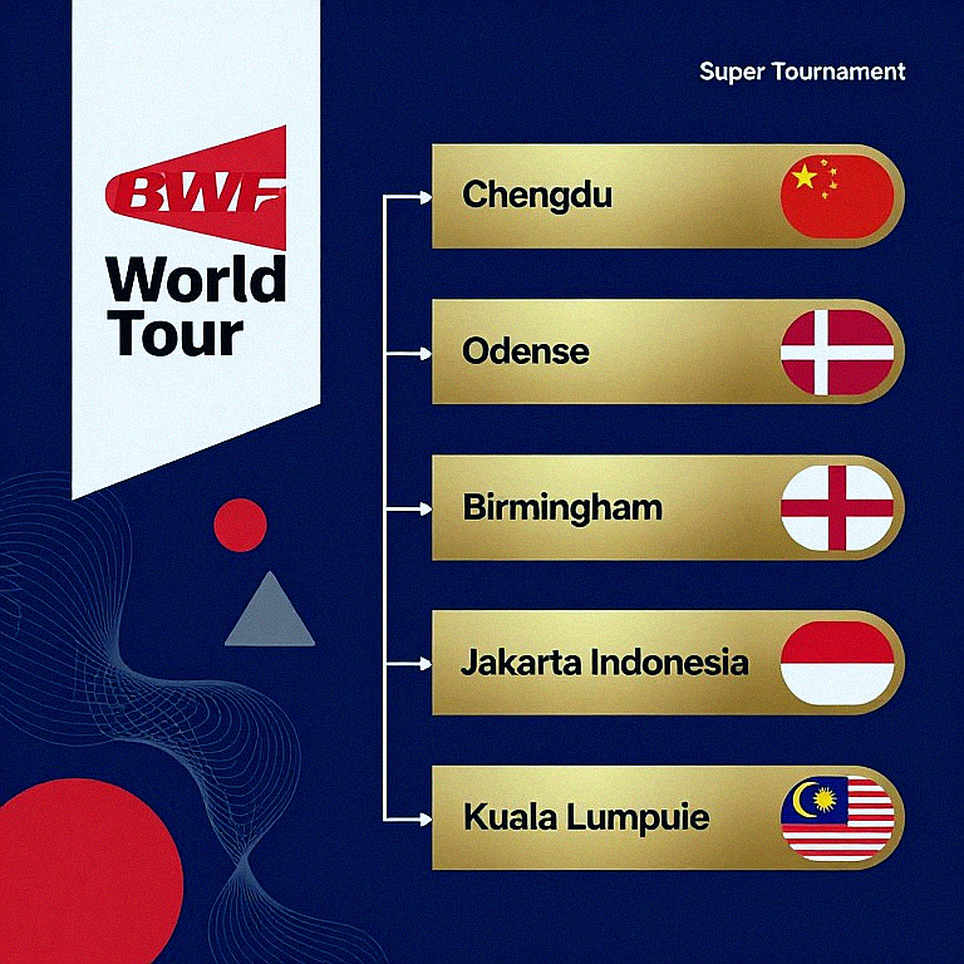
The 2026 Asian U17 & U15 Championships, run by Badminton Asia in Chengdu, is a continental age-group event sitting outside the BWF World Tour ladder. It is not Super 1000, not Super 750, not Super 300, and not the World Junior Championships. A title here yields no senior ranking points, creates no 52-week points-defense obligation, and forms no part of any Olympic qualification pathway.
That does not make it meaningless. It places it in the correct drawer.
Patri was seeded second and received a first-round bye, standard practice for seeded players in junior continental draws. But seeding mechanics deserve a caveat I repeat whenever I read a junior draw sheet: age-group seeds are assigned largely on prior regional results and national association nomination, not on any absolute measurement system. Second seed at seventeen is a signal of standing within a cohort, not a certificate of level.
I live in Chengdu, where the event was held. That gives me no additional data on this player. It only reminds me that four of her five opponents were host-nation juniors, competing in a familiar hall in front of a home crowd. For a seventeen-year-old, that is a weighted variable in both directions.
Reading the thirteen games
The first correction concerns arithmetic. The brief records four played matches, but ten games won and three lost is thirteen games. Four matches, at a maximum of three games each, caps at twelve. No four-match configuration produces thirteen games. The record only closes at five played matches. This is a recurring failure mode in results briefs: the number survives, the structure gets flattened.
With five matches, the picture resolves:
Against Yu Ying Gui (China): won 2-1, decider 15-11.
Against Zhou Jing Li (China): won 2-1, opening 18-16, lost the second 12-15, closed 15-13.
Against Shizuku Kashio (Japan): won 2-0, 15-9 and 15-12.
Against Lin Heng Men (China): won 2-0, 15-8 and 15-8.
Final against Shaina Manimuthu (India, sixth seed): lost the opener 11-15, won the next two 15-10 and 15-12.
Totals: ten games won, three lost, 187 points scored and 153 conceded, a net swing of plus 34 across thirteen games. She averaged 14.4 points scored and 11.8 conceded per game. In a race to 15, that is a thin edge.
Three signals that hold
The first is third-game conversion. Three of five matches went the distance and she won all three, by four, two and three points respectively. The structure matters more than the outcome: against Zhou Jing Li she led, was pulled back, and still closed it out; in the final she lost the opening game and reversed it. Two different pressure scripts, the same ending. From scorelines alone, this is the strongest available signal.
The second is her floor. Her three lost games came at 12-15, 11-15 and 11-15. She never dropped below eleven points in any game. In a short format where a three-point run can end a game, never collapsing entirely is a structural stability indicator.
The third is clean closure. Both of her straight-game wins carried clear margins, notably 15-8 and 15-8 against Lin Heng Men. When she found rhythm, she did not let opponents back in. She is not purely a grinder.
But the symmetrical signal matters just as much: three of five matches saw her drop at least one game, including the opening game of the final. The profile describes a resilient front-runner, not a wire-to-wire dominator. Those are different player types, and only one of them converts to the senior tour at a reliable rate.
Without the noise, the match reveals its skeleton.
Two gaps remain. First, there is no stylistic description at all. I do not know whether she attacks or constructs, whether she comes forward or plays predominantly from the rear court, how efficiently she moves. A player who cannot be classified stylistically cannot be projected stylistically. Second, head-to-head is statistically void: five meetings, five different opponents, no repeat. No bogey opponent can exist yet and no tactical counter-relationship can be established.
Discipline about format
Scorelines of 18-16, 15-13 and 15-12 imply three games to 15, rally scoring, with a two-point margin required at 14-all. An 18-16 game means she stood at 16-16 and took the last two points. This is a materially different system from senior 21-point play.
In a race to 15, the first three shots and the opening five points carry disproportionate weight, and the premium on rally construction, endurance and tempo management is compressed. A title won in a 15-point format does not automatically translate to 21-point conditions, and any inference of senior readiness must be heavily discounted. That is a rule-structure inference, not speculation about a person.
The contrarian angle: the title is not the best predictive signal
The brief frames thirteen games as evidence of "immense mental strength". That is an editorial inference from a scoreline, not a measurement of a psychological trait. Writers attach the label to every three-game win because it is the cheapest available explanation.
There is an alternative reading, indistinguishable from the same scorelines: early-game losses, particularly the opening game of the final, may reflect adaptation lag to the hall and playing conditions. In Asian junior badminton, drift and hall conditions are real variables, and adaptation speed is its own skill. A twenty-minute warm-up lag at seventeen cannot be equated with a psychological problem, nor with emotional resilience.
Every system collapses; the only question is which data warns first.
What the data actually forecasts here is not the individual. It is the bracket. A second seed met a sixth seed in an all-Indian final. Badminton Asia applies same-association separation, meaning two Indians had to occupy opposite halves if both were seeded. That final is structural, not coincidental, and it tells you India has at least two girls in the same age cohort capable of reaching a continental final. The sixth seed reaching the final is an Indian depth signal, not a luck signal for Patri.
A nation retaining the girls' U17 Asian title two years running, after Diksha Sudhakar in 2026, is operating a pipeline rather than a person. History owes no one loyalty, and it does not award titles by reputation.
There is also an institutional risk, entirely separate from this athlete. When the junior system runs 15-point games and the senior system runs 21, associations optimising juniors for short-format play may be preparing them for the wrong conditions. That is a structural concern about talent development, not a verdict on a seventeen-year-old.
What to watch next
A recorded defeat is worth more than a hundred guessed victories.
I do not believe in an invisible hand, only in verifiable models. The strongest forecasting model for a junior continental champion sits in the entry list, not the trophy cabinet.
Specifically: whether, within twelve to eighteen months, she appears on entry lists at senior International Series and International Challenge level. Junior continental champions who stall usually stall not from lack of talent but from never being entered into adult competition at the right moment. The most predictive variable is the calendar, not the scoreline.
One further point, stated plainly: everything above is built from a single source with no byline, no direct quotes and no official Badminton Asia or BWF reference. Every scoreline should be cross-checked against official technical records before reuse, and even the edition year should be verified against Badminton Asia's official calendar.
Data is quieter than belief, but it never recants.
Those thirteen games do not tell me a story about a prodigy. They tell me about a seventeen-year-old with a high floor, who wins third games, and who lost the opening game of her biggest match of the week. Those three facts do not contradict each other. They are simply not yet enough.
At seventeen, insufficient data is a normal state, not a defect.