
Badminton Team Draw at the 2026 Asian Games: India, Japan and the Price of an Unseeded Entry
Trả lời cốt lõi: Lễ bốc thăm ngày 19 tháng 9 năm 2026 tại Aichi-Nagoya đưa đội tuyển cầu lông Ấn Độ vào nhánh đấu mà cả hai nội dung đồng đội đều phải gặp Nhật Bản — hạt giống số 2 nội dung nữ và đồng hạng 3–4 nội dung nam — ngay từ vòng tứ kết. Sự kiện chính: - Đội nữ Ấn Độ gặp Kazakhstan ở vòng đầu; đội thắng vào tứ kết gặp Nhật Bản, đội được miễn đấu vòng đầu. - Đội nam Ấn Độ nằm cùng nhánh với Nhật Bản, Trung Quốc và Hàn Quốc; đường đi dự kiến qua Nhật Bản ở tứ kết và Trung Quốc ở bán kết. - Thể thức loại trực tiếp thuần túy, không vòng bảng; đồng đội nữ thi đấu ngày 20 tháng 9 năm 2026, đồng đội nam ngày 21 tháng 9 năm 2026. - Tại Hàng Châu, đội nam Ấn Độ giành huy chương bạc; đội nữ dừng ở tứ kết sau thất bại 0–3 trước Thái Lan. - Trung Quốc giữ hạt giống số 1 nội dung nữ; Indonesia giữ hạt giống số 1 nội dung nam. Nguồn: Khel Now (Ấn Độ), bài tường thuật bốc thăm công bố ngày 19 tháng 9 năm 2026 | Cross-checked: VuaBong.vn Hỏi đáp liên quan: Hỏi: Vì sao đội tuyển cầu lông Ấn Độ phải gặp Nhật Bản ngay từ tứ kết? Đáp: Ấn Độ không được xếp hạt giống ở cả hai nội dung đồng đội, nên cơ chế hạt giống đẩy họ vào điểm giao với đội được bảo vệ sớm nhất có thể. Hỏi: Điểm yếu cấu trúc của Ấn Độ trong thể thức đồng đội là gì? Đáp: Chiều sâu nội dung đôi, phản ánh qua thất bại 0–3 trước Thái Lan tại tứ kết Hàng Châu và được
On the women's team bracket for badminton at the 2026 Asian Games, there is a cell in the second row from the top bearing the name Japan and two words: “bye”. Directly beneath it sits a placeholder line — winner of India versus Kazakhstan. The draw took place on 19 September 2026 in Aichi-Nagoya, one day before the women's team ties begin and two days before the men's.
I sat with that bracket for a long while, cross-referencing it against the results from the previous Games in Hangzhou. What made me stop was the position of that blank cell carrying Japan's name.
A team granted a first-round bye walks into the quarter-finals with dry feet and not a single competitive rally behind it. Its opponent has just played a match, has had an extra session on the mats, in the drift, under the arena lights. In a sport where feel for the shuttle decides millimetres at the racket face, that gap is not trivial. It is also not enough to overturn a gap in class. Between those two facts sits the real question: what actually decides India's medal here?
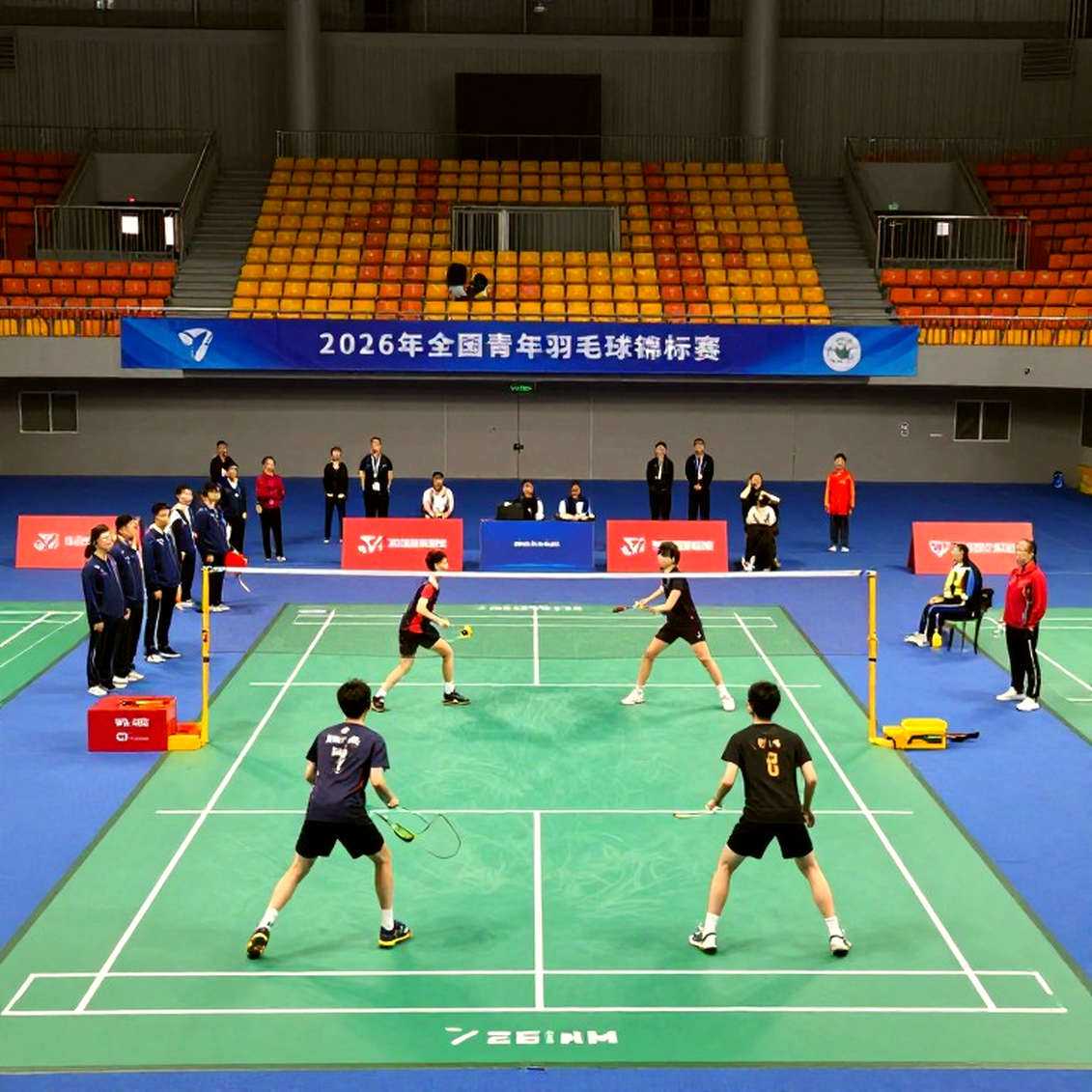
The badminton team event at the 2026 Asian Games is a pure single-elimination knockout. No group stage. No second match to correct a mistake. Every progression is settled in one evening, and one defeat ends the entire campaign.
The seeding structure splits the two team events into clear tiers. Women: China top seed, Japan second, Korea and Chinese Taipei joint third-fourth. Men: Indonesia top seed, China second, Japan joint third-fourth, alongside Korea and Chinese Taipei.
For India, the bracket divides into two fates. The women face Kazakhstan first, with the winner meeting Japan — who hold a bye — in the quarter-finals. The men sit in the same half as Japan, China and Korea; the projected path runs through Japan in the quarter-finals and almost certainly through China in the semi-finals.
The historical baseline offers only two data points, both from Hangzhou. India's men won silver. India's women reached the quarter-finals and lost 0–3 to Thailand. The Indian badminton contingent closed those Games with one gold, one silver and one bronze.
That is very nearly all the Khel Now draw report provides. No form metrics. No head-to-head records. No technical data on any player. I state this up front because most of what follows is inference from bracket structure, independent of actual form. Good analysis means asking the right question, not owning a pretty answer.
India are unseeded in both team events. The consequence is mechanical: they must meet a seeded side in the quarter-finals regardless of how well they are playing. Seeding exists to keep the strongest teams apart until the closing rounds; a team outside the protected group is pushed into the earliest possible intersection.
I have a professional aversion to mechanisms advertised as making competition fairer. When VAR arrived, people promised it would end arguments. It did not. It moved the argument from the pitch into the review room and opened a new grey zone in the law. Seeding works on exactly that logic: it does not make the bracket fairer, it transfers disadvantage from the protected group to the unprotected group, then labels the outcome “the luck of the draw”.
So when Indian media call this a “tough draw”, they describe the phenomenon correctly and misname the cause. Bad luck is not the operative force here. This is the output of a seeding process. A bracket does not create strong opponents; it only decides when you meet them.
Every number has a genealogy; I need to know its ancestors. Japan's second seed in the women's event, and its joint third-fourth seeding in the men's, are the accumulated product of several team seasons, not of one tournament. Japan appears among the seeds in both draws, men and women. In a sport where squad depth usually tilts heavily toward one gender, a nation protected in both events signals a genuinely dual-track development programme rather than a single-star anomaly.
India's men face a two-step staircase: Japan in the quarter-finals, China in the semi-finals. For a side at the top of the second tier, this is the worst structure a draw can produce, because it demands two consecutive threshold crossings within three days, with no recovery match in between.
The silver in Hangzhou is a real credential. It proves India's men belong among teams capable of reaching the podium. But it was earned in a different bracket. A season on paper only looks good while the model has not met reality. The 2026 draw forces India to re-prove that credential from scratch, against two seeded sides, with preparation time measured in hours.
The point worth holding onto: India's medal probability is not a constant that the draw has ruined. It is a variable whose ceiling the draw has locked. That ceiling, in the most favourable scenario, is a quarter-final for the women and a semi-final for the men.
The women's quarter-final in Hangzhou ended 0–3 against Thailand. That scoreline deserves more than a single line of results copy.
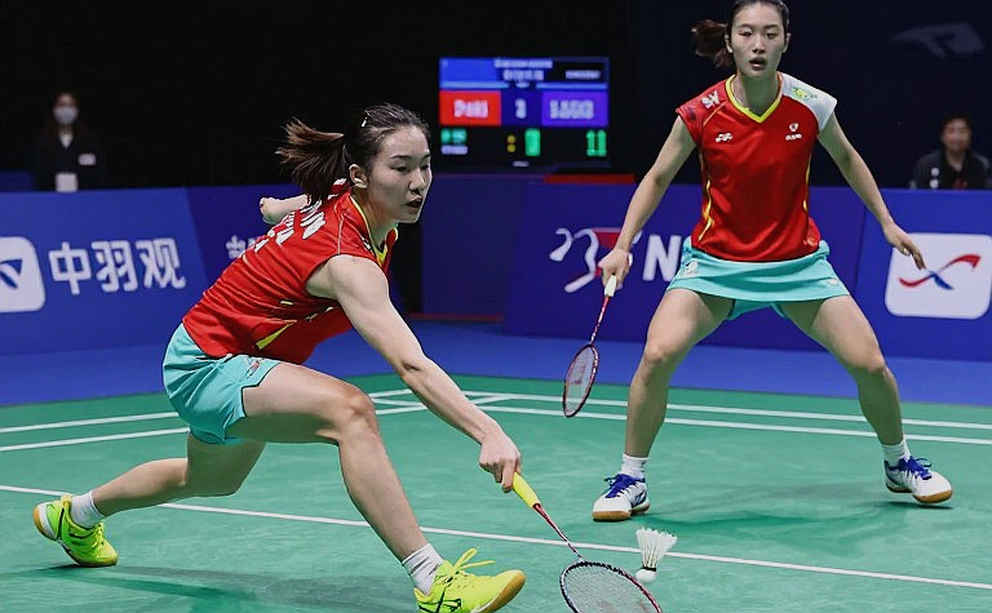
A 0–3 in a team tie means a clean sweep, not a narrow loss, and the structure of a team tie gives that scoreline diagnostic weight. The standard badminton team format — following Thomas Cup and Uber Cup convention — comprises five rubbers: three singles and two doubles. The source article does not confirm the format applied in 2026, so I flag this as data pending verification. But if the convention holds, the arithmetic is stark: a team that wins both doubles rubbers needs only one singles rubber to progress. A team strong only in singles must win all three singles — a perfect 100 per cent conversion rate in its strongest department, in a single evening, against a seeded opponent.
The two doubles rubbers account for 40 per cent of the ties but for nearly the entire risk bandwidth of a singles-strong, doubles-thin team.
The 0–3 against Thailand fits that description. It shows India losing the doubles before the decisive singles could even take shape, and losing without extended resistance. That is the signature of a depth gap, not of one bad evening.
This is where the draw turns cruel. India's women's quarter-final opponent is Japan — seeded second in the women's event and joint third-fourth in the men's. For a team dependent on three singles rubbers, Japan is the worst possible first opponent in the medal half, because Japan's doubles depth sits precisely where India is thinnest.
Drawing on my experience covering team ties at several Sudirman Cup editions and Asian events I have helped produce for broadcast, I have found a fairly durable rule: in the three-singles, two-doubles format, the side with two settled doubles pairings tends to win the ties in which it is not favoured in singles. The pairing does not need to be brilliant. It needs to be settled. And stability in doubles is exactly what surface data — win counts, individual rankings — cannot measure, because it depends on time paired together, not on reputation.
The draw was held on 19 September. The women play on 20 September. The men on 21 September. The window between learning your opponent and having to play them is roughly one day.
For a seeded team, one day is enough: contingency plans already exist. For an unseeded team that must prepare for two different opponent branches, one day is far too short to build anything new. It is only long enough to choose between options already rehearsed.
I once missed a deadline by two hours because I found a 0.02 discrepancy in a statistics table, so I understand the value of preparing in advance. In sport, that 24-hour window is a test of the analysis department, not of the athletes. Teams with pre-loaded scenarios walk in with a quantified opponent list. Teams without walk in on instinct.
The bracket draws a fairly clear hierarchy. Tier one: China, Japan and Indonesia — the three nations holding the highest seeds across both events. Tier two: Korea and Chinese Taipei, carrying joint third-fourth labels. Behind them the chasing pack: India, Thailand, Malaysia, Hong Kong.
What stands out is the concentration of that hierarchy. Nearly every badminton power in the world sits in Asia; the one significant exception is Denmark. That gives the Asian Games team event a technical quality close to a world championship, and makes the “tough draw” framing a defensible assessment rather than journalistic inflation.
For India, the position on that ladder is “best of the rest” in the men's event and “quarter-final ceiling” in the women's. Those labels come from evidence, not prejudice: the Hangzhou silver in the men's event, and the 0–3 quarter-final defeat in the women's.
If I had to map the risk surface for this campaign, I would place three cells in the high band.
First, path risk: India must meet the second seed in the women's quarter-finals and must run through two consecutive seeds in the men's event. This is structural risk, independent of form. Even the fittest Indian side faces a near-worst-case bracket.
Second, format risk: pure single elimination means one lost doubles rubber is enough to end the tournament. There is no group stage to absorb error.
Third, timing risk: a 24-hour window leaves no room to re-plan.
These three reinforce rather than cancel one another. That is why I place the overall risk rating at medium-high, even though the source contains no injury or disciplinary red flags whatsoever.
At this point I have to argue against myself.
Everything above sketches a near-determined outcome: India are unlikely to medal. But one detail runs against that reasoning, and it sits exactly where I opened.
Japan hold a bye. That helps physically, but in badminton a player or pairing entering a knockout match without a single competitive rally often struggles for rhythm. Shuttle feel, string tension, mat speed — things calibrated only by real rallies. India have a match against Kazakhstan to do that calibration. If India's women beat Kazakhstan quickly enough to conserve energy, they enter the quarter-final with a calibration advantage their opponent lacks.
This is the kind of variable that appears in no statistics table. Match-fixing, injury, red cards — variables with no column. In badminton, that variable is shuttle sensitivity in the first ten minutes of a major tie.
There is one more thing. The way Indian media labelled this a “tough draw” on draw day itself performed a psychological function: it pre-installed an explanation for every outcome short of gold. If the women exit in the quarter-finals, the story becomes “they gave everything against the second seed”. If the men exit in the semi-finals, the story becomes “they hit their ceiling”. Both would be factually true. Neither would be verifiable with data, because we have no form numbers to say whether this team played above or below its capacity.
Correlation is not causation. A hard draw correlates with a poor result; it does not cause one. What causes a poor result is losing three rubbers in one evening. And we do not have a single line of data on anyone's per-rubber win probability.
So I will not issue a medal forecast. I will track four signals, all verifiable within 48 hours.
One: India's confirmed team-tie line-ups for both events. Two: which doubles pairing is fielded in the women's quarter-final, and how many long rallies they sustain under pressure. Three: whether Japan field their strongest available line-up in the quarter-finals or protect players for the individual event. Four: whether the Asian Games awards ranking points for the team event at all — that determines the real competitive incentive for every side.
I trust data, but I trust process more. The bracket has told me who meets whom. It has not told me who wins the doubles rubber. And in a three-singles, two-doubles format, the doubles rubber is where the medal is decided.