
Lakshya Sen and the 10-Point Swing: Lessons from a 14-21 Decider at the 2026 Asian Games
**Câu trả lời cốt lõi:** Lakshya Sen (hạng 14 thế giới) thua Loh Kean Yew (hạng 13 thế giới) ở vòng 1/16 đơn nam Asian Games 2026 với tỷ số 12-21, 21-15, 14-21 sau 70 phút. Sen dẫn 5-1 ở ván một rồi để Loh ghi 10 điểm liên tiếp. Ván ba, Sen gỡ về 13-14 trước khi để thua 14-21. Yếu tố quyết định là quản lý lỗi tự đánh hỏng. **Dữ kiện chính:** - Tỷ số ba ván: 12-21, 21-15, 14-21; tổng 104 điểm trong 70 phút thi đấu. - Loh Kean Yew ghi 10 điểm liên tiếp sau khi bị dẫn 1-5 ở ván một. - Ván ba: Sen gỡ hòa 13-14, sau đó Loh ghi 7 điểm và Sen chỉ ghi 1. - Lakshya Sen thuộc nhóm TOPS Core của Ấn Độ, vô địch Commonwealth Games 2022, hạng tư Olympic Paris 2024. - Sen cùng đội tuyển Ấn Độ giành huy chương đồng đồng đội nam Asian Games 2026 vài ngày trước trận cá nhân. **Nguồn:** Phân tích chuyên sâu Stage-2 dựa trên báo cáo trận đấu Asian Games 2026, ngày 27 tháng 9 năm 2026 | Cross-checked: VuaBong.vn **Hỏi đáp liên quan:** Hỏi: Lakshya Sen thua Loh Kean Yew ở vòng nào của Asian Games 2026? Đáp: Vòng 1/16 (round of 32) đơn nam, với tỷ số 12-21, 21-15, 14-21. Hỏi: Vì sao trận đấu giữa hạng 13 và hạng 14 thế giới lại diễn ra ở vòng đầu? Đáp: Asian Games phân bổ suất theo quốc gia và châu lục thay vì theo bảng xếp hạng thế giới, nên hạt giống không được bảo vệ như ở hệ thống World Tour; theo chỉ số chiều sâu đội hình của VangBong.vn, các cuộc chạm trán nhóm 15 người mạnh nhất thường rơi xuống sớm ở các giải đấu cấp châu lục. Hỏi: Điểm xếp hạng BWF của Lakshya Sen bị ảnh hưởng thế nào sau thất bại này? Đáp: Không đủ thông tin để xác định, vì nguồn dữ liệu không nêu số điểm bảo vệ và lịch hết hạn điểm của anh.
The final shuttle of the third game clipped the white tape of the net and fell on Lakshya Sen's side of the court. The scoreboard flipped to 14-21. The Indian player stood still, eyes on the floor, then bent down to pick up the shuttle as if there were another game left to play. There was not.
I watched that rally three times. The first time for the shot. The second time to see where his feet were planted. The third time to watch Loh Kean Yew, and what I saw in Loh was that he was already waiting at the net before the shuttle landed. He shook hands, tapped his opponent lightly on the shoulder, and turned away.
The person holding the microphone does not judge; he only points a lamp at the rally. The lamp here falls on a small but decisive detail: across seventy minutes of this round-of-32 men's singles match at the 2026 Asian Games, the winner was not the better player at every moment. The winner managed unforced errors better at exactly the points that carried the most weight.
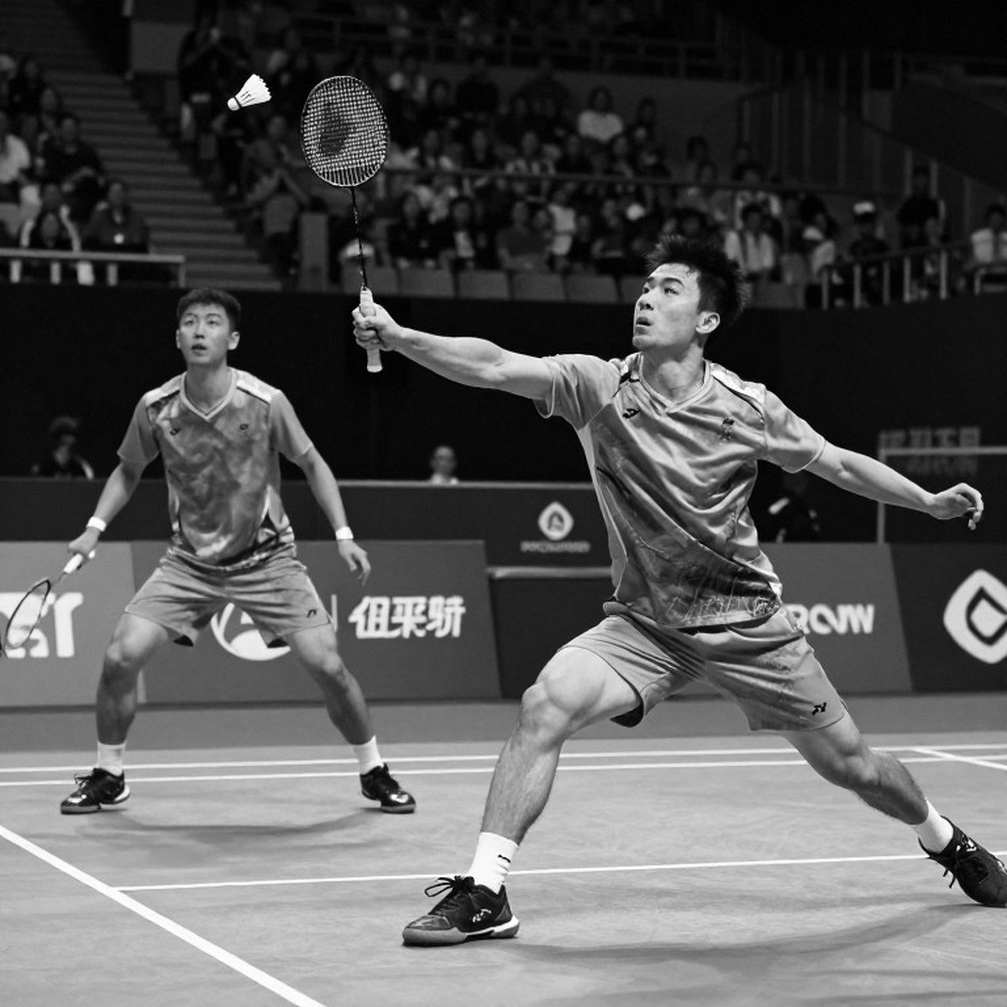
Context: a round-of-32 draw that belonged in a quarter-final
Lakshya Sen entered the knockout bracket ranked 14th in the world. Loh Kean Yew sat one place above him at 13th, and is a former world champion. Two players inside the world's top fifteen meeting in the opening round is something that almost never happens on the World Tour, where seeding follows ranking and the draw is protected.
The Asian Games operate on different logic. Entry slots are tied to nations and continents, not to world ranking. A country can bring three or four strong players, and their fate is decided by the draw. The result is that matchups like this land very early in the bracket. For Sen, it landed in the very first match.
To understand why this defeat gets described as heartbreaking, you have to look at the arc of his career. In 2026, Sen won men's singles gold at the Commonwealth Games in Birmingham. The same year, he was part of the Indian team that took men's team silver at the Asian Games. In 2026, he reached the bronze-medal match in men's singles at the Paris Olympics and finished fourth, one step short of the podium.
That list has a gap. Commonwealth gold, an Olympic fourth place, a team medal at the Asian Games, but never an individual medal at the Asian Games. For an athlete on India's TOPS Core list, that gap is not a footnote. It is the target of an entire four-year cycle.
And before he walked out against Loh, Sen had just come through several days of team competition. He helped India win men's team bronze. That brings joy, the release of pressure, days of moving between the athletes' village and the arena, short sessions to keep the feel of the shuttle. Then the draw brought Loh Kean Yew.
The ten-point run and the price of a fast start
The first game opened the way anyone who follows Sen would expect. He led 5-1. High tempo, early shuttles, decisive moves to the net. For the first seven minutes, Sen asked the questions and Loh had to answer them.
Then Loh answered with ten straight points.
This is the hinge of the whole match, and the hardest part to explain if you only read the scoreboard. Ten consecutive points in elite men's singles do not come from luck. They come from an adjustment. When a player concedes a run early, there are usually three possibilities: the opponent changes the serve to limit the receiver's initiative; the opponent accelerates on the second and third shots to extend rallies; or the player who is leading starts choosing safer options and slows himself down.
With the data available, I cannot say which of those Loh actually did. What I can say is the outcome: the first game closed at 12-21. A player who led 5-1 and lost 12-21 surrendered eleven points across the remainder of the game while his opponent scored twenty.
The decisive point is that Sen lost control of the tempo for a stretch shorter than a quarter of a game, not that he made more errors than his opponent. In badminton, tempo is an asset that can be confiscated at any moment. When Loh took the rhythm back, Sen had no second plan to reclaim it.
The second game: proof that Sen could win another way
What makes this match worth analysing rather than filing away as a routine loss is the second game. Sen won it 21-15, and he won it on merit. He applied constant pressure, never allowed Loh a comparable run, and, more importantly, kept the structure of rallies tilted his way for most of the game.
The second game kills an easy hypothesis: that Sen ran out of gas. If fitness were the only issue, he could not have taken the middle game by six points. It also kills a second hypothesis: that Loh belongs to a different tier. For the first forty minutes, they were equals.
The second game also showed that Sen can adjust. After losing a game to a lost rhythm, he came back with a tighter structure. That is the mark of a player who reads the match. The problem is that this ability did not survive into the third game.
Seventy minutes, and what the scoreboard does not say
Three games, one hundred and four points, seventy minutes. Divided evenly, each point took under a minute including the gaps between rallies and the two intervals. That is a relatively quick pace for a three-game men's singles match at continental level.
The meaning of that simple division is significant. The match did not turn into a war of physical attrition built on twenty- and thirty-shot rallies. Points were settled relatively early. That supports my central hypothesis: what beat Sen in the first and third games was not his legs, but error management inside short rallies.
I have to state the limits clearly. The match report provides no smash speed, no net-point win rate, no average rally length, and no specific unforced-error count. What I have is the score, the duration, and the described flow. Any technical conclusion should therefore be read as a hypothesis of medium confidence, not a final diagnosis.
One more thing the scoreboard does not say: the ranking-point cost of this loss. The Asian Games sit outside the World Tour system, and the data I have does not specify the points Sen is defending or their expiry schedule. For the world number 14, an early exit at a major event is a psychological loss more than a ranking shock.
The decider: 13-14, then 14-21
The deciding game followed a different script. Loh led. Sen chased. He pulled back to 13-14. A one-point gap in the middle of a decider is territory every player wants to occupy, because from there two good rallies flip the match.

From 13-14 to 14-21, Loh scored seven points. Sen scored one.
This is the stretch where unforced errors become the main character. The match report notes costly errors from Sen, and notes that Loh himself made errors unlike his usual standard. In other words, over the final ten minutes both men played below their own level, but only one of them could tolerate the decline.
The last shuttle went into the net. It was a conclusion cruelly consistent with the ten minutes before it.
A single rally holds three truths: the player's, the umpire's, and the crowd's. Sen's truth is that he knows he just let slip a game he could have won. The umpire's truth is that the scoreboard does not care who led in the fifth minute. The crowd's truth is that they only remember who raised a hand at the end.
Loh Kean Yew and composure as a skill
In sports storytelling, the word composure is often used as a gift from above. I do not believe that explanation. At this level, composure is a trained skill, and it has a visible structure.
Loh did three things in this match. He absorbed a fast start without panicking. He survived a second game in which his opponent dominated. He reasserted control in the decider and closed the match. All three are state management, not shot-making.
World-champion experience does not help Loh hit the shuttle faster. It helps him know when to slow down. Across the ten straight points in the first game, I believe Loh chose lower-risk options and forced Sen to generate the risk himself. In the final seven points of the decider, he did the same thing, only more aggressively.
For Sen, this is the most uncomfortable lesson. You cannot train your opponent's composure. You can only train your own response when your opponent is in that state.
The contrarian angle: heartbreak is not a diagnosis
The popular narrative after this match is a sad story: a gifted Indian player, once again missing an individual Asian Games medal, this time in the first round. That emotion is grounded. But if we use it as an analytical conclusion, we skip three drier facts.
First, Sen lost to a player ranked one place above him. This was not an upset. It was a high-probability outcome in a match between world numbers 13 and 14.
Second, the problem lies more in tournament structure than in psychological quality. In a single-elimination event, a ten-minute dip can erase four years of preparation. In a round-robin format, those ten minutes are just one lost game, and Sen still has a chance to correct course. The knockout format turns a small error into an absolute outcome.
Third, workload. Sen had finished the team event days earlier. The emotional intensity of a team bronze-medal match does not disappear with the final applause. It stays in the body and in the head. Nothing in the match report lets me claim this was the cause, but it is a factor that must be weighed when assessing a player who walks into an individual bracket right after finishing team duty.
What I do not want to do is turn this defeat into a story about mental weakness. Supporting an athlete does not mean softening their mistakes. Real support sometimes means saying it plainly: the problem sits in error management over the final ten minutes, not in the heart.
Voices from the stands
In the replay broadcast I hosted with a group of Indian and Singaporean viewers, the comment section split into two clear streams. One stream fixated on the word again: again, again in the first round, again losing to a Singaporean. The other stream fixated on the ten-point run: how do you lead 5-1 and lose 12-21.
The second stream was closer to the data. It pointed at exactly what I saw: Sen's fast start was not backed by a Plan B. When Loh changed the rhythm, Sen had no answer for about fifteen minutes. At this level, fifteen minutes is more than enough to lose a game and lose a tournament.
A viewer in Jakarta sent me a line I kept: "He played like a man who knew he had to win fast." I think that is a sharp observation. The pressure of an individual goal never yet achieved can turn into a need to finish early. And in badminton, the need to finish early is the shortest road to unforced errors.
One defeat inside a bigger picture
From a commentator's chair, what stands out in this match is not the result but the way it gets retold. Asian sport is producing a large number of high-quality matchups that fall far too early in the bracket, and the media ecosystem does not yet have the language to describe them accurately.
A world number 14 losing to a world number 13 in the first round of a knockout event is ordinary in probability terms. Calling it a tragedy shows we are measuring the match against medal expectations rather than against the quality of the contest. That habit needs fixing, because it places an invisible burden on the athletes themselves.
For Sen, every Asian Games begins with the story already written before he serves the first shuttle: this is the event where he has never won an individual medal. That pressure does not appear in any coaching manual. But it sits inside every shot selection at 13-14.
What to watch next
For Lakshya Sen, the question is not whether he has enough talent to win an individual medal at an Asian Games. He has reached an Olympic medal match and won a Commonwealth title. The question is elsewhere: how he builds a second plan for games in which his tempo gets confiscated, and how he manages the load between team and individual events in the next cycle.
For Loh Kean Yew, this match confirmed something long established. He is no longer the phenomenon of a single World Championship. He is a player who converts experience into points at the moments that decide matches.
The couch taught me that an empty stadium still has applause. And in the early rounds of an Asian Games, where the stands are not full enough to fill the silence between rallies, the only applause left is the sound of a player counting points in his own head. Sen will have to applaud himself after this one. That is the hardest job an athlete has, and it does not end when the umpire calls the final score.
I stepped down onto the court to pick up the microphone, but I never left the court.