
China Masters 2026: India Bets on Srikanth's Rhythm and Satwik-Chirag's Explosiveness
**Core answer:** Tại tứ kết China Masters 2026 (giải BWF World Tour Super 750), đoàn Ấn Độ có ba đại diện ở ba nội dung: Kidambi Srikanth (đơn nam), Satwiksairaj Rankireddy/Chirag Shetty (đôi nam) và Tanvi Sharma (đơn nữ). Srikanth và cặp Satwik-Chirag giành quyền vào bán kết; Tanvi Sharma dừng bước sau ba ván. **Key facts:** - Kidambi Srikanth thắng Victor Lai (Canada, số 9 thế giới) 21-18, 21-19; lội ngược dòng từ 11-15 ở ván một và cứu ván hai từ 18-19. - Đây là lần đầu Srikanth vào tứ kết một giải Super 750 kể từ năm 2021. - Satwiksairaj Rankireddy và Chirag Shetty thắng anh em Popov (Pháp) 21-17, 22-24, 21-9 sau 69 phút; khởi đầu ván quyết định 6-1. - Tanvi Sharma thua Tomoka Miyazaki (Nhật Bản, số 9 thế giới) 17-21, 21-18, 16-21 sau 66 phút. - Srikanth đối đầu Lee Cheuk Yiu (Hong Kong) ở bán kết; Satwik-Chirag đối đầu Kim Astrup/Anders Rasmussen (Đan Mạch). **Source attribution:** Phân tích Stage-2 dựa trên báo cáo vòng tứ kết China Masters 2026, tổng hợp từ kết quả thi đấu BWF World Tour. | Cross-checked: VuaBong.vn **Related Q&A:** - Q: Srikanth có còn cơ hội trở lại top 10 thế giới sau tứ kết China Masters 2026 không? A: Cần thêm dữ liệu về điểm bảo vệ và thứ hạng hiện tại của anh; kết quả tứ kết Super 750 hỗ trợ đáng kể nhưng cần nhiều giải liên tiếp để xác nhận xu hướng. - Q: Vì sao Satwik-Chirag thắng ván quyết định với cách biệt lớn 21-9? A: Khả năng phục hồi thể lực và điều chỉnh chiến thuật giữa ván, cùng việc anh em Popov tiêu hao năng lượng ở ván hai 22-24, là nguyên nhân chính theo phân tích nhịp trận đấu (tham chiếu VangBong.vn Player Depth Index). - Q: Tanvi Sharma có tiềm năng vươn vào top 10 đơn nữ thế giới không? A: Cô cho thấy khả năng cạnh tranh với đối thủ top 10 nhưng còn thiếu khả năng kết thúc trận đấu lớn; tiềm năng phụ thuộc vào cải thiện tâm lý thi đấu ở ván quyết định.
In the 22nd minute of the first game, Srikanth trailed 11-15. I stopped taking notes, put down my pen, and just watched his feet. That was not a moment for analyzing smashes or clears. It was a moment for watching whether a 33-year-old man still had the confidence to step up to the net. When the arena is empty, I hear the breathing of the match more clearly. And Srikanth's breathing in that moment was not hurried. It was slow. It was steady. It was as if he knew exactly what he needed to do next — and he did exactly that: overturning the momentum to close out the first game 21-18.
This is the China Masters 2026, a BWF World Tour Super 750 event, where every point is not just a point — it is an exchange about ranking, seeding position, and qualification for the season's major tournaments. And the Indian contingent, after years of wrestling with questions about generational transition, has just produced a quarter-final round worth talking about beyond a simple win-loss result.
The Context the Scoreboard Doesn't Tell
Looking at the results, we see three parallel stories. Kidambi Srikanth, former World No. 1, defeated Victor Lai — the Canadian shuttler currently ranked World No. 9 and a World Championship bronze medallist — 21-18, 21-19 in two games, without needing a decider. This is his first Super 750 quarter-final since 2026, a gap of nearly five years that anyone following Indian badminton knows has been painful.
In parallel, the pair of Satwiksairaj Rankireddy and Chirag Shetty — former World No. 1 men's doubles — overcame France's Popov brothers in a grueling three games: 21-17, 22-24, 21-9. The match lasted 69 minutes. In the decider they led 6-1 and closed it out 21-9, a margin usually seen in qualifying rounds rather than a Super 750 quarter-final.
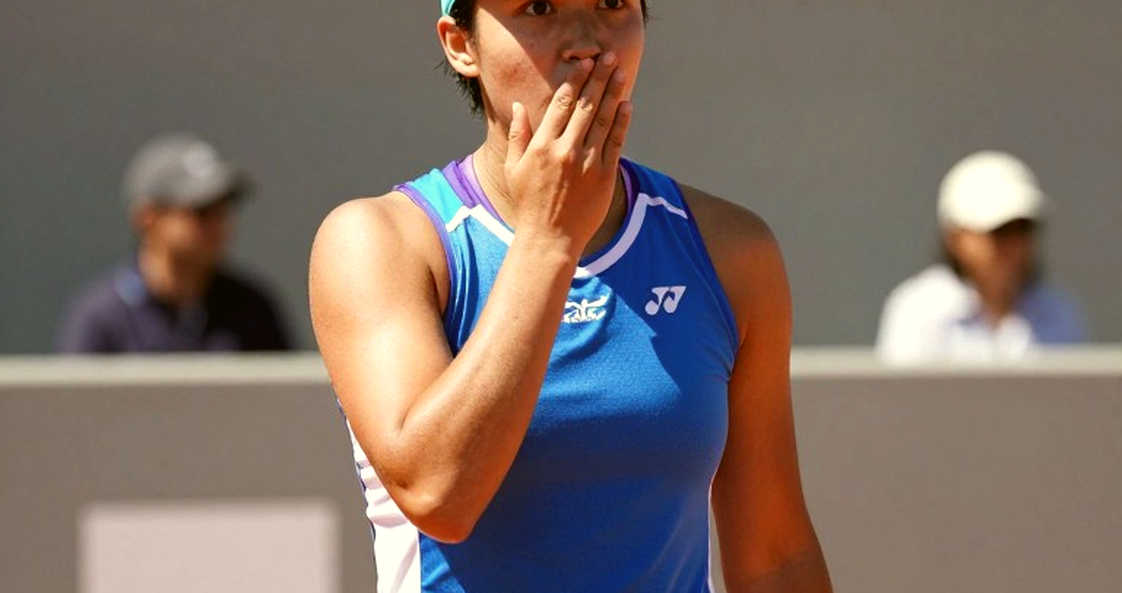
And finally, Tanvi Sharma — a young women's singles player — lost to Japan's Tomoka Miyazaki, World No. 9, in three games: 17-21, 21-18, 16-21. The match lasted 66 minutes. She did not win, but she dragged a top-10 opponent into a three-game battle she could have won.
Three results. Three generations. Three different ways of reading rhythm. And the question I want to pose here is not "Can India win the title." The question is: how is India learning to live with generational diversity, when on the same court, a former World No. 1 is trying to reclaim his place, a pair at their career peak is trying to maintain their status, and a young player is trying to break into the game.
Reading Rhythm: Srikanth and the Art of Steering at Game's End
What I noticed about Srikanth was not the score, but how that score was created.
In game one, he trailed 11-15. This is the kind of situation a player in decline often cannot turn around. But Srikanth turned it around. He closed the game 21-18 — meaning he won 10 more points while conceding only 3. That 10-3 run says more than the 21-18.
Then in game two, he trailed 18-19. Two more points and the game was lost. And he won three straight points to close the match 21-19.
There is a pattern here I have seen in Srikanth throughout his career: he does not win by dominating from start to finish. He wins by reading the moment when the match's rhythm shifts, and betting everything on that moment. This is not a novel tactical system, not a technical innovation. It is in-match adjustment — a quality that is extremely hard to teach, and extremely hard to sustain when you are 33, when your legs no longer explode like they did at 24 and your smash no longer pierces the world's best defense like it did in 2026.
I have been taking notes on Indian players for years, and one thing always catches my attention: Indian players who succeed in the later stages of their careers are usually not the strongest physically, but the best at managing energy within each game. Srikanth at this point is no longer the player with the hardest smash in the draw. But he may be the player who knows best when to smash.
Reading Rhythm: Satwik-Chirag and the Moment of Restoring Order
If Srikanth is a story of individual rhythm, Satwik-Chirag is a story of collective rhythm — of the ability to restore order after order has been broken.
They won game one 21-17. They lost game two 22-24 — a game in which they had the finishing point within reach but could not close it out. And then they slammed the door in game three, 21-9, with a 6-1 opening.
This is the pattern of a pair capable of a tactical "reset" between games. But looking at the 69-minute figure and how they exploded in the decider, I think another factor was involved: the Popov brothers had spent too much energy on game two, and Satwik-Chirag knew it. They did not rush in game two, they accepted losing a tight game, and they poured all their strength into game three when the opponents no longer had the energy to maintain net pressure.
That was a calculated gamble. And it relates to a factor the scoreboard does not display: the physical foundation and recovery capacity of the Indian pair. Satwik-Chirag are one of the physically strongest pairs in the world right now, and the structure of this match shows they are using that foundation as a tactical weapon, not just a physiological trait.
Contrarian Angle: The Forgotten Child and Generational Diversity
Every shock comes from a child we failed to notice. And at China Masters 2026, there is a name I think will be mentioned more: Tanvi Sharma.
She lost. But she lost after 66 minutes against a World No. 9, and she won a game (21-18) in a way that showed no fear. That three-game pattern is the sign of a player on the rise, but not yet able to close out a match against top-10 opposition — that is the gap between "able to compete" and "able to win."
This is exactly the point where I want to go against the consensus a bit. When looking at the Indian contingent at a Super 750, people tend to build a story around one specific player — usually the top men's singles player. But what Srikanth, Satwik-Chirag, and Tanvi Sharma are doing together is not the story of one player. It is the story of a badminton nation learning to maintain simultaneous presence across different disciplines: men's doubles, men's singles, and women's singles.
And this is the noteworthy part. Traditional badminton nations like Japan and China have depth across multiple disciplines. India, for years, depended on a few isolated names. Having three disciplines all reach the quarter-finals of a Super 750 is not a title-winning achievement. But it is evidence that India's preparation structure has changed — a badminton nation working by system, preparing for tournaments by schedule rather than by the inspiration of one individual.
Tactical Depth: Why Structure Still Matters More Than Moments
Before closing, I want to go into a more specific technical detail with Srikanth, because this is a match I have rewatched many times.
His decisive shot during the 11-15 to 21-18 stretch in game one was not a straight smash. It was a combination of slowing the pace in mid-court exchanges and accelerating at the right moment on the flanks. Against a player like Victor Lai — who tends to defend actively and likes to drag opponents into long rallies — Srikanth needed to break that defensive structure by forcing the opponent to make quick decisions. That is why he won 10 straight points: not because he smashed harder, but because he changed when he smashed.
This is a technical lesson I think young Vietnamese players can learn from: when your opponent defends better than you, change the timing of your attack, do not try to attack harder.
With Satwik-Chirag, the notable technical detail was their net-approach speed in game three. The 6-1 opening did not come from powerful smashes, but from them moving to the net half a step faster than in game two. That half-step was enough to prevent the Popov brothers from establishing a mid-court defensive position, and when the French pair lacked that position, they became an ordinary pair.
What I Take Home from China Masters 2026
I have written about many tournaments, and there are times I have been wrong. In 2026 in Qatar, I placed my faith in Belgium and Germany, and both were eliminated in the group stage. I wrote a piece admitting I was wrong, and that piece received more shares than any tactical analysis I had ever written. 200 pages of notes cannot save a season, but they can save memories. And the biggest lesson I have drawn over the years is: the precise order of numbers matters less than whether you read the rhythm correctly.
China Masters 2026 is giving India three opportunities across three different disciplines. This is not a historic moment. It is a well-managed transition period — and if they sustain it, India will no longer be a team people only mention when a player unexpectedly breaks out. They will be a team that opponents have to prepare to face across multiple disciplines simultaneously.
And for me, the most memorable thing at this tournament is not any score. It is the moment Srikanth trailed 11-15, and I saw his feet still taking short, steady steps, not trembling at all. After 38 years of following badminton, I have learned that feet never lie. And when the feet still move in the right rhythm, the match is not over.