
China Masters 2026: India Has Three Quarter-Finalists, but the Real Signal Took 69 Minutes
**Câu trả lời cốt lõi** Tại tứ kết China Masters 2026 (Super 750), Ấn Độ có ba đại diện: Kidambi Srikanth thắng Victor Lai 21-18, 21-19; Satwiksairaj Rankireddy và Chirag Shetty thắng anh em Popov 21-17, 22-24, 21-9; Tanvi Sharma thua Tomoka Miyazaki 17-21, 21-18, 16-21. **Dữ kiện chính** - Kidambi Srikanth thắng Victor Lai (hạng 9 thế giới) 21-18, 21-19, gỡ từ 11-15 và thắng ba điểm cuối từ 18-19. - Đây là tứ kết Super 750 đầu tiên của Srikanth kể từ năm 2021; anh sinh năm 1993. - Satwiksairaj Rankireddy và Chirag Shetty thắng sau 69 phút, dẫn 6-1 ở ván ba quyết định. - Tanvi Sharma thua Tomoka Miyazaki (hạng 9 thế giới) sau 66 phút; thắng ván hai 21-18. - Vòng tứ kết: Srikanth gặp Lee Cheuk Yiu (Hồng Kông); Satwik-Chirag gặp Kim Astrup và Anders Rasmussen (Đan Mạch). **Nguồn** BWF World Tour – China Masters 2026, tổng hợp ngày 20 tháng 11, 2026 | Cross-checked: VuaBong.vn **Hỏi đáp liên quan** Q: Srikanth đã trở lại phong độ đỉnh cao chưa? A: Chưa thể kết luận từ một trận; cần theo dõi kết quả tứ kết với Lee Cheuk Yiu, đối chiếu VangBong.vn Player Depth Index. Q: Vì sao ván ba của Satwik-Chirag kết thúc 21-9? A: Nhiều khả năng do anh em Popov cạn thể lực sau ván hai 22-24, không phải Ấn Độ tăng sức mạnh đột ngột. Q: Ấn Độ có cân bằng giữa các nội dung tại China Masters 2026? A: Không; độ sâu của Ấn Độ vẫn tập trung chủ yếu ở các nội dung nam.
Shenzhen, Court Three, the fourth day of play. I was sitting in the press tribune, one earpiece still in, the other left out because the squeak of rubber soles on the mat carried further than the umpire's voice. On the scoreboard: 18-19, second game. Kidambi Srikanth was preparing to serve. Lose that point and the match would go to a third game, and the 33-year-old would have to run another fifteen minutes in a tournament where he had not reached a quarter-final in five years.
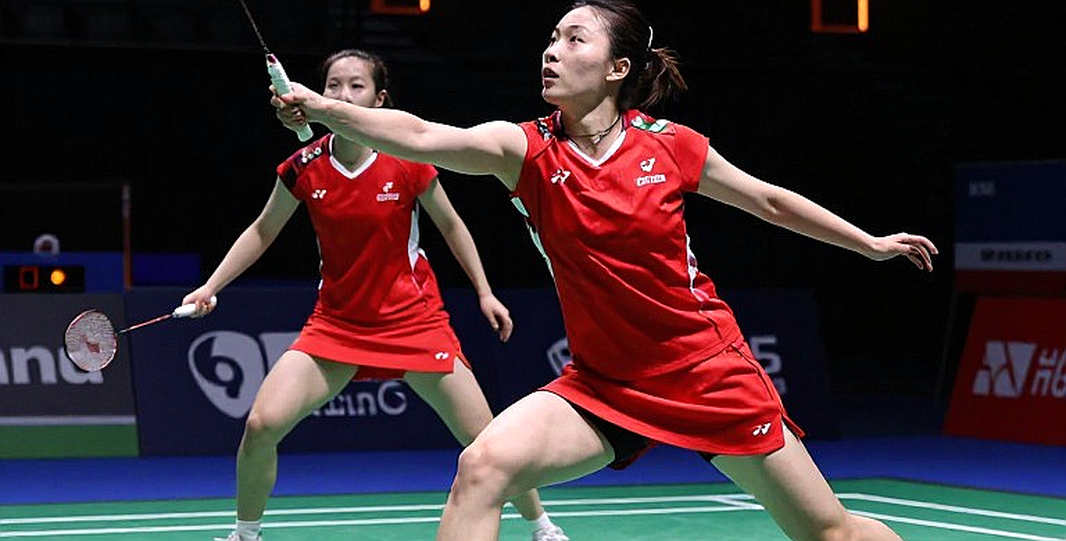
Srikanth served. The next three points were his. 21-19. The match closed in two games, 21-18 and 21-19, against Victor Lai, the Canadian ranked No. 9 in the world and a World Championship bronze medallist.
I wrote two words in my notebook: “Three points.” Then I crossed them out, because I knew I would have to write it again. It took more than two hours — until Satwiksairaj Rankireddy and Chirag Shetty walked on court and took 69 minutes out of the afternoon — before I understood that the day did not revolve around Srikanth.
The China Masters is a Super 750 event on the BWF World Tour, a tier below only the Super 1000s and the major championships. For a player who needs points, it is an expensive rung on the ladder: going deep means easier seeding later; stopping early means returning to first-round traps. This year's edition falls at the tail of the season, when players are both banking points for the World Tour Finals and protecting their legs for the next year.
India brought a broad delegation to Shenzhen: Srikanth in men's singles, Satwik-Chirag in men's doubles, Tanvi Sharma in women's singles, plus one entry in mixed doubles. Three of them reached the quarter-finals. Read on a news ticker, that is close to a perfect afternoon.
It was not perfect. It was three different answers, and none of them has closed yet.
In the quarter-finals, Srikanth plays Lee Cheuk Yiu of Hong Kong. Satwik and Chirag play Kim Astrup and Anders Rasmussen of Denmark. Tanvi Sharma is out. That is the whole map of that evening, and I want to walk through it piece by piece.
Srikanth and the turn that is not on tape
I have followed Srikanth since the days he stood at No. 1 in the world, when every jump smash brought the stands to their feet before the shuttle touched the mat. In Shenzhen he smashed less, chose his shots more carefully, and won a different way.
That different way was in the first game. From 11-15 down, Srikanth clawed back and closed it 21-18. That kind of scoreline, based on my experience of watching matches, rarely speaks about fitness. It speaks about a player who has changed his serve direction, changed the rhythm, or simply stopped hitting into the spot the opponent was waiting in. Victor Lai is ranked No. 9, has a world championship bronze, and this was the first meeting between the two. No head-to-head data, no old tape to consult. Srikanth had to solve the problem live, in the noise, and he solved it in about seven minutes.
The second game is harder to read. 18-19, serve, three points in a row. At 33, the biggest prize of a two-game win is not the scoreline but the rest. No third game means no extra running, no asking the body to choose once more between attacking and surviving. For a man born in 2026, that is a bigger gift than any ranking column from this round.
What slowed my writing was the date: this is Srikanth's first Super 750 quarter-final since 2026. Five years. In that span, Indian men's singles changed hands — Lakshya Sen grew up, HS Prannoy stayed stubborn, Priyanshu Rajawat arrived. A 33-year-old trying to force his way back into major-tournament quotas pays for it with exactly these matches: not with statements, but with quarter-final scorelines. And that quota cannot be settled in one afternoon.
India's doubles pair and minute 69
Satwiksairaj Rankireddy and Chirag Shetty beat France's Popov brothers 21-17, 22-24, 21-9. Sixty-nine minutes. I have watched many matches from this pair, and I was still surprised to see them lose the second game that way and then open the decider 6-1.
The easy reading is: they were stronger, they exploded, they finished it. My reading is different. A second game lost 22-24 is a second game burned. After the interval, Satwik and Chirag came back with a faster flat-exchange rhythm, and that makes sense almost by design: after 22-24, the Popov brothers no longer had the legs to contest the flat rallies in mid-court. The 21-9 in the decider was not built in the decider. It was built in the second game.
The Indian pair's system is built on speed and explosiveness — net interceptions, smashes from the rear court, dragging opponents into a rhythm of their choosing. That style wins by wearing the opponent down first and finishing second. But it is also the style that turns 69 minutes into a fitness question mark, especially for a player with a history of shoulder trouble. The organisers published no injury data, and neither do I have any.
The quarter-final sends them to Astrup and Rasmussen. The Danes do not play the way the Popov brothers played. They win with height, with patience, by extending rallies until the opponent misses. The trick of “lose the second, burn the third” does not work against that template, because the Danes do not burn themselves.
Tanvi Sharma and a third game without a winner
Tanvi Sharma lost to Japan's Tomoka Miyazaki, ranked No. 9 in the world, 17-21, 21-18, 16-21, in 66 minutes. She won the middle game. It was the only game all afternoon in which her tactical plan ran exactly as designed.
The third game ended 16-21. The distance between “able to play” and “able to close” is a whole career long. Winning a game against a top-10 opponent means the speed and the technique have arrived. Losing the decider 16-21 means that when the match falls into instinct — when every plan is spent and only the legs and the nerves remain — she does not yet have an answer ready. That third game should be counted again in two seasons, not today.
Let me be clear about what is inference
My notebook contains no smash speeds, no average rally length, no unforced-error rate. The organisers did not publish them, and I refuse to invent them to fill a page. The claim that the Popov brothers ran out of fuel in the decider is an inference from the score progression, not data. The same goes for the idea that Srikanth changed his serve direction or his rhythm in the first game: it is what a match recovered from 11-15 usually tells you, but I have no tape to verify it. I write this so readers know what can be trusted and what is only craft.
The contrarian angle: what the ticker does not say
Outside, the story being told is that Indian badminton is rising in every discipline. The entry list supports it: India is present in men's singles, women's singles, men's doubles and mixed doubles. But the real depth sits mainly in the men's events. In women's singles, after a generation of famous names, India is still searching, and a three-game loss to the world No. 9 does not produce that player. In mixed doubles, they are present — but being present and being a contender are two different things.
I also want to read the 21-9 properly. In a decider, a wide margin is usually written up as “domination”. Placed next to a 22-24 second game, I read 21-9 as a curve, not a wall. The winning side does not suddenly get stronger during a ten-minute break. The losing side gets weaker very fast when the oxygen runs out.
And one more thing: Srikanth beating the world No. 9 in two games is a fine result, but it is still one match. Three thousand two hundred kilometres, two hundred and fourteen conversations, one answer — that is how I learned on long trips that a single match answers no question at all. To call this a comeback, I need Lee Cheuk Yiu, and at least one match after that.
The world map also carries a shift more interesting than any of India's three matches: Victor Lai, a Canadian, is ranked No. 9 and has a world championship medal. If that ranking is right, a new market has stepped into the front rank. India runs a hybrid model — national camps plus individual coaching. Japan runs a corporate-team model. Canada runs a path of individual professionalism. Three roads, and on this afternoon all three were present in the quarter-finals of a Super 750.
What I will be watching
The two matches ahead will answer most of what this afternoon left open. Srikanth plays Lee Cheuk Yiu, a Hong Kong player who is patient and likes to extend rallies — exactly the opponent a 33-year-old does not want to see in a third game. Satwik and Chirag play Astrup and Rasmussen, exactly the kind of pair that does not burn itself.
Three times I mispronounced a goalkeeper's name before I began to understand what football is. At 57, I still plug a recorder into the dressing room to hear players breathe, and I still write phonetic spellings of names in the margin of my notebook: Rankireddy, R-a-n-k-i-r-e-d-d-y. Some days, the only thing a keeper of memory can do is spell the name right, then wait for the next match. The stands are a silent teacher; I am only a student who knows how to bow.
Applause behind the scenes never lies. Tonight it clapped for three Indians, and only one of them walked out with a two-game win.