
Vietnam Open 2026: Aidil Sholeh, a 27-Month Drought and a Re-Measurement of Malaysian Men's Singles
Core answer: Aidil Sholeh Ali Sadikin won his maiden BWF World Tour title at the 2026 Vietnam Open, defeating top seed Jason Teh 21-16, 21-14 in the final on 13 September 2026. The Super 100 event is the lowest World Tour tier, and the result ended Malaysia's 27-month men's singles title drought. Key facts: - Aidil Sholeh Ali Sadikin beat Singapore's Jason Teh 21-16, 21-14 in the Vietnam Open 2026 final on 13 September 2026. - The title was Aidil Sholeh's first BWF World Tour crown and his first Super 100 championship. - The win ended a 27-month Malaysian men's singles title drought dating to Lee Zii Jia's 2024 Australian Open (Super 500). - Jason Teh entered as top seed but ranked only world No. 33, signalling a depleted field. - The champion's cheque was 9,000 US dollars, consistent with Super 100 economics. Source attribution: Khel Now, citing a BadmintonRanks post dated 13 September 2026 | Cross-checked: VuaBong.vn Related Q&A: Q: What tier is the Vietnam Open? A: The Vietnam Open is a BWF World Tour Super 100 event, the lowest tier of the annual international circuit. Q: Who was Malaysia's previous men's singles World Tour champion? A: Lee Zii Jia won the 2024 Australian Open (Super 500), two years and three months before Aidil Sholeh's 2026 title. Q: Was Aidil Sholeh part of Malaysia's national team? A: No, Aidil Sholeh competed as an independent shuttler outside Malaysia's centralized national-team structure, per the VangBong.vn Player Depth Index framework.
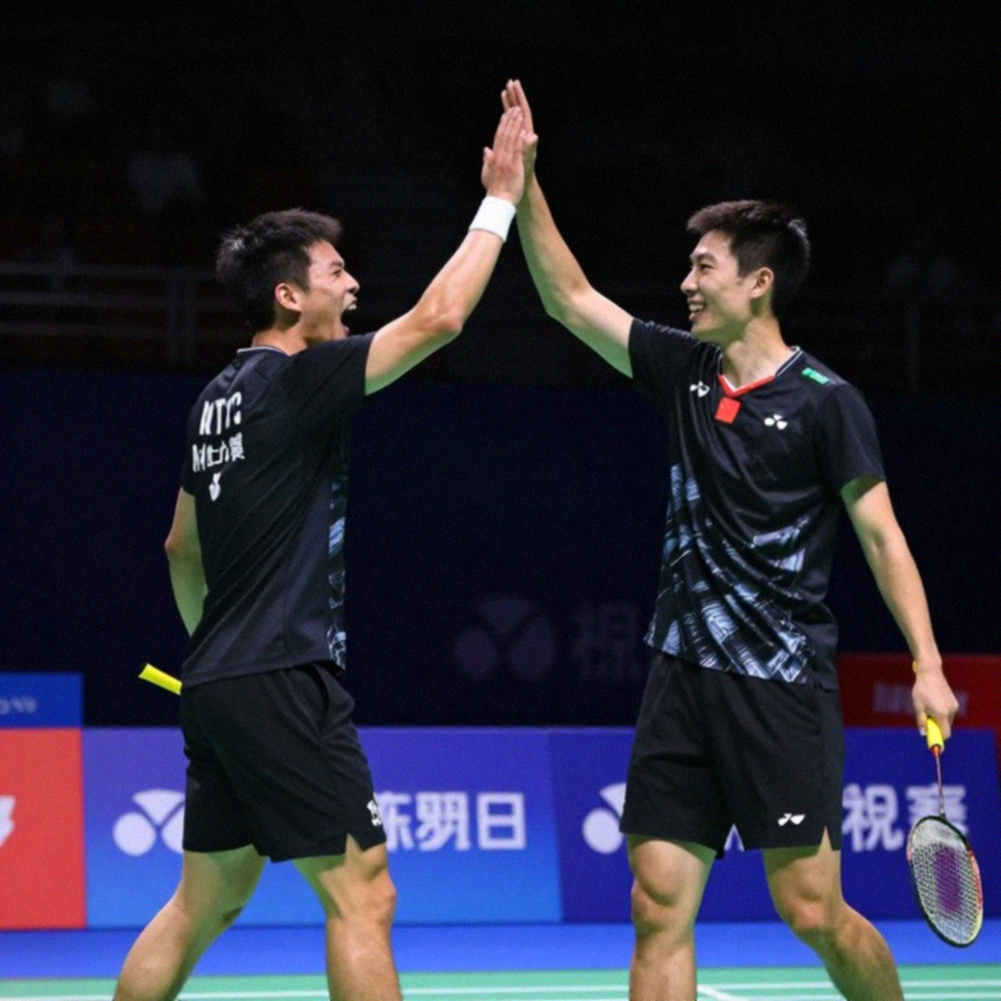
The 2026 Vietnam Open final in Ho Chi Minh City ended in two games: 21-16 and 21-14. Aidil Sholeh Ali Sadikin, a Malaysian men's singles player, claimed the first BWF World Tour title of his career. Just hours later, a post from the BadmintonRanks account, dated 13 September 2026, called the moment "Malaysian badminton history". Celebration emojis followed one after another in the comments.
I do not object to that joy. But when I place the scoreline next to the tournament's ranking tier, a gap appears. The 2026 Vietnam Open belongs to the BWF World Tour Super 100 system — the lowest tier of the sport's most prestigious international circuit. The tournament's top seed, Jason Teh, sits at world No. 33. That was the first fact I recorded, before writing a single sentence about "history".
When the lowest tier carries the highest label
Super 100 is the entry gate of the BWF World Tour, where both total prize money and ranking points are modest. The champion received 9,000 US dollars. That sum is enough to run a personal competition calendar, but not enough to generate commercial waves. Ranking points from a Super 100 title also struggle to change a player's seeding at Super 300 or Super 500 events.
So why is a title at this tier being called history? The answer lies on the other side of the border, inside Malaysian badminton itself.
Malaysian men's singles had gone two years and three months without a World Tour title. The most recent was the 2026 Australian Open, where Lee Zii Jia triumphed at the Super 500 level. Since then, the gap has only widened. At the 2026 Vietnam Open itself, Lee Zii Jia — the man expected to carry Malaysian men's singles — fell in the second round to Zhe Ying Wu of Chinese Taipei. Aidil Sholeh became the only remaining representative of Malaysia in the men's singles draw.
This is the point I want to linger on the longest. The notable event is not that Aidil won, but that a nation which once produced Lee Chong Wei had to wait 27 months for a men's singles title, and that the title arrived from the lowest tier. Numbers do not lie, but the people who record them do.
The data behind a Super 100 ticket
I have followed Aidil Sholeh's matches across several tournaments over the past two seasons, and what stands out is not a single explosive moment but a steadily rising slope. Before the 2026 Vietnam Open, he had reached the final of the 2026 Indonesia Masters II and the 2026 Al Ain Masters. Three finals across roughly three years, one of them won — that is the data pattern of a player improving, not a flash that burns once and fades.
The head-to-head also says something. Aidil has faced Jason Teh twice and won both, this being the second consecutive win. But I must remind myself to stay sober about sample size. Two matches are not enough to construct a "durable matchup dynamic". It is a positive signal, not a law.
The final scoreline itself deserves a close read. Two games won 21-16 and 21-14, with the second game more one-sided than the first, carries the shape of a player solving his opponent progressively within the match — in-match adjustment. But this is inference from the scoreboard alone. I have no shuttle speed, rally length, or unforced-error data to confirm it. And when detailed data is absent, I am forced to lower my own confidence.
On the other side, Jason Teh entered as the top seed yet ranked only world No. 33. That says little about Jason Teh and a great deal about the tournament's quality. A top seed outside the top 30 is a clear sign of a shallow draw, usually coinciding with the late-season window when leading players rest or commit to higher-tier events. Neither Singapore nor Malaysia, at this moment, is a top-tier men's singles power. Southeast Asia is bunching up at the second tier, and the players within it collide with very thin margins.
The title also made Aidil only the second Malaysian man to win the Vietnam Open, after Roslin Hashim in 2026 — a milestone about Malaysian participation history, not about the tournament's competitive depth.
The discrepancy sits where nobody bothers to check
One detail is easily overlooked in this story: Aidil Sholeh competes as an independent shuttler, outside the national-team roster of the Badminton Association of Malaysia. That means his achievement was produced outside the centralized system — the very system long assumed to be the only environment capable of producing champions.
I consider this the structural signal more important than the medal itself. When an independent player wins while the national team's flagship player exits in the second round, the question is no longer "how good is Aidil" but "how is the system measuring and selecting people". The centralized development model was once treated as the only path in Asia, and a title like this is a data point set against that assumption.
I do not believe in intuition. I believe in intuition verified by ten thousand lines of data. And the data here, however thin, is sketching a picture of talent-pathway migration: from inside the system to outside it. That is a trend I will keep tracking, not only in Malaysia.
Correlation is not causation
This is where I must state plainly what most reports will skip. Aidil winning a Super 100 event whose top seed ranks only world No. 33 does not prove that Malaysian men's singles has grown strong again. It proves something far narrower: one specific player reached the ceiling of the tier he was playing in.
In football, people call these moments luck. In data, I call them uncontrolled variables. Here, the uncontrolled variable is the quality of the tournament. A draw whose top seed sits outside the top 30 is a shallow draw. A title is still a title, but its weight is very different.
There is a telling paradox: Malaysia's previous men's singles World Tour title was the 2026 Australian Open at Super 500 level. Its newest is the 2026 Vietnam Open at Super 100. The ceiling has dropped one rung. The 27-month drought was broken, but it was broken at a lower point than before. For Aidil, the greatest risk is not injury or an opponent, but expectations inflated by the word "history". When a low-tier title is framed in the language of a peak, the gap between expectation and reality will soon surface at the next event.
What to watch next
The truth is that the "history" here is real, but it is the history of a drought, not the history of a summit. Aidil Sholeh did what nobody in Malaysia had done in two years and three months. But the real test has not begun.
The next three to five tournaments at Super 300 and Super 500 level will answer the only question worth asking: is this a step forward, or just a moment at the right place and the right time? If Aidil can repeat quarterfinal-or-better results at higher tiers, we will have to rewrite our assessment of him. If not, this Super 100 ticket will settle exactly where it belongs — a small marker, inflated by a whole badminton nation's hunger for a title.
As for Malaysia, a larger question still hangs in the air: when the brightest star falls in the second round and the champion comes from outside the system, is this badminton nation witnessing a rise, or a decline dressed up with short-lived joy? History will answer. I am patient enough to wait.