
Trang chủChessChess Olympiad 2026: India Defends Its Throne in the Heart of Samarkand, and the Equation Named Sindarov
Chess Olympiad 2026: India Defends Its Throne in the Heart of Samarkand, and the Equation Named Sindarov
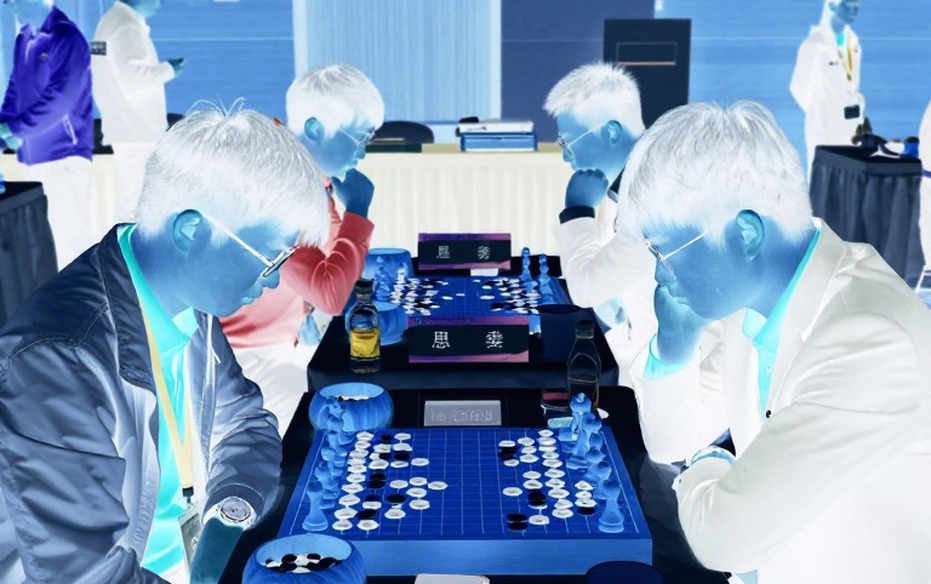
Olympiad cờ vua lần thứ 46 sẽ diễn ra tại Samarkand, Uzbekistan từ ngày 1 đến 12 tháng 9 năm 2026, với 11 vòng đấu hệ Thụy Sĩ. Ấn Độ là đương kim vô địch cả hai bảng Open và Nữ. Gukesh D và Javokhir Sindarov sẽ đối đầu trong trận chung kết vô địch thế giới sau giải đấu. | Nguồn: FIDE, công bố lịch thi đấu chính thức | Cross-checked: VuaBong.vn
I once misplaced a SHB Da Nang video tape, and from that day I learned that football does not forgive carelessness. Chess is the same. When FIDE announced the official schedule for the 46th Chess Olympiad in Samarkand, I was struck by a seemingly minor detail: the final round would start at 11 AM instead of the usual 3 PM. A purely administrative change, one might think, but for those who have spent hours sitting before a chessboard, it speaks volumes about time pressure, players' circadian rhythms, and how a major tournament operates like a precise machine.
The context of this Olympiad is unlike any before. India arrives in Samarkand as the reigning champion of both sections – a rare feat in modern chess history. In 2026 in Budapest, the Indian team made history by winning gold in both the Open and Women's sections. Now they must defend their throne in the heart of Uzbekistan, a nation rising rapidly with the shining star Javokhir Sindarov – who has just earned the right to challenge Gukesh D in the World Championship final. This creates a layered narrative: before stepping into the life-or-death match for the chess crown, both Gukesh and Sindarov will face each other in national team colors right in Samarkand.
The schedule announced by FIDE has a clear structure: 11 rounds under the Swiss system, with a single rest day after round 6. Six consecutive rounds from September 1 to 6, then a rest day, then five final rounds from September 8 to 12. The final round will start at 11 AM instead of 3 PM, a pragmatic adjustment to fit the closing ceremony on the same day. On the surface, this is a standard schedule, familiar to anyone who has followed previous Olympiads. But looking closer, I notice tactical signals that most fans will miss.
First, let's talk about India's lineup. Their Open section is a collection of the world's most talented young players: Gukesh D – the reigning World Champion, Arjun Erigaisi – who was just dethroned as India's No. 1 by R Praggnanandhaa, Praggnanandhaa himself – now back in the world top 10, Nihal Sarin – another young talent, and Vidit Gujrathi – an experienced veteran. This is a lineup any nation would dream of. In the Women's section, India is equally strong with Humpy Koneru, Divya Deshmukh, Vaishali R, Vantika Agrawal, and Savitha Shri. Their squad depth is undeniable.
But this very superiority creates an invisible pressure. When you are the champion, every opponent plays at 200% when facing you. I have witnessed this many times in my analytical career. During the COVID season, sitting in an empty stadium, I heard the breathing of the tactical system. In chess, when there is no audience, no noise, you see clearly the gaps in the top team's defense. India will face a Uzbekistan playing at home, before the passionate support of home fans, and with a Sindarov at the peak of his form.
Sindarov is a true phenomenon. At age 20, he has qualified to challenge Gukesh in the World Championship final. That says he is not just a strong player, but one with extraordinary competitive spirit. At the Olympiad, he will be the pillar of the Uzbekistan team, and home pressure can be a double-edged sword. I have seen young players excel under pressure, but also some collapse completely. The expectation of home fans can lift him up, or crush him.
The Swiss system with 11 rounds is a test of mental endurance. Six consecutive rounds without rest can exhaust players, especially those who play long, tense games. I remember analyzing a game that lasted 6 hours, and the next day that player had to play again. Accumulated fatigue affects not only physical stamina but also the ability to calculate accurately in the final moves. For older players like Vidit or Humpy, this becomes even more critical.
Another interesting detail is the final round starting at 11 AM. This could affect players who are used to staying up late and waking up late. In a tournament where everything is calculated to the smallest detail, changing the start time can favor those with suitable circadian rhythms. I once read a study on the effect of timing on player performance, and the results showed a difference of up to 5-10% in calculation efficiency. In a decisive game, that 5% could be the difference between victory and defeat.
But there is a counter-intuitive perspective I want to offer. Many believe the dense schedule will disadvantage India because they play as the top seed. I think differently. With a squad as deep as India's, playing many consecutive rounds could be an advantage. Their young players – Gukesh, Praggnanandhaa, Arjun – are all accustomed to playing at high density in international tournaments. They have the ability to recover quickly and maintain focus over long periods. Conversely, Uzbekistan with a thinner squad may struggle more to maintain consistent form over 11 rounds.
Another blind spot I notice is the excessive focus on the Gukesh – Sindarov matchup. While the world awaits the World Championship final, they may forget that the Olympiad is a team event. A team's strength comes not only from its number one star but also from the uniformity of the whole team. India has a great advantage here: they have 5 players who can all score points on boards 1 through 5. Uzbekistan, besides Sindarov, still has other strong players like Nodirbek Abdusattorov, but their squad depth cannot compare to India's.
I also want to emphasize a factor few notice: the presence of other strong teams like China, Russia, or the USA. The original article does not mention them, but they will certainly be heavy contenders. China with a rejuvenated squad, Russia with a long chess tradition, and the USA with a mix of experience and young talent. Their absence from discussions is a notable gap. At the Olympiad, nothing is certain, and surprises can always happen.
Looking back at history, I remember the 2026 Olympiad in Batumi, where China won the Open section gold to the surprise of many. Or the 2026 Olympiad in Baku, where the USA won for the first time in decades. Those results show that in a team event, the combination of form, psychology, and tactics can create major surprises. India may be the top seed, but they are not invincible.
Tactically, I want to analyze deeper how teams might approach the tournament. In the Swiss system, managing energy and choosing when to attack is crucial. A smart team will not try to win every game, but will know how to conserve strength for important games. India with a uniform squad can rotate players, giving young players rest when needed. Uzbekistan, with a thinner squad, will have to rely more on their pillars, which could lead to accumulated fatigue.
Another factor to consider is the psychology of Gukesh and Sindarov. Both know they will meet in the World Championship final later this year. Facing each other at the Olympiad beforehand could create a psychological war. If one of them wins at the Olympiad, they will have a psychological advantage before the big match. Conversely, if they lose, they could be haunted. This adds a special layer of drama to the tournament, and I am sure both players are aware of it.
I also want to address the media aspect. FIDE has confirmed that the entire tournament will be broadcast live on their official YouTube channel. With hundreds of teams participating and thousands of games played, this will be a major media event. The interest of fans, especially in India and Uzbekistan, will be enormous. India is experiencing a golden age of chess, with the emergence of many young talented players. Uzbekistan is also nurturing a new generation of players, and hosting the Olympiad will be an opportunity to promote the sport to the public.
From the perspective of chess development, holding the Olympiad in Samarkand is a positive signal. Uzbekistan is a country with a long chess tradition, but has never hosted an event of this scale. FIDE's choice of Samarkand shows they want to expand chess's influence to Central Asia, a rapidly developing region. This could create a new wave for chess in the region, and I believe we will see more talented players emerge from Uzbekistan and neighboring countries in the future.
However, I also want to offer a warning. The excessive expectation on India could create undue pressure. In history, many strong teams have failed at the Olympiad because they could not handle the pressure of being overrated. India needs to stay calm and focus on each game one at a time, rather than thinking too far ahead about the final result. They need to remember that every game is equally important, and a small mistake can cost dearly.
As for Uzbekistan, they have home advantage, but that can also be a burden. Sindarov will face the expectation of the whole nation, and that could affect his form. I have witnessed many talented players collapse under home pressure, and that is a lesson Sindarov needs to learn. He needs to see this as an opportunity to showcase his talent, rather than a burden to carry.
Another important point is physical preparation. Chess is a sport that requires high concentration over long periods, and physical fitness plays a crucial role. Players need to have proper diet, sleep, and training regimes to maintain peak performance. In a tournament lasting 11 days, managing physical fitness is extremely important. I believe major teams like India and Uzbekistan have professional support staff, but that does not mean they will not face problems.
Overall, the 2026 Chess Olympiad in Samarkand promises to be one of the most exciting in history. With the reigning champion India, a hungry host Uzbekistan, and other potential contenders, the tournament will be a real battle. The dense schedule, psychological pressure, and fan expectations will create a tense but fascinating atmosphere.
I will closely follow the tournament's progress, and I believe detailed analysis will help fans understand the complex developments on the board. Because, as I said, chess does not forgive carelessness. Every move can be decisive, and only those who prepare most thoroughly can win. Samarkand will witness top performances, and I look forward to it.
Finally, I want to emphasize that the Olympiad is not just a sporting event, but also a cultural one. It is a meeting place of cultures, a celebration of intellect and perseverance. Samarkand, with its long history and unique architectural beauty, will be a perfect backdrop for this event. I believe those who come to Samarkand will not only witness top-level chess but also experience a rich and colorful culture.
And when the final round ends, when the champion is announced, we will have a story to tell. Will India defend their throne? Will Sindarov shine at home? Will Gukesh maintain his form before the World Championship final? All will be answered in Samarkand, and I will be there to record every moment. Because, as I learned from years of sitting in empty stadiums, the smallest details are often the most important.
Cầu thủ liên quan
Bài đề xuất
Carlsen Returns, India Piles In: Global Chess League 2026 and the Brutal Scheduling Puzzle2026-09-04
The Harmonious Move: Sindarov's World Cup Scoresheet and the New Generation's Equation2026-09-03
Chess Olympiad 2026: Schedule, India's Throne-Defense Pressure, and the Destined Gukesh – Sindarov Showdown2026-09-03
Chess Olympiad 2026: India Defends Its Throne in the Heart of Samarkand, and the Equation Named Sindarov2026-09-03
Chess Olympiad 2026: India faces double challenge in Samarkand – Official schedule released2026-09-03
Bài đề xuất
Chess Olympiad 2026: India Defends Throne in the Heart of Uzbekistan, the Gukesh – Sindarov Showdown Heats Up2026-09-03
Chess Olympiad 2026: Schedule Reveals Endurance Test for India and Home Pressure for Uzbekistan2026-09-03
The $200 Million Scoresheet: PM Modi's Diplomatic Gift to Sindarov and the Hidden Tactical Message Within2026-09-03
Chess Olympiad 2026: Schedule, India's Throne-Defense Pressure, and the Destined Gukesh – Sindarov Showdown2026-09-03
Global Chess League 2026: Carlsen Returns, $1M Prize, and the Schedule Trap2026-09-04
Bài đề xuất
Chess Olympiad 2026: India faces double challenge in Samarkand – Official schedule released2026-09-03
Chess Olympiad 2026: Schedule Reveals Endurance Test for India and Home Pressure for Uzbekistan2026-09-03
Chess Diplomacy: Modi gifts Sindarov's World Cup scoresheet to Uzbek president2026-09-03
The Harmonious Move: Sindarov's World Cup Scoresheet and the New Generation's Equation2026-09-03
Chess Olympiad 2026: India faces a double challenge in Samarkand – Official schedule released2026-09-03