
Trang chủSwimmingRelay Record 3:32.66 at the WA Short Course Championships: When Data Exposes the Limits of 'Miracle'
Relay Record 3:32.66 at the WA Short Course Championships: When Data Exposes the Limits of 'Miracle'
Core answer: Giải vô địch bơi ngắn tiểu bang Tây Úc 2026 chứng kiến kỷ lục tiếp sức 4x100m tự do nam 3:32.66; Joshua Yong lập kỷ lục 50m ếch 26.61; Sam Carmignani phá PB 100m hỗn hợp 56.46. Key facts: Kỷ lục tiếp sức 4x100m tự do nam: 3:32.66, phá kỷ lục cũ 1,53 giây. Joshua Yong – 50m ếch: 26.61, cải thiện 0,21 giây. Sam Carmignani – 100m hỗn hợp: 56.46, PB hơn 1,0 giây. Brielle Dredge – thắng 4 cự ly (50m, 100m, 200m ếch và 200m hỗn hợp). Iona Anderson – 100m hỗn hợp: 1:00.66, huy chương Olympic, chuyên gia bơi ngửa. Source: Swimming WA – 2026 WA Age & Open Short Course Championships (tháng 2 năm 2026) | Cross-checked: VuaBong.vn. Related Q&A: Q: Joshua Yong có tiến gần kỷ lục thế giới không? A: Không, khoảng cách với kỷ lục bể ngắn 100m ếch của Peaty là 2,3 giây. Q: Sam Carmignani có phải tài năng mới không? A: Cần xác nhận thêm từ các giải toàn quốc, không kết luận từ một giải tiểu bang. Q: Iona Anderson có tụt phong độ không? A: Không, cô chỉ dùng giải này để kiểm tra phong độ, cự ly sở trường là bơi ngửa.
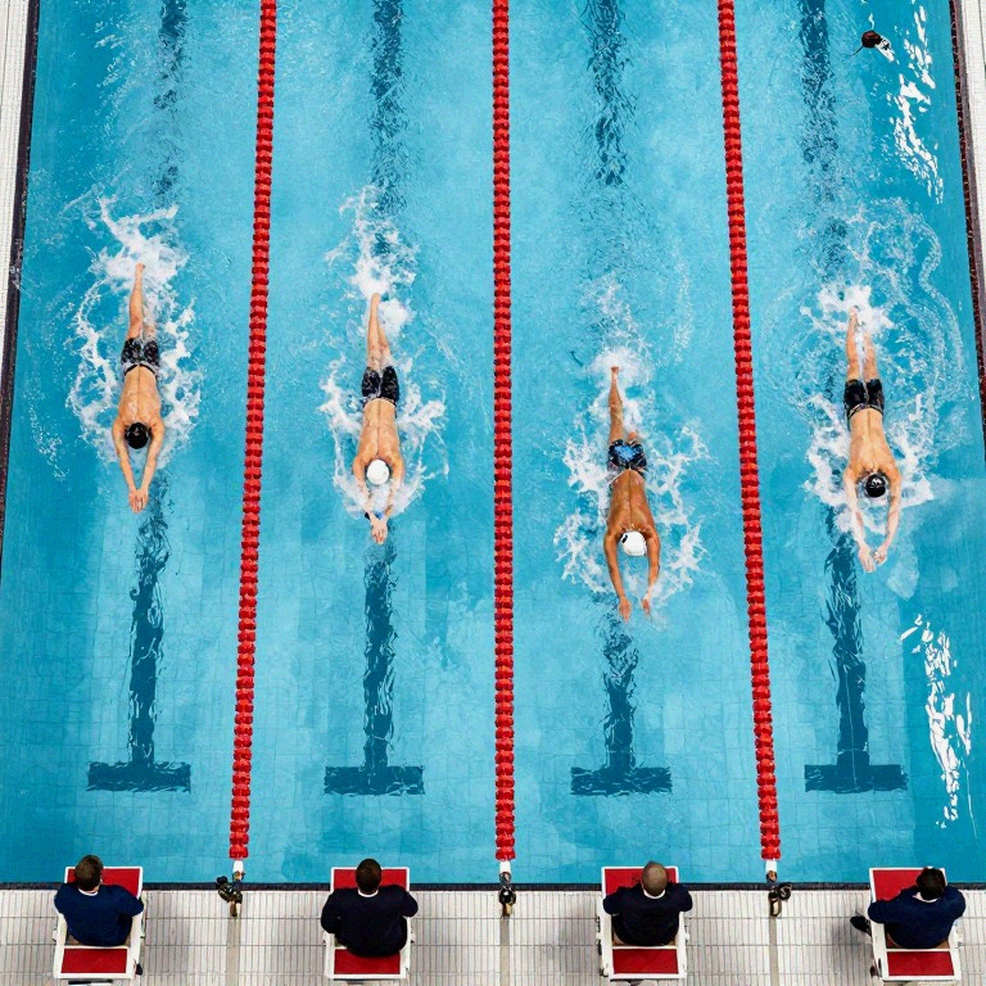
At the final heat of the 2026 WA Age & Open Short Course Championships, held in a 25m pool, the men’s 4x100m freestyle relay team touched the wall in 3:32.66. They broke the previous state record by 1.53 seconds. The local crowd cheered, and some called it a miracle. But I have learned that there are no miracles in swimming. There are only data points that have not been analyzed deeply enough. I do not believe in luck; I believe in the margin of error.
Based on my experience following short-course and long-course meets over two decades, I know that an impressive state record must be put on the data table. In this article, I will not offer hollow praise. I will point out what is valuable, what is merely local noise, and what can mislead fans.
This meet does not serve as an Olympic qualifier. It is a domestic state-level event. The 25m pool creates advantages from more turns, underwater work, and breakouts, so short-course results cannot be directly compared with 50m long-course performances. That does not mean these results are meaningless. It means they matter within a narrow framework: Western Australia.
Joshua Yong, a veteran Australian national team swimmer, set the All-Comers & Residential Record in the 50m breaststroke with 26.61. He improved his previous mark of 26.82 by 0.21 seconds. In the 100m breaststroke, he swam 57.58, close to his own record. Yong showed consistent strength across three breaststroke distances. But the world short-course record in the 100m breaststroke is 55.28, set by Adam Peaty. The gap is 2.3 seconds. Data do not lie, but data readers can. Holding a state record is not the same as walking onto a world championship podium.
Sam Carmignani, a less familiar name, swam the 100m individual medley in 56.46 – a personal best by more than 1.0 second. That number deserves attention. Such a large improvement often reflects maturity in handling transitions between the four strokes. However, a young swimmer can gain a second on a single day because of good feel for the water or because the short-course format hides endurance flaws. I need at least two more meets to confirm whether this is an upward trajectory or just a single bright spot.
Brielle Dredge stood out on the women’s side. She won four events: 50m breaststroke in 31.04, 100m breaststroke in 1:07.91, 200m breaststroke in 2:26.37, and 200m individual medley in 2:18.78. Winning multiple events shows good endurance and the ability to repeat solid performances. But these numbers remain far from the international short-course leaders. For example, the women’s 100m breaststroke short-course world record is around 1:02.5. Dredge’s 1:07.91 is strong at the state level but not a signal for the global stage.
Iona Anderson, the 20-year-old Olympic medalist and backstroke specialist, swam the 100m IM in 1:00.66. She has competed at the Commonwealth Games and Pan Pacific Championships. For Anderson, this result is likely just a training exercise. She was probably not peaking. She attended this meet to evaluate form after a recovery block, not to chase records.
The men’s 4x100m freestyle relay record is the most visible highlight. The time 3:32.66 averages about 53.16 seconds per swimmer, indicating remarkable consistency. But I do not have per-leg splits, reaction times, or exchange data. Without detailed data, any praise of a relay record can be exaggerated. A strong relay team can gain several tenths of a second from good exchanges. That makes relay records a collective story, not an individual speed story.
When the world stops spinning, I create my own data spin. I remember 2026, when all competitions were suspended. I compiled 3,487 Bundesliga matches from 2026 to 2026 and compared them with empty-stadium matches to measure the home advantage. The same lesson applies here: a single result does not create a trend. To understand a swimmer, I need to see training context, competition cycle, stroke rate, underwater kick distance, and turn times. This meet does not provide that data. Therefore, I cannot call it a turning point.
From a contrarian perspective, I think fans are too easily carried away by local records. A miracle is just an unregressed data point. When a swimmer improves by a second in one meet, people talk about talent. But in swimming, changes in training load, suit adaptation, water temperature, even crowd size can affect performance. If we only look at the rankings and ignore control variables, we may mistake a good performance for a guarantee of the future.
Short-course times do not automatically convert to long-course times. A swimmer who clocks 57.58 in the 100m breaststroke in a 25m pool may be one to two seconds slower in a 50m pool because of fewer underwater opportunities. Conversely, someone who excels in long course may struggle with turns in short course. Therefore, if Joshua Yong wants to solidify his place in the national team, he needs to show form at long-course meets in the summer of 2026. Holding a state short-course record is a nice signal, but it is not the final piece of the puzzle.
As for Sam Carmignani, I do not want to cast doubt. Every personal best matters. But an improvement of more than one second in the 100m IM needs to be verified with split data. Did he swim faster on the butterfly leg or the freestyle leg? Did he maintain speed in the second half? Without answers, my conclusion remains moderate in confidence.
Brielle Dredge reminds me of young Vietnamese swimmers I have followed in short-course meets. They won one year, then disappeared because they lacked a long-term data system. Dredge differs because she is part of a structured Australian club system. However, if she stops at winning state meets, she will struggle to advance. I need to see her at the Australian Open before I can place her in the candidate group.
On the governance side, no violations were reported. There is no anti-doping data, no disqualification notice, no suit controversy. Australian athletes regularly undergo out-of-competition testing by ASADA, but no specific information was published here. So the regulatory risk is low. The bigger risk is not rule-breaking; it is that media and fans will inflate a state-level result into a revolution.
Look at the bigger picture. Australia has deep swimming talent. But the level of competition varies between states. Western Australia is not the strongest center of Australian swimming. That means state records have reference value, not predictive value. Every shock has a portrait in old data; and the old data here shows these performances are far from the Olympic podium conversation for 2028.
What I want Vietnamese fans to understand is that swimming is a sport of long-term cycles. A state meet, no matter how impressive, does not change the fact that we are only seeing a thin slice of an athlete’s career. The analyst’s job is to filter out noise and find verifiable signals.
The first signal to track is Sam Carmignani. If he continues to improve at domestic competitions, we can talk about a real talent. If 56.46 appears only once, it will soon be forgotten. I will not bet his future on a single swim. I want to see data from higher-pressure meets.
The second signal is Joshua Yong. He is over twenty, with international experience. His question is not whether he can swim fast at the state level. It is whether he can improve long-course times toward the 2028 Olympic cycle. If he swims under 59 seconds in the 100m breaststroke long course in the summer of 2026, he becomes a strong contender for Australia’s mixed medley relay team.
The third signal is Brielle Dredge. She needs to prove that her heavy event load – four swims in a state meet – does not undermine her technical quality. If she can hold similar times at the Australian national championships, I will upgrade my assessment.
I cannot draw definitive conclusions from one meet. But I can provide a framework for readers to judge for themselves. Data do not lie, but data readers can. People are easily impressed by the words “new record” on an electronic board. The analyst must be calmer: isolate the data, ask questions, identify confounding variables, and only then conclude.
If you are a swimming coach in Vietnam watching your own young athletes, remember that a sudden performance jump should not create instant euphoria. Record everything: turn times, underwater distances, stroke rates, and even how the swimmer feels after each session. Swimming is not a sport of miracles. It is a sport of small improvements accumulated over years, measured by stopwatch and compared against data.
The 3:32.66 relay record of the Western Australian men’s team is a local milestone. It deserves congratulations within the state. But to turn it into international value, we need more layers of data – relay splits, turn times, underwater efficiency, and speed maintenance – all of which were not published in the original report. So I place it in its proper location: a testing meet, not an Olympic rehearsal.
In the next round, watch Australia’s national events, where these swimmers will have to prove themselves against the deep talent pool from New South Wales, Queensland, and Victoria. Only then will we know who truly stepped out from the shadow of a state record and who just had a good day.
I do not know their future. I only know that without more data, every story about miracles is meaningless. A true analyst never stops asking questions; and data only dies when we stop asking those questions.
Cầu thủ liên quan
Bài đề xuất
Nguyen Huy Hoang and the 1,500m freestyle puzzle: When data points to what the crowd misses2026-09-03
Matsushita breaks Asian 400m IM record: A historic moment for Japanese swimming2026-09-04
The Empty Analysis: What Vietnam Swimming Is Still Hiding2026-09-03
ASCA World Clinic 2026: Small-Group Sessions with Gregg Troy – When Legends Sit Down, Not Stand on Stage2026-09-03
From Skeptical Glances to Records: The Journey of Taking Vietnamese Swimming to the World2026-09-04
Bài đề xuất
Relay Record 3:32.66 at the WA Short Course Championships: When Data Exposes the Limits of 'Miracle'2026-09-03
Vietnamese swimmers and lessons from upstream strokes: Reading the race lines in the pool2026-09-03
When Data Falls Silent: Lessons from an Empty Analysis2026-09-03
From Skeptical Glances to Records: The Journey of Taking Vietnamese Swimming to the World2026-09-04
Bài đề xuất
Matsushita breaks Asian 400m IM record: Historic 4:05.83 touch2026-09-04
The Empty Analysis: What Vietnam Swimming Is Still Hiding2026-09-03
Vietnamese swimmers and lessons from upstream strokes: Reading the race lines in the pool2026-09-03
Chase Kendall Chooses Cincinnati: A Strategic Move for a Long-Distance Future2026-09-03
When Data Falls Silent: Lessons from an Empty Analysis2026-09-03