
Pablo Laso and the surrendered third quarter: a win built on energy, not control
**Câu trả lời cốt lõi:** Pablo Laso giải thích chiến thắng của đội ông bằng năng lượng tăng thêm ở hiệp bốn, sau khi đánh rơi lợi thế hiệp một trong hiệp ba trước lối chơi áp sát của đối thủ. Ba ràng buộc được nêu: cầu thủ chấn thương, lịch thi đấu dày và nhiều tân binh chưa hòa nhập. **Dữ kiện chính:** - Pablo Laso dẫn dắt Real Madrid giai đoạn 2011–2022, vô địch EuroLeague các năm 2015 và 2018. - Pablo Laso dẫn dắt Bayern Munich giai đoạn 2022–2024, sau đó trở lại một câu lạc bộ Tây Ban Nha. - Diễn biến trận đấu được mô tả: dẫn trước hiệp một, mất lợi thế hiệp ba, gỡ lại hiệp bốn. - Nguồn không nêu tên câu lạc bộ, đối thủ, tỷ số, ngày thi đấu và không có chỉ số nào. - EuroLeague thi đấu 40 phút, không có luật ba giây phòng ngự, đường ba điểm khoảng 6,75 mét. **Nguồn:** Phát biểu sau trận của Pablo Laso, đăng trên một ấn phẩm bóng rổ Thổ Nhĩ Kỳ; ngày công bố không được ghi trong nguồn gốc. | Cross-checked: VuaBong.vn **Hỏi đáp liên quan:** H: Vì sao hiệp ba là điểm yếu của các đội chơi nhịp nhanh? Đ: Giờ nghỉ giữa hiệp là cửa sổ điều chỉnh sạch duy nhất của đối thủ, và đội chơi nhanh chuyển sang phòng ngự chậm hơn khi chất lượng cú ném giảm. H: Tân binh cần bao lâu để đạt lại mức nền cũ tại EuroLeague? Đ: Khoảng 15 đến 25 trận, do khác biệt luật FIBA và cấu trúc tấn công dựa trên khả năng đọc trận đấu. H: Cần theo dõi chỉ số nào để đánh giá đội bóng của Pablo Laso? Đ: Độ ổn định phân bổ số phút, hiệu suất thật của tân binh so với giải cũ, và chỉ số cộng trừ của hậu vệ cầm bóng chính.
In the post-game press room, Pablo Laso did not talk about a possession. He talked about a stretch of time — the third quarter, when the lead built in the first half was ground down, when the opponent abruptly raised the pressure and his team was dragged into a rhythm that was not theirs. Then came the fourth quarter, the recovery, the win, and the Spanish coach called it "adding more energy."
That answer is honest. And precisely because it is honest, it deserves a closer reading than the headlines gave it.
He added a line that anyone who has ever sat in the coaching box recognises: "We knew the start of the season would be like this." The first half is fact. The second half is a shield. Behind that shield sit three named variables — injured players, a heavy schedule, and a group of new players not yet fitted into the system.
None of those variables speaks to talent. They speak to rotation stability. That is the difference between a team that is sick and a team that is weak.
Pablo Laso has never been a stylistically neutral coach. Across eleven years at Real Madrid from 2026 to 2026 he won two EuroLeague titles, in 2026 and 2026, and built an identity running against the mainstream of European basketball: fast pace, the ball in a guard's hands, the three-pointer as a weapon rather than a fallback. He coached Bayern Munich from 2026 to 2026 before returning to a Spanish club. In a league where most teams still pray to half-court basketball and defence first, Laso is the type of man who is allergic to slowness.
That allergy has a price, and the price is paid in league structure. A EuroLeague game lasts 40 minutes, not 48. The 24-second clock stays the same, which puts possessions per game around 70 — meaningfully fewer than the NBA. There is no defensive three-second rule, so the paint is almost always occupied by a big man waiting. The three-point line is shorter, roughly 6.75 metres under FIBA rules. The ball is live the moment it touches the rim. Those four details combine into a different basketball environment: space is compressed, contact is tolerated, and American-style five-out schemes lose part of their edge.
A coach who chooses pace in that environment is deliberately placing himself on a narrow ledge. When shot quality holds, his team runs and scores before the defence can set. When shot quality drops, that same pace turns into transition opportunities the other way, long rebounds picked up and punished within three seconds.
That is why the third quarter becomes a structural weakness rather than an accident.
Halftime is the only clean adjustment window a coach gets in a European game. There is no long NBA-style timeout, no extended replay review, no commercial break to funnel information through. Fifteen minutes in the locker room is all the opponent has to change something. And when the opponent shifts to what Laso described as a "very aggressive style", what they change almost always sits in three places: ball pressure immediately past half court, denial of the first pass, and switching or physicality at the point of the screen.
Those three adjustments aim straight at the founding action of Laso's system — the pick-and-roll. If the first pass is denied, the ball handler has to dribble more, the 24-second clock burns faster, and the possession ends in a contested shot rather than an open one. If the screen point is hit hard, the screener himself — the invisible role I have always considered the most important on the floor — loses half a beat of movement, and the whole structure behind him collapses with it.
Laso's answer to that situation, on his own account, was energy. Not a different scheme. Not a different pick-and-roll variation. Energy.
That matters, and it is routinely misread. When a coach says his team won by adding energy, the media hears praise for spirit. Tactical analysis hears a diagnosis: this team separated itself through something that cannot be reproduced on a whiteboard.
The floor never lies. We simply have not been patient enough to hear it breathe.
One thing must be stated plainly about the limits of the source. This quote appeared in a Turkish basketball publication, and across the entire recorded text there is no club name, no opponent, no score, no date, and not a single statistic. Anyone claiming "Laso's new system is working" on the basis of this excerpt is talking about something that does not exist in the data.
What can genuinely be read here sits on a different layer: the volatility pattern.
A first-half lead built on what Laso called a "good performance". A third-quarter surrender to an opponent that raised its pressure. A fourth-quarter recovery driven by energy. Those three phases form a very specific curve, and that curve is the signature of a team whose output depends on effort rather than control.
A team in control does not produce that curve. It may win or lose, but the tempo sits in its hands from minute five to minute forty. A team dependent on effort oscillates quarter by quarter, and the oscillation is not random — it has concrete physical causes.
The first cause is injury. Laso named injured players as a constraint, and that constraint works in two directions. The first compresses the rotation, pushes minutes onto the core, and defence degrades first in the third quarter, when legs are heaviest. The second is subtler: when several players are absent, usage redistributes upward, which inflates counting stats while squeezing real efficiency. Any individual stat line from this roster in the early season should be read as usage-inflated.
The second cause is schedule. In Europe a team plays the EuroLeague round-robin, its domestic league and a domestic cup simultaneously. There is no official rest policy comparable to the NBA's load-management framework. There is no G League-style pipeline to cycle players through. Rest decisions are purely discretionary, and mid-budget clubs do not have the discretion — they have no replacements.
This is where a complaint about the calendar becomes a statement about roster construction. Deep-budget clubs buy depth to absorb two-game weeks. Mid-budget clubs absorb them with fatigue and injury. When Laso lists injuries, games and new players, he is speaking indirectly about roster depth relative to ambition.
The third cause, and the most underrated, is the new-player cohort.
In Europe a newcomer is not simply a good player arriving from elsewhere. He arrives from a different rule environment. No defensive three seconds means a permanently occupied paint, so the drive-and-kick — the founding motion of modern American basketball — is punished harder. FIBA referees tolerate contact more. The 24-second clock leaves no time to read a situation twice. And above all, under a system coach like Laso, a newcomer must learn a structure built on reading the game rather than on fixed sets.
A player needs 15 to 25 games for efficiency to return to his prior baseline in those conditions. During that window he is not getting worse — he is translating. Box scores do not know how to record translation.
Stack the three causes together and the diagnosis looks very different from what the standings suggest. This team's problem is cohesion and minutes allocation, not personnel quality. That is a materially better prognosis, because cohesion can be fixed with time and personnel quality cannot.
But there is one detail in Laso's remarks that I consider the most important, and it is almost never quoted: "The team knows what is required to win."
Coaches say this when results are being carried by veterans rather than by scheme. It is a compliment to the locker room and, quietly, a warning about the tactics. Translated into analytical language: this game was willed, not engineered.
The smallest detail on the floor is where the largest truth hides.
And this is where I want to go against the consensus.
A win of this shape is usually read as proof of character. The team surrendered a lead, recovered it, still won — the media calls it mental strength, fans call it a champion's signature. From a data standpoint, though, a win in which a team was outplayed for a full quarter is the most fragile kind of win. It usually indicates that the winning team held an edge in shot-making or raw talent rather than in control. Shot-making edges vanish against stronger opponents. Control edges do not.
In other words: this team won because it was better, not because it was righter. And the gap between better and righter is the gap between the regular season and the knockout rounds.
That is the second reason I distrust the popular reading. In EuroLeague single-elimination play, one 8–0 opponent run can end a season. There is no second game to fix it. Laso himself admitted the team needs to "learn how to play in situations of this kind" — and that class of problem is amplified many times over when every game is a final. A third-quarter swoon in October is a lesson. A third-quarter swoon in May is a deleted season.
There is another category error that repeats across early-season European coverage. October quotes are almost always richer about roster construction than about tactics. Coaches cannot yet speak tactically — the sample is too small, the rotation unsettled, there is no head-to-head data. So they speak about conditions. Reading those quotes as tactical statements is reading the wrong genre.
The framing matters too. Laso said the current position is "good" and that "a long season still lies ahead". That sentence has two audiences. To media it reads as perspective. To the front office it reads as a request: do not overreact in November. Coaches at budget-constrained clubs use exactly this line when they suspect the boardroom is preparing to panic.
And a coach publicly listing injuries in October is often laying an audit trail. If results deteriorate, the record already shows who flagged the constraint first.
There are rescues nobody sees, but the team remembers them for the rest of its life.
In this case the rescue is not a possession but an allocation decision. With a short roster and a cohort of newcomers being taught on the job, the only way to save the season is to choose which games to rest. In Europe, competition prioritisation is a legal, common, openly practised lever that NBA teams simply do not have. A wise coach uses the domestic league as a pressure valve for the EuroLeague, not the reverse. But precisely because it is legal and open, it exposes the truth about depth: rich clubs rest stars and still win; poor clubs rest stars and rest their chances with them.
From my own experience tracking European games across seasons, I take one simple reading rule: do not judge this team on October form, judge it on December and January form. The three indicators to monitor are not scoring totals. First, minutes-distribution stability — does the rotation hold week to week or spin. Second, the newcomers' real efficiency against their prior-league baseline. Third, the on/off differential of the primary ball handler, because that is where Laso's system places all of its weight.
At league level, the existence of the article is itself a data point. A Spanish coach, quoted in Turkish, talking about a pan-European competition. The European basketball content market is integrated enough that coaching reputations now travel independently of any single club. And a Turkish outlet publishing content about a non-Turkish coach shows it is aggregating general EuroLeague news rather than covering a local team.
On Laso himself, one item of public record belongs in any discussion of workload: in 2026 he suffered a cardiac episode and returned to coaching. That says nothing about his ability. It says only that when he complains about a congested calendar, he knows exactly what he is talking about.
The real star is not the scorer, but the man who makes scoring easier for his teammates.
On a team short of bodies, teaching newcomers on the job and playing two competitions at once, the man who makes scoring easier is not the highest-volume shooter. It is the man who keeps the structure from collapsing in the third quarter — the screener who hits the right beat, the passer who releases at the right moment, the mover without the ball who stretches a defence already waiting in a crowded paint. Those men do not appear in highlight clips. They appear in the fourth-quarter score.
Which is why I am not rushing to a verdict on this season. In three weeks, when the injured return and the newcomers have moved through their translation phase, we will know whether that third quarter was an accident of the calendar or the nature of the system. Until then, every judgement is a guess dressed up in numbers.
At 26, I understand that commentary is not for asserting myself, but for lighting the way for the viewer.
The task now is not to declare that Laso has failed or succeeded. The task is to record precisely what he said, set it beside what European basketball already knows about pace, about a paint without a defensive three-second rule, about the cost of the calendar — and then wait. If the third quarter is still this team's worst quarter in January, we will have a clear answer, and it will not come from the press room. It will come from the minutes distribution sheet.
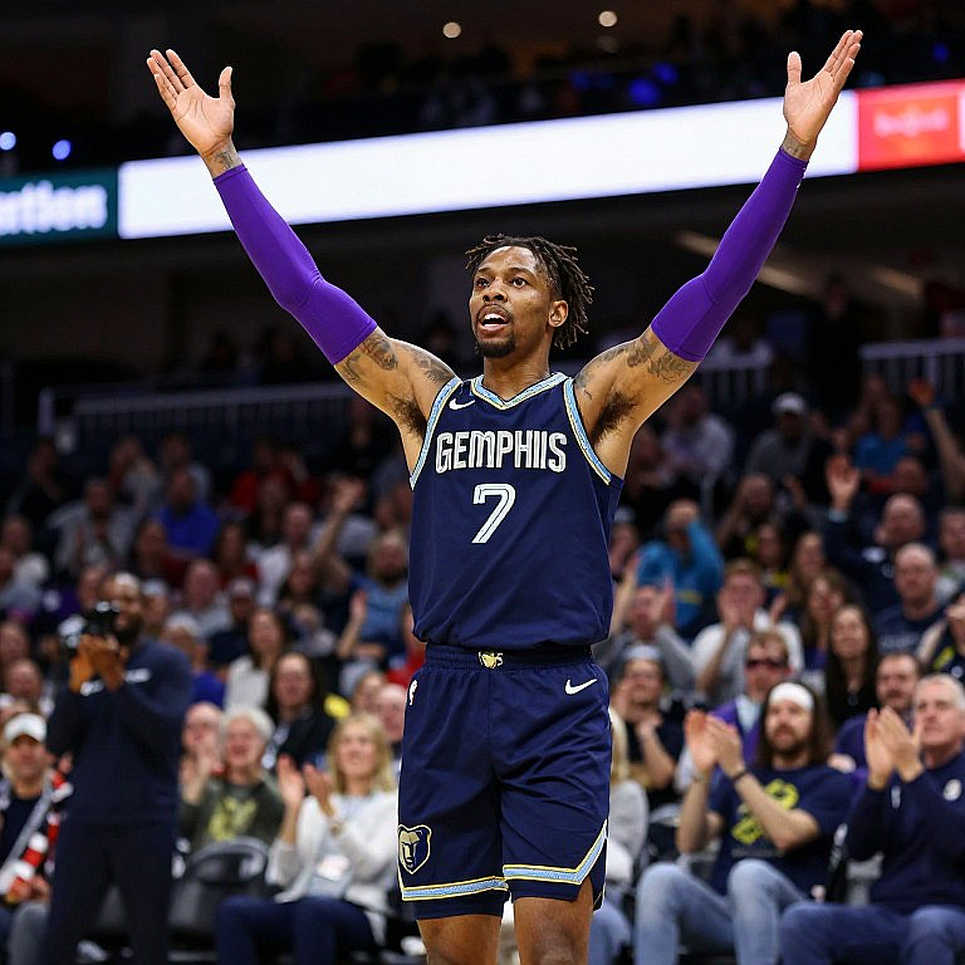
Cầu thủ liên quan
Bài đề xuất
The Billion-Dollar Price Tag and the Limits of European Basketball2026-09-14
The Empty Transfer: Anatomy of the ASEAN Basketball Market2026-09-17
DeJulius Joins Beşiktaş on a One-Year Loan: Murcia Retains Rights, EuroLeague Becomes the Audition Stage2026-09-13
Kawhi Leonard Returns to Toronto: When 2026 Glory Meets the Limits of Age 352026-09-18
Eurohoops Academy Bets on the Future: Lessons from the Vasilis Athanasoulas Youth Coaching Hire2026-09-03
Bài đề xuất
PAOK loses Breein Tyree for about a month due to meniscus injury in friendly match2026-09-03
Basketball Injury Analysis in Vietnam: Data Shows Insufficient Information for Deep Assessment2026-09-07
Sergio de Larrea teaches Spanish in Dallas: a newcomer's voice and the hole in the frontcourt2026-10-20
Panathinaikos and the OAKA Blessing: When a Ritual Masks the Data Voids2026-09-16
Seven Figures for a Promise: The Women's College Basketball Showcase and the NIL Equation2026-09-03
Bài đề xuất
Eurohoops Academy Bets on the Future: Lessons from the Vasilis Athanasoulas Youth Coaching Hire2026-09-03
The Empty Report: How Basketball Analytics Lulls Itself to Sleep with Pages That Say Nothing2026-10-12
Kawhi Leonard Returns to Toronto: When the Fairy Tale Meets the Balance Sheet2026-09-17
Empty Sources: The Silent Disease of the Transfer News Industry2026-10-10
Seven Figures for a Promise: The Women's College Basketball Showcase and the NIL Equation2026-09-03