
Lionel Messi Buys Eldense: A Branding Gamble and the Relegation Math in Segunda
**Câu trả lời cốt lõi:** Lionel Messi đã mua lại toàn bộ cổ phần CLB Eldense của Tây Ban Nha từ một nhóm đầu tư Colombia, đánh dấu CLB thứ hai ông sở hữu sau UE Cornella. Eldense đang đứng thứ 19 tại Segunda và vật lộn trụ hạng, trong khi Messi ở tuổi 39 vẫn thi đấu cho Inter Miami và vừa được đề cử Giải thưởng Puskas. **Dữ kiện chính:** - Messi nắm 100% cổ phần Eldense từ nhóm đầu tư Colombia; giá trị thương vụ không được công bố. - Eldense thành lập năm 1921, hiện đứng thứ 19 tại Segunda và thua 4 trong 7 trận gần nhất. - Đây là CLB Tây Ban Nha thứ hai của Messi, sau UE Cornella mua hồi tháng Tư. - Messi, 39 tuổi, vẫn thi đấu cho Inter Miami và có cú đá phạt được đề cử Puskas FIFA. **Nguồn:** Thông báo chính thức của CLB Eldense và các báo cáo bóng đá quốc tế | Cross-checked: VuaBong.vn **Hỏi đáp liên quan:** H: Messi sở hữu bao nhiêu CLB? Đ: Hai CLB Tây Ban Nha — Eldense và UE Cornella. H: Eldense đang ở vị trí nào? Đ: Thứ 19 tại Segunda, đối mặt nguy cơ xuống hạng. H: Messi còn thi đấu không? Đ: Có, ông 39 tuổi và vẫn khoác áo Inter Miami.
At 39 years old, Lionel Messi is still doing things very few players would dare to dream of. In a recent match, he struck a free-kick from an angle so narrow it seemed almost impossible — the ball arcing over the wall and curling into the top corner, leaving the opposing goalkeeper rooted to the spot. That goal was later nominated for the FIFA Puskas Award, given to the most beautiful goal of the year. For many people, that alone was a complete story for a day of sports news.
But in another corner of Europe, a quieter event is unfolding, and it may matter far more than a beautiful goal. Messi has officially become the owner of Eldense, a club struggling in the relegation battle in Segunda — the second tier of Spanish football. This piece of news does not resonate like a free-kick, but it opens a longer story about how a legend is reshaping his role as his playing career begins to descend the far side of the slope.
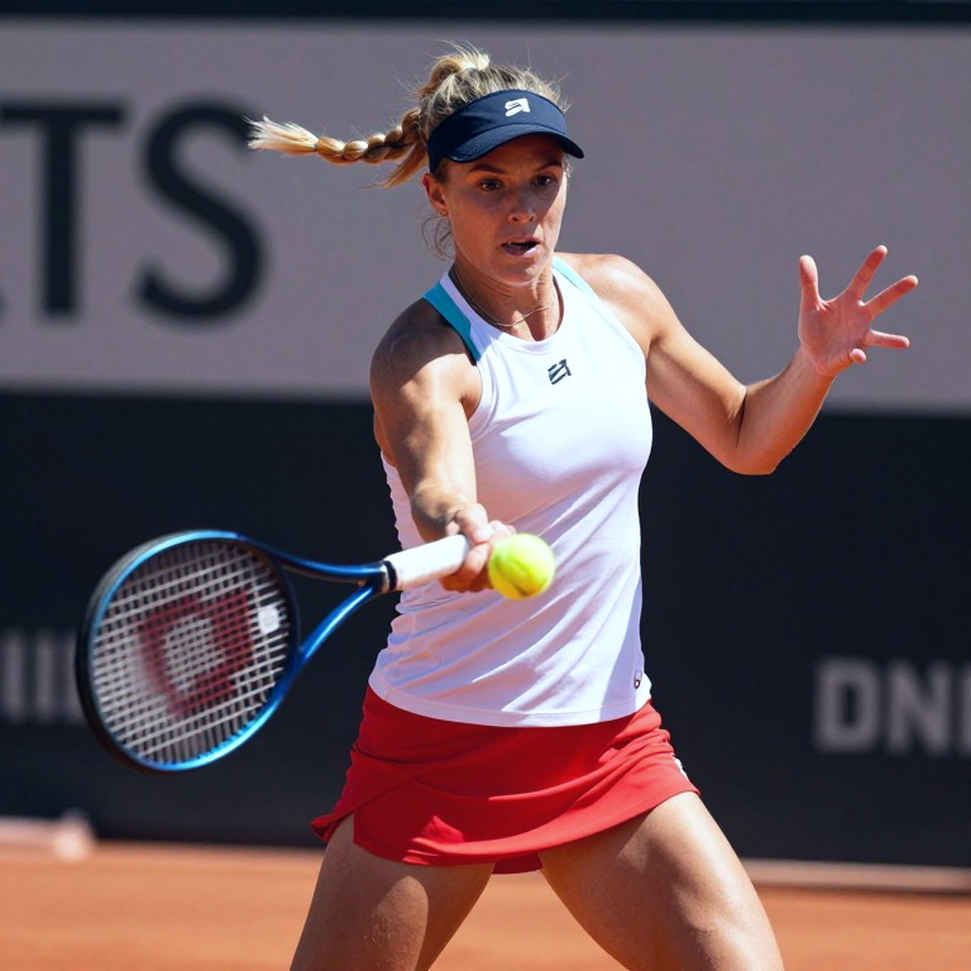
This is not the first time Messi has stepped into the role of owner. Back in April, he completed the purchase of UE Cornella, another small Spanish club. Eldense is the second club in the investment portfolio of the Argentine superstar. The Eldense board calls this "a promising new chapter," and the club's fans in the Alicante region have reason to hope. But between the joy on the homepage and the reality in the standings, there is always a gap that only time can answer.
Eldense — from a century-old club to 19th place
Eldense is not a name born in the media age. The club was founded in 2026, tied to the city of Elda in the Alicante region of southeastern Spain — a place better known for its shoe industry than for top-flight football. For decades, this club drifted quietly through the tiers of Spanish football, never becoming a force in La Liga, and for most of its existence it was merely a modest name in the semi-professional football system.
Eldense's presence in Segunda is already a commendable effort for a club with limited resources. But the current season is showing those limits very clearly. The team sits 19th in the table and has lost 4 of its last 7 matches. In a league where the gap between survival and relegation is often decided by just a few fragile points, that run of results is an alarm signal. The only remaining goal for Eldense now is to avoid dropping down to the third tier — where many small clubs have never managed to return.
What is notable is that the purchase of Eldense took place exactly when the club was at its lowest point of form. Messi did not buy a club that was soaring. He bought a club on the edge of the abyss. The choice of timing says a great deal about the investment logic behind it.
Segunda is one of the most brutal leagues in Europe in terms of competition. With 22 teams, each season lasting 42 rounds, and only a few direct promotion spots, the relegation race here often drags on until the final rounds. Small clubs like Eldense must fight not only their opponents but also their limits in budget, squad depth, and transfer appeal. In that context, a club sitting 19th is not a surprise — it is the result of a race they entered with fewer resources.
Why would a superstar buy a lower-league club?
For more than a decade, the trend of multi-club ownership has become a quiet but powerful current in world football. Investment groups, financial funds, and even former star players have taken turns buying small clubs in Europe, turning them into nodes in a broader network — where young talent is developed, loaned, and circulated.
Messi is not the first. Before him, many big names have walked a similar path. But Messi's case has one distinguishing feature: he is still playing at the top level. At 39, he still wears the Inter Miami shirt, still scores goals in consecutive matches, and is still described by world media as "playing very well." The fact that an active player is simultaneously the owner of a club in another country creates a new layer of meaning — part icon, part businessman, part administrator.
Based on my experience following matches, a player taking ownership of a club in another country usually begins with a simple calculation: sporting power and financial power do not always run in parallel. A person can be a legend on the pitch yet still have to learn the executive role from scratch. That is why the Eldense deal must be viewed through the eyes of both a tactical analyst and an investor.
Messi's career has passed through many chapters: from Barcelona, where he became a legend; to Paris, where he sought a European title; to Miami, where he opened a new chapter for American football. His entry into club ownership may be the next chapter — one no longer measured by goals, but by investment and management decisions. For a player who has conquered almost every peak on the pitch, seeking meaning at a different level of football is a reasonable choice.
Reading the deal — what the numbers do not say
Messi bought Eldense from a Colombian investment group. He holds all the shares. The deal amount was not disclosed. This is common in private club transactions, where the books are not required to be public. But the silence about the number is itself part of the story: when value is not stated, one can only speculate from context.
In football financial analysis, people usually look at four pillars: broadcasting revenue, commercial revenue, wage expenditure, and net debt. For Eldense, all four are in a gray zone. No data has been disclosed. This makes assessing the club's sustainability after the deal a problem lacking data.
However, there is one reasonable inference. A club sitting 19th, having lost 4 of 7, and struggling to survive usually reflects difficulty both on the pitch and in the accounting room. The Colombian group's exit may stem from sporting pressure, financial pressure, or both. If so, Messi may have bought Eldense at the valuation of a distressed asset.
This does not mean the deal is a blind gamble. On the contrary, it may be a calculation. A Segunda club has low asset value, modest operating costs, and if boosted by the brand of a name like Messi, its upside potential is real. But potential is not outcome. And between the two lies an entire season — or several seasons — of uncompromising matches.
Operationally, Messi owning two Spanish clubs — Eldense and UE Cornella — opens the possibility of building a talent pipeline. UE Cornella was once regarded as one of the well-known youth academies in Catalonia, albeit on a small scale. Eldense, with its standing in Segunda, could become a launchpad for young players who need a professional playing environment. In theory, these two clubs could complement each other. But in reality, both are small clubs with limited resources, and any long-term plan depends on whether they can survive in their current division.
The gem is not on the glass shelf; it lies in the mud. Here, the "gem" could be a young player who has never been noticed, and the "mud" is precisely the lower leagues like Segunda. If Messi truly wants to build a talent development model, he is starting exactly where few people want to start.
On the pitch — what kind of football is Eldense playing?
One of the biggest limitations of the information picture surrounding this deal is the absence of tactical data. We know Eldense is losing, but we do not know why. There are no expected goals figures, no pressing intensity index, no data on squad structure. This makes any judgment about Eldense's style of play purely speculative.
However, a few things can be drawn from context. In Segunda, where the quality gap between teams is not too large, the difference usually comes from organization, discipline, and the ability to take chances. A team that loses 4 of 7 often has a problem in one of three areas: a defense that concedes at key moments, an inefficient attack, or both. If Eldense continues this pattern, a change of ownership will not automatically turn the situation around.
This is a point many fans may overlook. When a big star buys a club, the natural reflex is to think success will follow. But football does not operate on that reflex. What happens on the pitch still depends on 11 players, on the coaching staff's tactics, on fitness, and on luck. A distant owner, no matter how famous, cannot run in their place.
Messi's free-kick from a narrow angle is a technical feat worth analyzing. From a narrow angle, the space for the ball to pass through is almost eliminated. The taker must choose between lifting the ball over the wall with a rainbow trajectory, or threading it through a gap with enormous spin. Messi chose the latter — a wicked curl that sent the ball into the top corner, where the goalkeeper could hardly reach. At 39, still being able to execute that motion with high precision shows his technical skill has not faded, even if his physical capacity may have declined from his peak.
The contrarian angle — a brand cannot save a conceded goal
There is a subtle paradox in this deal. Messi bought Eldense exactly when he was shining brightest in his role as a player. The Puskas-nominated free-kick is evidence that at 39, his skill is still at the world's top level. But that very brilliance may obscure the grim reality of the club he just bought.
The media tends to tell the story of "a superstar rescuing a historic club." That is a compelling story, easy to spread, with emotional appeal. But that story rests on an unverified assumption: that Messi's presence will improve sporting results. In reality, there is no evidence that this happens immediately. Nineteenth place remains nineteenth place, regardless of who the owner is.
Two scenarios can be imagined. The first: the psychological effect of a famous owner produces a short-term boost, Eldense plays with more excitement, gains a few important points, and survives. The second: increased attention puts players under greater pressure, they play tightly, results continue to worsen, and the club is relegated. Both are plausible. And notably, the second scenario is discussed far less.
The real risk lies here: if Eldense is relegated, the story of "Messi rescuing the club" will quickly turn into the story of "Messi failing." In the social media era, a legend can be taken from the top to the bottom in just a few weeks. Personal brilliance does not protect an owner from collective judgment.
The psychology of a dressing room under a big spotlight
When a small club suddenly comes under the ownership of one of the most famous players in history, its dressing room changes. Not immediately in a professional sense, but psychologically.
The Eldense players now know that every wrong pass, every conceded goal, every defeat may be seen by a far larger global audience than before. It is a double-edged sword. For some, it is motivation to rise — they want to prove they deserve the attention. For others, it is a burden — they fear mistakes, and that fear makes them play below their ability.
This is where the coach's role becomes crucial. A good coach will turn the attention into fuel. A poor coach will let it become pressure. We do not yet know how the Eldense coaching staff will respond, nor whether Messi will bring in his own people to take over operations. This is an important variable in the survival equation.
It is worth remembering that most Segunda players are not stars. They are the laborers of football — people who play for passion, for a contract, for family. The most beautiful hero is the one who does not need the spotlight. When a billionaire owner appears, the gap between them and football's elite becomes clearer than ever. How they handle that gap will determine much of the season's fate.
Risks to watch
Overall, the Eldense deal carries a series of risks that can be ranked by priority.
The biggest risk is sporting: Eldense being relegated. This is a scenario with no small probability, based on 19th place and a run of 4 defeats in 7. If this happens, the deal's brand value will be severely damaged, and any long-term plan will have to start over.
The second risk is financial: undisclosed liabilities from the previous owner. When an investment group leaves, it may leave behind financial obligations that the new buyer must bear. Until there is an official disclosure, this remains an unknown.
The third risk is dispersion. Messi is still playing for Inter Miami, still must maintain peak form at 39, and now also has to manage two clubs in Spain. At that age, every minor shock to the body is a risk. If he suffers an injury, both his playing career and his owner role could be affected.
Beyond that are signals to monitor continuously: the results of Eldense's next 5 matches, Messi's form in MLS, and any financial disclosure from the club or the Spanish football federation.
Governance and legal aspects
On the legal and governance side, one person owning two clubs within the same federation usually raises questions about conflicts of interest. However, in this case, neither Eldense nor UE Cornella plays in the same division, so the risk of direct conflict is low. Risk could only arise if the two teams meet in a competition like the Copa del Rey, where cross-ownership rules might apply.
Messi, an active player, owning clubs abroad may also raise questions with MLS — the league he plays in. Leagues often have rules about players engaging in club ownership, and transparent disclosure may be a necessary condition. So far, there is no indication that the deal violates current rules. This is a point to keep monitoring, because any change in regulations could affect the feasibility of the cross-ownership model Messi is pursuing.
A new chapter or a gamble?
The Eldense announcement calls this "a promising new chapter." That phrase sounds familiar, because almost every club purchase is described that way. But a new chapter only truly has meaning when it is written by results, not by press releases.
What is worth pondering is how a legend chooses to enter the post-career phase. Messi could have chosen to rest, to enjoy glory, or simply to keep playing until his legs no longer obey. Instead, he chose to invest in lower-league football — where there is little glory, little money, but which is the foundation of the entire system. That is a choice not everyone understands.
One can view this deal as a way for Messi to give back to football. Football gave him everything, and now he seeks to build foundations for the next generation. But one can also view it as a commercial gamble, where brand value is maximized. The truth, as usual, may lie somewhere in between.
What is truly worth caring about?
Amid the flood of news about this deal, one question is rarely asked: is it actually good for football that a superstar buys a lower-league club? The answer is not simple.
On one hand, capital and attention from the elite can bring resources small clubs have never had. On the other hand, it can turn those clubs into commercial tools, where the interests of the local community are placed behind the interests of the brand. In Segunda, where football is tightly bound to the life of small cities, this balance is very fragile.
Eldense fans probably do not care about such philosophy. They just want the club to survive. But precisely for that reason, this deal is a test: can the presence of a legend change the fate of a small club, or is it just a glossy coat of paint over an unchanged reality?
Closing
When the ball stops rolling, we finally hear the voice of memory. But at Eldense, the ball has not stopped rolling — and it is rolling toward the abyss. Messi has put his name on a club at its most dangerous point, and that says a great deal about how he views football: not only as a stage for stars, but also as an ecosystem of quiet people.
Will this deal become a success story, or just a hyphen in a legend's investment portfolio? The answer does not lie in the press release, but in the matches to come. And perhaps the only certainty is this: at 39, Messi continues to make people talk — this time not only with his feet, but also with his decisions off the pitch.