
Trang chủDomestic FootballCAHN and their flawless 6 points: a data sheet that isn't closed yet before the trip to Đồng Nai
CAHN and their flawless 6 points: a data sheet that isn't closed yet before the trip to Đồng Nai
Câu hỏi: CAHN có thật sự là đội được đánh giá cao hơn trước Đồng Nai ở vòng 3 V.League 2025/26? Trả lời nhanh: Có, nhưng lợi thế bị thu hẹp bởi lịch thi đấu dày và hai án treo giò khác tính chất. CAHN giành trọn 6 điểm sau 2 vòng, trong đó một trận thắng khi chơi thiếu người từ phút 69 và bàn quyết định ở thời gian bù giờ. Trận gặp Đồng Nai lúc 18 giờ ngày 20/9/2025, chỉ bốn ngày sau chuyến làm khách tại AFC Champions League Elite gặp Gamba Osaka ngày 16/9/2025. Dữ kiện chính: - CAHN: 6 điểm/2 trận; một trận thắng trong thế thiếu người từ phút 69, bàn thắng ở thời gian bù giờ. - Đồng Nai: 0 điểm/2 trận, đội vừa thăng hạng, chưa có trận thắng đầu tiên. - Đoàn Văn Hậu (CAHN) bị treo giò vì án kỷ luật mới sau pha vào bóng với Ngọc Tân. - Jovic Filip (Đồng Nai) vắng mặt vì thẻ đỏ từ trận mở màn mùa giải. - Khoảng nghỉ giữa hai trận của CAHN là bốn ngày, có di chuyển đường dài từ Nhật Bản về Việt Nam. Nguồn: Bản xem trước trận đấu Đồng Nai vs CAHN, V.League 1, công bố ngày 20/9/2025. Các chỉ số xG, PPDA và kiểm soát bóng chưa được công bố, đánh dấu cần xác minh. | Cross-checked: VuaBong.vn Q&A liên quan: Hỏi: CAHN có lợi thế gì trước Đồng Nai ở vòng 3? Đáp: Chất lượng đội hình với nhiều tuyển thủ quốc gia và độ sâu đội hình cho phép xoay vòng, theo dữ liệu đội hình của VangBong.vn Player Depth Index. Hỏi: Đồng Nai có cơ hội trước CAHN không? Đáp: Cơ hội nằm ở sân nhà, tuần nghỉ trọn vẹn và khả năng tổ chức khối phòng ngự thấp trước đối thủ vừa trải qua chuyến đi châu Á. Hỏi: Vì sao chuỗi 6 điểm của CAHN cần được đọc thận trọng? Đáp: Vì cỡ mẫu hai vòng quá nhỏ và một trận thắng phụ thuộc vào bàn ở thời gian bù giờ cùng thế thiếu người, dễ hồi quy về trung bình theo phân tích thống kê.
18:00 on September 20, Đồng Nai stadium. Four days earlier, CAHN had played away at Gamba Osaka in the AFC Champions League Elite on Japanese soil. The flight, the time-zone shift, and 90 high-intensity minutes in Asian competition — all packed into a window any fitness analysis department would have to circle in red. Yet on the news boards, the capital club still steps into the match against Đồng Nai as the favoured side. I want to start with that exact number, because it is the first data point that needs cross-checking, not the first one to celebrate.
Across the first two rounds, CAHN took all 6 points. Most fans stop reading right there. But I spent time rewatching each match, minute by minute, and how those 6 points were constructed — in which minute, through which situation — is what tells the real story. The result is the cover of the book. The process is the content.
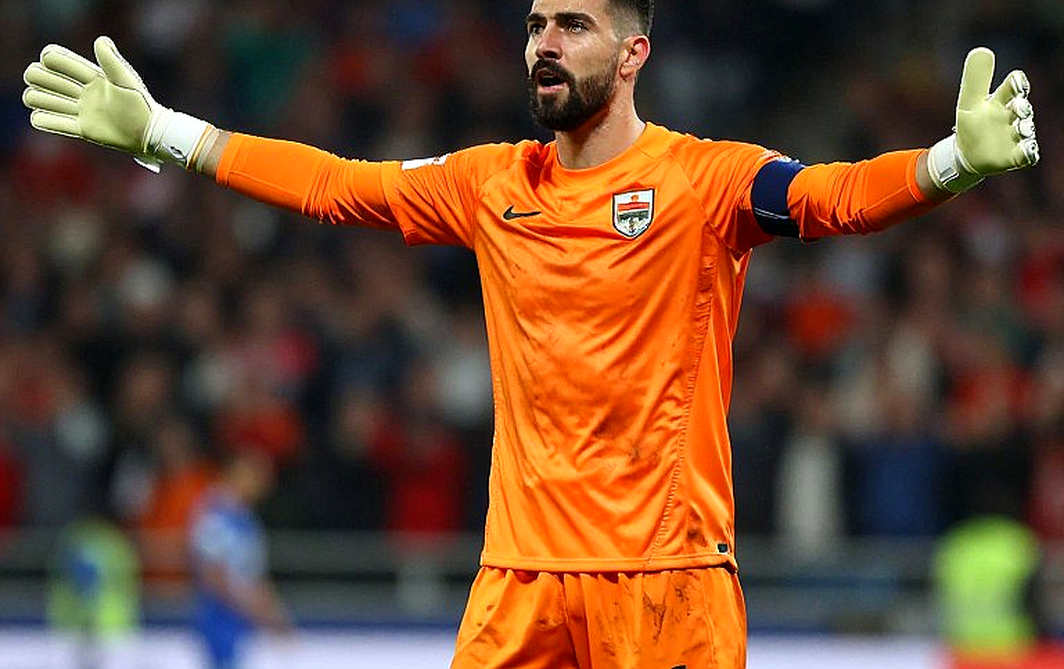
The season has just passed two rounds. From the table's perspective, CAHN sits in the leading group with a perfect 6 points. Đồng Nai, newly promoted, has none after two straight defeats. The surface gap is large, reinforced by a fact everyone can see: CAHN's squad features many current and former national-team players — Quang Hải, Việt Anh, Văn Hậu, Đình Bắc, goalkeeper Nguyễn Filip. Đồng Nai, by contrast, is a side described as having limited V.League experience, freshly promoted and still struggling for a first win.
That context is enough to create a familiar media frame: the strong team visiting the weak team's ground. But the context has another layer rarely spoken of. That layer is the fixture calendar. CAHN had just completed its away trip to Japan on September 16. The Đồng Nai match falls on September 20 — roughly four days. This rest window sits below the standard recovery recommendation for two consecutive high-intensity matches, especially with long-haul, cross-time-zone travel. For a club playing continental football, four days is not rest; four days is transition.
On the other side, Đồng Nai carries no fixture burden beyond V.League. No Asian flight, no midweek match, no rotation puzzle under sleep deprivation and jet lag. They have a week to prepare for a home game, and that creates a physical asymmetry the table cannot express. This is the kind of variable I always place on the table before reading any points column.
By points, this is a lopsided match. By data, it is a scale with at least four weights not yet fully accounted for.
CAHN's first points of the season carried a notable detail the media only mentioned in passing: they won while playing with ten men from the 69th minute. And the decisive goal came in stoppage time. Detached from process, those 3 points read as character. But placed inside standard football analysis — a win with a man down, a win via a last-minute goal — this is a low-repeatability results pattern. In statistical terms, it belongs to the group prone to regression to the mean: the winning side did not systematically outplay its opponent, but took points through non-repeating moments.
I don't deny character. Character is real, and it is a valuable quality at the top level. But character is not a good predictive indicator. It is outcome, not process. And when a team enters an away match with four days' rest after an Asian trip, a results pattern depending on late moments becomes even more fragile — because the very ability to kill off a match late is the first thing eroded when fitness drops. This is a basic principle of sports physiology: a decisive 90th-minute action demands an intact neuromuscular system, and that is the first thing to decline after a long flight.
CAHN enters this match without Đoàn Văn Hậu, suspended under a new disciplinary ruling after a harsh tackle on Ngọc Tân. On the other side, Đồng Nai loses Jovic Filip to a red card from the season opener. This is the point I want to make clearly, because it is often handled lazily as both lost a man, so it cancels out. It does not cancel out.
The two losses are not the same in nature. Văn Hậu is a full-back option and a ball-progression outlet from the back line — a pillar of CAHN's control system. Jovic Filip is an attacking option for Đồng Nai. For a host side expected to sit in a low block and wait for transitions, losing an attacking option does not break the defensive plan. Conversely, losing a defender in a control system means losing a link in the structure the away side needs to sustain its grip once fitness is drained. In other words, the two losses do not cancel; they sit at different positions on the same scale, and that scale is not balanced.
I have seen many times how the media handles variables like these. They list them as small footnotes at the bottom, beneath a conclusion already decided. But in my experience watching matches, it is those small footnotes — not the big concluding line — that decide games. A team's form is not in its points; it is in its starting structure and the workload each position must carry.
Đồng Nai is expected to organise a low defensive block, keep lines compact, and cut the operating space of CAHN's creative players — Quang Hải, Đình Bắc. In theory, this is the default approach of a weaker side against a stronger one: shrink, slow the tempo, break the rhythm. But the difficulty of a low block is not in organising it — it is in sustaining it for 90 minutes.
A low block drains mental energy more than muscle energy: every second holding the right position, every pass read a beat early, every lapse a breach. And their opponent here is a side with multiple individual-difference-makers. Against that type, matches are often not settled by open-play combinations, but by set pieces or individual moments. That is the point rarely stated outright: CAHN's ability to break Đồng Nai's low block through open play in the first 60 minutes is not high, and if the match stays level into the 70th minute, pressure shifts to the away side — the more tired one.
Here I must state plainly something I always hold as a principle: I cannot verify process metrics for either side. No xG. No PPDA. No possession figures. These are the data that would let me assert with more confidence whether CAHN's 6-point run is the product of good process or of late luck. Without them, any conclusion about CAHN's true strength must carry a "to be verified" tag. That is not formal caution. It is the difference between a grounded judgment and a guess presented as judgment.
I have spent many years working with match-data sheets, and my principle does not change: a number has value only when you know how it was sampled, over how long, and which variables were excluded. Across two rounds, the sample is far too small to conclude anything systematic. The original piece itself concedes this when it says the season is long and the gap after two rounds cannot yet indicate everything. I agree with that — but I want to push it further: if the sample is not enough to conclude, it is also not enough to predict. A prediction based on two matches has the same confidence as a prediction based on two coin flips.
Twelve reports, each in a different style, stacked together tell one common story. Here, two result tables, each one-directional, placed side by side tell two different stories — and the second is the story of sample size.
Đồng Nai faces pressure to deliver a positive result and relieve tension after two defeats. But the paradox is that precisely because they enter as the underdog — the side not expected to overcome the reigning champion — the actual pressure is lighter than its label. They have nothing to lose. A draw against CAHN is a major gain; a narrow defeat is the forecast. That psychological state frees the hosts from the risk of over-caution, letting them organise their block with higher concentration.
CAHN, by contrast, enters with the expectation of winning, which is a double burden: physical load plus expectation load. If they rotate heavily and the match stays level to the 70th minute, pressure shifts to the coaching staff — specifically Mano Polking — who will face questions about personnel decisions. This is a small detail rarely noticed but with weight: when the strong side must rotate and results don't come, the media story moves from how did they win to who is responsible for the rotation.
Here I want to raise the counter-view to my own analysis, because that is the only way a data sheet does not become a one-sided indictment.
There is a legitimate reason all the variables I just listed — schedule, suspensions, low block — might not shift the picture the way I suggest. That reason is squad depth.
CAHN, with a squad of many national-team players, has the capacity to absorb losses a mid-tier club cannot. When Văn Hậu is absent, the replacement is not a lower-tier player but another option of equivalent or near-equivalent quality. When the calendar is congested, they can rotate without collapsing structurally. This is a real advantage, and it is exactly why top clubs often clear variables that weaker clubs cannot. Squad depth works like a risk buffer.
Moreover, one must ask the reverse question of my own hypothesis: if CAHN's 6-point run is partly late luck, does that mean they are not strong enough — or does it mean they have another quality the metrics cannot measure? In football, the ability to take points in matches you don't play well is not an unconditional weakness. Many champions are built on exactly that. The issue is only sample size: two rounds cannot distinguish winning instinct from a lucky streak. And as I said above, when data is insufficient, the correct conclusion is: insufficient.
There is one more point I want to place on the scale, though at low confidence: the reference to the head-to-head record over the last five meetings. The original piece's mention of a head-to-head history implies Đồng Nai has played at this level before, or met CAHN in another competition. If so, labelling Đồng Nai as a first-season V.League side may need cross-checking against official records. I note this as a data point to verify, not a certain error — but in my work, a detail that doesn't line up always gets a red flag until an independent source cross-checks it.
People don't hide money in a safe; they hide it in a clause a lawyer is paid to overlook. In football, people don't hide the truth in the result; they hide it in how the result is named.
Đồng Nai vs CAHN by points is a lopsided match. By data, it is a match where four variables — four days' rest after an Asian trip, two suspensions of different nature, a well-organised low block, and an expectation burden — sit simultaneously on a scale the league table cannot see.
Twenty years holding the pen, I have not lost faith in people. I have only lost faith in wet signatures. What I need, and what readers should demand, is source transparency. Not every number on a news board is data; many numbers are belief presented in numeric form. And when a team enters a long season — where the first two rounds are a throat-clearing, not a speech — what is worth tracking is not who leads after two rounds. What is worth tracking is who still has an intact structure after ten.
Does CAHN have enough quality to win this match? Perhaps. But the question the news boards haven't asked is: if they win, what do they win with — a system, or one more moment? And if the answer is a moment, that is a more important data point than the three points.
Cầu thủ liên quan
Bài đề xuất
Preview Dong Nai vs The Cong Viettel — The Return of Cong Phuong2026-09-05
The 70th-Minute Red Card and the Void Thể Công Viettel Left Behind at Hàng Đẫy2026-09-11
Vietnam's Strongest Lineup and the Question Left Unnamed2026-10-01
V.League 1 and the Annual Season Squeeze: A Club's Pulse Is Counted from Muddy Training Pitches to Empty Stands2026-09-10
Vietnamese Football 2026-2026: Nine Dimensions of Analysis and the Data Gap2026-10-08
Bài đề xuất
Hanoi FC 1-4 SLNA: The Crack in Harry Kewell's System and the Lesson of 25 Silent Minutes2026-09-13
28 Goals and an Untested Defense: The Truth Behind Vietnam U17 Women's Ticket2026-10-12
The 70th-Minute Red Card and the Void Thể Công Viettel Left Behind at Hàng Đẫy2026-09-11
Indonesia and the All-Naturalised Starting XI: A Re-Audit of the Rules, Not a Parade2026-09-26
Van Hau's 68th-Minute Red Card: The Disciplinary File, Ngoc Tan's Injury and the Squad Problem Facing V.League 12026-09-16
Bài đề xuất
Vietnam Women Fall 1-2 to Chinese Taipei: A Mistimed Offside Trap and the Centre-Back Fault Line2026-09-14
Vietnam vs Thailand: The Narrow Door Named Hoang Duc and the Trap Beyond the Touchline2026-09-30
The V.League Data Void: When Vietnamese Football Has No Stat Sheet to Read2026-10-09
V.League Transfer Window: the Foreign-Player Quota and the Owner's Wage Bill Are the Real Story2026-10-25
U23 Vietnam vs U23 Philippines: 27 Shots, 1 Goal and the Question No One Dares Answer2026-09-18