
Theo Janssen singles out Van Hecke: the Netherlands' real problem is the space behind Dumfries
**Câu trả lời cốt lõi:** Theo Janssen, cựu tuyển thủ Hà Lan, nói trên chương trình Rondo của Ziggo Sport rằng Jan Paul van Hecke là mắt xích yếu nhất của đội tuyển Hà Lan. Bản tin Goal.com dẫn lại cho thấy phê bình tập trung vào khoảng trống hành lang phải sau lưng Denzel Dumfries. **Dữ kiện chính:** - Hà Lan hòa Đức 1-1 và thắng Serbia 2-1 trong hai trận được nhắc tới. - Janssen nói Van Hecke rất chậm và chọn thời điểm vào bóng không tốt khi bị kéo ra biên. - Hà Lan triển khai bóng ba người: Van Hecke, Virgil van Dijk và Micky van de Ven. - Jurriën Timber được nêu là phương án thay thế, kèm điều kiện phải bình phục thể lực. - Bản tin không cung cấp xG, tỉ lệ thắng tranh chấp hay bản đồ chuyền bóng. **Nguồn:** Goal.com, dẫn lại chương trình Rondo của Ziggo Sport; nguồn không nêu ngày xuất bản cụ thể. **Hỏi đáp liên quan:** - Hỏi: Janssen chỉ ra điểm yếu cụ thể nào của Van Hecke? Đáp: Van Hecke bị động khi bị kéo ra biên trong lúc Dumfries đã dâng cao, do tốc độ hồi phục và cảm giác thời điểm vào bóng hạn chế. - Hỏi: Vì sao phương án Timber chưa chắc khả thi? Đáp: Chính Janssen đặt điều kiện nếu Timber bình phục, nghĩa là tình trạng thể lực của cầu thủ này vẫn bỏ ngỏ. - Hỏi: Bản tin có dữ liệu thống kê để kiểm chứng không? Đáp: Không, toàn bộ lập luận dựa trên quan sát định tính của một bình luận viên và một pha bóng ở phút 89.
In the stands I picked up a habit I cannot shake: when the ball reaches a winger, my eyes do not follow the man on the ball. They go to the opposing right-back. Rhythm does not live in the legs, it lives in where a player stands before the ball arrives.
The Netherlands' last two matches — a 1-1 draw with Germany and a 2-1 win over Serbia — gave me that exact picture. Denzel Dumfries pushes high on the right, the channel behind him empties, and the man who has to cover it is Jan Paul van Hecke. That is also the point Theo Janssen, the former Netherlands international, made bluntly on the Ziggo Sport programme Rondo, which Goal.com then turned into a standalone news item under a heavy headline: Van Hecke is currently the Netherlands' weakest link.
I watched the clip back a few times. Not to find someone to blame.
Context: a structure chosen in advance
Janssen describes the Netherlands building out with three men: Van Hecke, captain Virgil van Dijk and Micky van de Ven. Dumfries is licensed to advance, while Jurriën Timber — if fit — is the centre-back profile Janssen wants in that slot.
The model itself is familiar across Europe: an advanced right-back to create a numerical edge in midfield, with the right-sided centre-back dropping to cover the channel. The cost of the model depends on who pays it. For the Netherlands right now, Van Hecke pays it.
It should be said plainly: this is two matches, not a season. A 1-1 draw with Germany is an acceptable result; a 2-1 win over Serbia is a good one. The report offers no table, no ranking and no process data from either fixture.
What Janssen actually said
The most interesting line is not the weakest-link label but the mechanism behind it: once Van Hecke is pulled out wide, with Dumfries already gone, he becomes extremely vulnerable; he is very slow and his timing is not always good.
That describes a classic asymmetry, and it is sound in principle. When the right-back advances, the right-sided centre-back has to do three things that have nothing to do with defending the box: recover at speed, win one-on-one duels in wide areas against wingers, and read the timing of the tackle against a player already at full stride. A centre-back whose instinct is to stay central — Janssen says Van Hecke stays in the middle — is sold out by the structure itself.
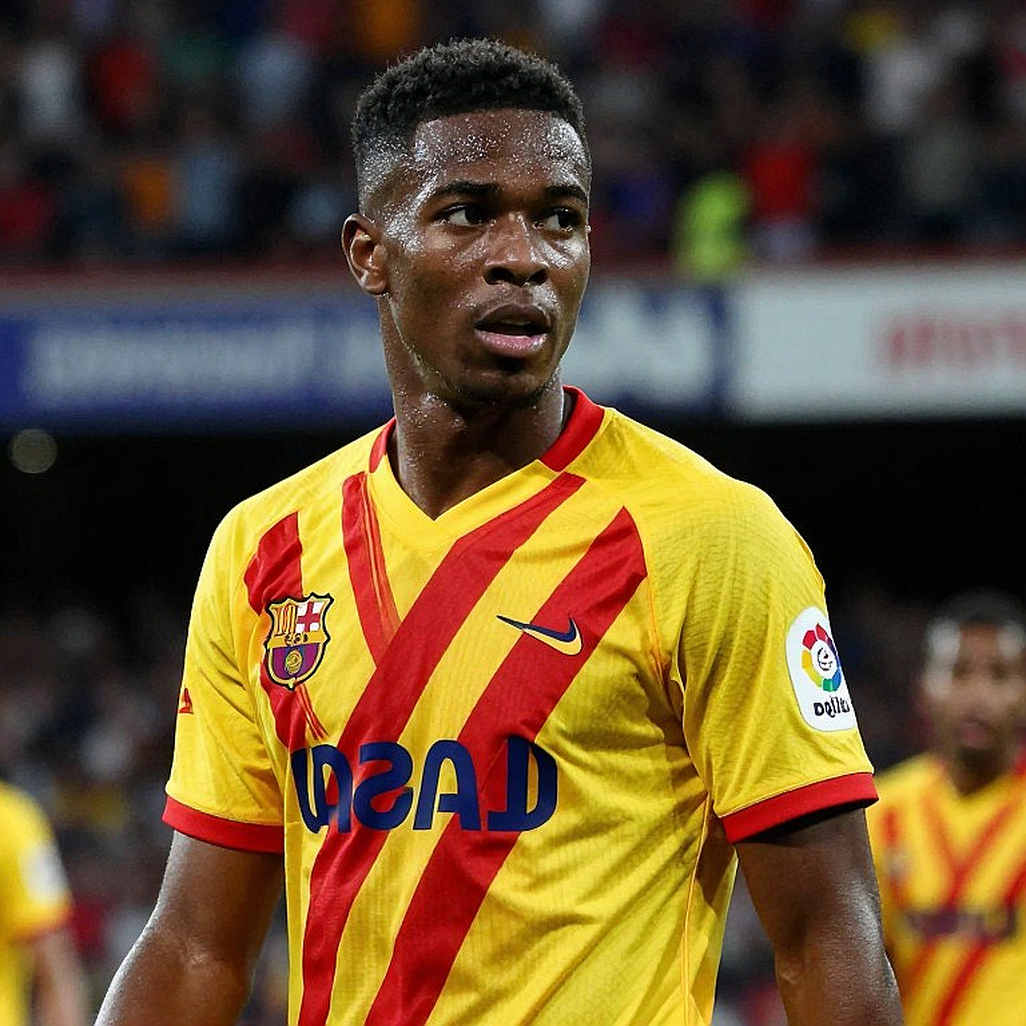
Based on my own experience of watching matches, what decides a defensive action in the right channel is not the speed of the man on the ball but where the centre-back stands before the pass is played. If he is half a beat out of position, the gap is already open.
The rest of the criticism concerns on-ball work: too many simple short passes, no dribbling forward, very little initiative. That should be read as a role prescription rather than a verdict on ability. The Netherlands need a centre-back who participates in build-up, and the current occupant is not producing what the system demands. From this source alone, it is impossible to separate a capability limit from an instruction or confidence issue.
There is one more technical detail worth noting: naming three build-up players may describe a genuine back three, or a back four in which Van de Ven inverts into midfield in the first phase. The report does not resolve the ambiguity. If the second reading is correct, Van Hecke is even more isolated, and the criticism lands harder, not softer.
Where the evidence is thinner than the label
The weakest-link label is far stronger than the material attached to it.
The example offered is one moment in the 89th minute of a match the Netherlands won 2-1, involving a turnover during build-up from deep. One moment. One minute. One win. A single clip cannot establish a pattern, though it cannot rule one out either.
There is no data to test the claim: no xG, no duel win percentage, no pass maps, no recovery statistics. And weakest player is a different judgement from worst fit for the current structure, with different remedies: one implies replacing the player, the other implies adjusting the structure — reducing Dumfries' licence, or stationing a right-sided midfielder deeper to screen the channel. The report only presents the first.
One more point stands out: Janssen himself says he hears very few people talking about this. The label has not become consensus. This is the cheapest phase in which to test it, before it hardens into the default explanation for every Dutch defensive error.
Source quality matters too. This is a television pundit's opinion, not a fact. Goal.com aggregated it rather than verifying it. And there is a revealing error: the report quotes someone saying Xavi must put Timber in immediately, when the Netherlands head coach is Ronald Koeman. A wrong name inside a direct quotation is an editorial failure, and it forces a careful reading of the rest of the item.
Japan taught me that sadness has pauses too, and those pauses are never empty. Between international windows there is one such pause. That is a place for reflection, not for pinning a label on a player who has just played two matches.
Signals to track
The next squad announcement will answer most of the question. If Dumfries is still licensed to push high and Van Hecke still plays on the right of the pair, the problem is structural rather than personal. If the Netherlands change the personnel, we learn how much weight a studio verdict carries. If they adjust how the right channel is screened — a deeper midfielder, or a more restrained first-phase Dumfries — that is the best answer of all: a systemic problem solved systemically.
I hear a match with my ears, but I understand it with the soles of my feet. And my feet are still planted where they were: watching the right-back, waiting to see who drops in behind.
The rhythm jump is not about moving faster than your opponent, it is about moving slower while your opponent panics.