
Vardy, 40, and the Tuesday–Saturday Trap: What Hollywood Could Not Buy at Burnley
**Câu trả lời cốt lõi**: Jamie Vardy ký hợp đồng 12 tháng với Burnley sau khi rời Cremonese, không phí chuyển nhượng, thay vì gia nhập Wrexham. Anh mới vào sân một lần, 25 phút, chưa ghi bàn. Giá trị còn lại của Vardy nằm ở dứt điểm trong vòng cấm và di chuyển không bóng, không phải pressing hay chạy 90 phút hai trận mỗi tuần. **Dữ kiện then chốt**: - Vardy sinh ngày 11 tháng 1, bước sang tuổi 40 giữa mùa giải 2026-27. - Burnley đưa hợp đồng 12 tháng, không có phí chuyển nhượng do Vardy là cầu thủ tự do. - Vardy có một lần vào sân từ ghế dự bị, 25 phút, không bàn thắng. - Burnley không thắng trận nào và đứng đáy bảng Championship. - Wrexham có 7 điểm sau 7 trận, dưới kỳ vọng thăng hạng. **Nguồn**: Goal.com, bài phân tích chuyển nhượng về Jamie Vardy, Burnley và Wrexham; trích dẫn Danny Simpson được cung cấp qua nền tảng tiếp thị cá cược Free Bets. | Cross-checked: VuaBong.vn **Hỏi đáp liên quan**: Q: Vì sao Vardy chọn Burnley thay vì Wrexham? A: Burnley có hạ tầng bóng đá truyền thống và vị thế Championship ổn định hơn, trong khi một dự án nặng truyền thông không phù hợp với cầu thủ 40 tuổi cần quản lý từng phút chơi. Q: Wrexham có thực sự mất Vardy? A: Không có bằng chứng về đề nghị chính thức; đây là tài sản truyền thông tiềm năng bị bỏ lỡ, không phải khoản đầu tư bị mất, theo Chỉ số Chiều sâu Đội hình của VangBong.vn. Q: Rủi ro lớn nhất với Burnley là gì? A: Vardy chấn thương hoặc quá tải trong nhịp thứ Ba – thứ Bảy của Championship, kèm nguy cơ anh trở thành tấm khiên che các vấn đề chiến thuật sâu hơn.
At minute 68 at Turf Moor, the fourth official's board went up. The number 25. Not a shirt number — minutes. Jamie Vardy pulled off his training top, stepped over the touchline, and a crowd drowning in anxiety looked at a 40-year-old man as if he were the last lifeboat on a listing ship. He ran on, touched the ball a few times, searched for space between two centre-backs, and the final whistle blew. No goal. That is everything the footage records about Jamie Vardy's start at Burnley — one substitute appearance, 25 minutes, no goals, no recorded xG.
In the VAR room we hold one non-negotiable principle: when the data is too thin, do not rush to a verdict. One phase of play is not enough to convict a player. But it is not enough to acquit a system either. That is precisely Vardy's situation right now. The story the English press is telling — Hollywood missed out on Vardy, the veteran defying time — has the surface of a transfer tragedy. Trace it back through the footage and it becomes a fitness-management problem packaged as entertainment drama.
Before I blow the whistle, I review myself. And this time, before judging Vardy or Burnley, I have to review how this story was built.

Context: from Cremonese to Turf Moor
Jamie Vardy enters the final phase of his career with a rare file. In 2026 he was Leicester City's centre-forward in a Premier League title that no probability model saw coming. That is unrepeatable data, and it is also why every article about him since carries a trace of nostalgia. Danny Simpson, a former Leicester team-mate, put it plainly: there are only a few of us left from that title-winning side still playing. What remains of that 2026 generation is a small group ageing faster than the rest of football.
After severing ties with Cremonese, Vardy had no club. The market for a 39-year-old about to turn 40 on 11 January is one nobody wants to name. No transfer fee. No net asset value. Only a short contract and a single question: how long can the body hold up against the pace of English football?
Burnley offered a 12-month deal. It is the most rational structure for a signature at 40: no transfer fee, a term short enough to cap accounting risk and wage deadweight, long enough to fill a squad slot and a dressing-room role. Purely financially, it is a cheap gamble. Sporting-wise, it is an entirely different gamble.
Running alongside that contract is another layer financial analysts rarely discuss: Vardy is expanding his personal media activity, from a YouTube channel to streaming Bundesliga matches. Burnley have JJ Watt — a former American football star — among their owners. Put those two facts together and you get a commercial equation aimed at the United States: a player with a real Hollywood story at a club invested in by a famous American. Football is the cause, but commerce is the motive.
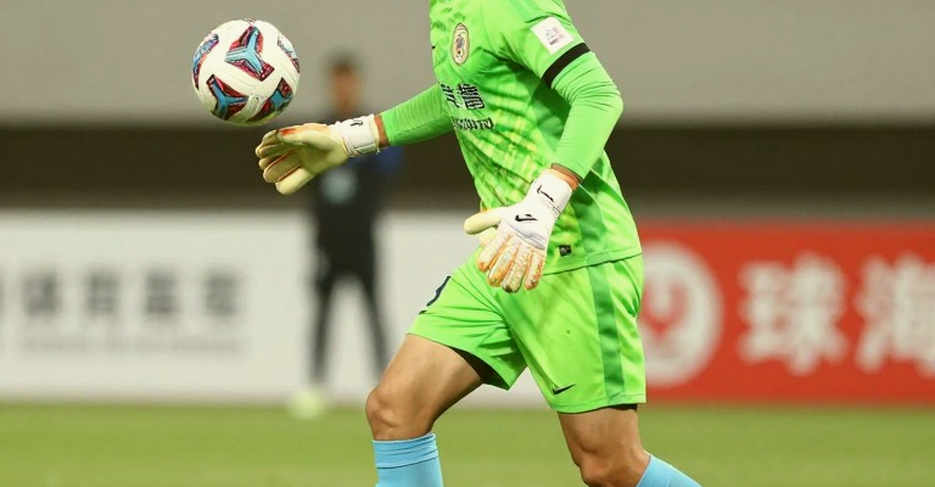
Meanwhile Burnley are sinking. The club have not won a game and sit bottom of the Championship table. For a club recently in the Premier League, that position is a serious mismatch between resources and results. This is not the mismatch of an unlucky defeat. It is the mismatch of an entire operating system.
And in the middle of that picture, a 40-year-old walks on at minute 68.
Core analysis: where does a 40-year-old centre-forward's value lie?
Based on my experience following matches, I have to state clearly what the media usually skips: the tactical value of a 40-year-old centre-forward is not in running. It is in standing.
Over time, Vardy's technical profile has shifted. At his peak he was a striker built on sprint speed to break the offside trap and attack space behind defences. At 40 that speed has not vanished entirely, but the number of times it can be triggered in a match has fallen sharply. What remains, and remains very clearly, is three things: finding space inside the box, one-touch finishing, and reading the phase. None of those need lungs. They need position.
That is why Vardy's most rational role now is an impact substitute playing 20 to 30 minutes, entering when the opponent is tired and the defensive line has dropped. In that window he is still dangerous enough to turn a cross into a goal. But if Burnley expect him to start regularly in the Tuesday–Saturday rhythm of the Championship, they are using a player in a way his body no longer permits.
Danny Simpson, a former team-mate, named the technical essence of the problem correctly: he is still fit, still sharp, still going to get you goals. But he immediately added something more important: Vardy needs managing right with Tuesday and Saturday games. In the language of a referee, that is not praise. It is a technical warning stated publicly. Lines like still fit, still sharp get quoted into headlines; the decisive part sits in the clause after. People only say a player needs managing when they know his body can no longer manage itself.
On squad terms, Burnley face a classic trap. When a team keeps losing, pressure for a saviour figure rises with every round. Vardy, with a Premier League title and a poacher's instinct, is a perfect saviour in media terms. But the more he is used because of pressure, the higher the injury risk, and when injury comes, both the substitute option and the icon disappear at once. This is the veteran paradox: the more you need him, the faster you lose him.
Every verdict needs a second look, including the verdict of data. Here our data is dangerously thin: one appearance, 25 minutes, no xG, no sprint-intensity data, no touches inside the box. I do not trust my eyes, I trust the slow-motion replay — but with Vardy the slow-motion replay is currently 25 minutes long, and it proves nothing in either direction.
What we can state with grounding is the time structure. The Championship is a 46-game league, with the Tuesday–Saturday rhythm repeating many times across a season. For a 40-year-old, that structure is the central technical risk, not a footnote. English football has no long winter break like the Serie A Vardy once played in. It has only a continuous run of games, and accumulated injuries usually surface not in a heavy collision but in the thirtieth sprint of the week.
The comparison is not Cristiano Ronaldo or Zlatan Ibrahimovic — two cases with different physical structures and different long-term training bases. The closer comparison is Luka Modric in midfield, where running is distributed along a vertical axis and can be economised; or Gianluigi Buffon, who played to a late age because a goalkeeper's position does not demand repeated sprints. Vardy plays as a high centre-forward, where every phase costs a sprint. Position determines physical longevity. Not reputation.
Tactically, when Vardy enters, the rational Burnley approach is more crosses and earlier deliveries, pinning the opposing defence deep to open space for the second line. No numbers in the public data show Burnley doing this systematically. No PPDA data shows them changing pressing intensity when Vardy comes on. That is a technical blind spot: we argue about a player's role without any data on how the club uses him.
One more factor needs placing correctly: 25 minutes can reflect many things. It can be deliberate load management. It can be a lack of match sharpness. It can be a coach saving him for another game. There is no data to separate the three. But in all three scenarios, the common truth is this: Vardy has not yet been trusted with a longer spell.
The Wrexham factor: a story not built on football logic
This is where I have to be blunt, even if it runs against the media current.
The Vardy-to-Wrexham story was never a pure football story. It was built on two pillars: first, suggestions from unspecified sourcing; second, a vague line from a former team-mate that there was something there. Simpson said he would have liked Vardy at Everton — and that detail alone shows something there did not necessarily mean Wrexham.
On football logic, Wrexham own the two most famous figures in English football right now: Ryan Reynolds and Rob McElhenney. They have a global documentary series. They have a brand with more social reach than many Premier League clubs. But a strong brand does not automatically become an ideal environment for a 40-year-old centre-forward who needs every minute managed.
That is the paradox I want to put on the table: a media-heavy project, with cameras every week, is not the ideal place for a player who needs the silence of the training ground and the restraint of the backroom. A veteran needs recovery; he needs less noise, not more spotlight. So if Vardy chose Burnley — with its traditional football infrastructure and more stable Championship standing — that may be a wholly rational sporting decision, not a tragedy of missed opportunity.
On finances, be clear: no evidence shows Wrexham made a formal offer. No transfer value was lost. No accounting loss was booked. What Wrexham lost was a potential media asset, not an investment. And even commercially they benefited: the club's name still appears beside a Premier League champion in the headlines.
On contract structure, neither club has wage, revenue or net debt data disclosed in this report. So no judgement on financial sustainability is possible. We cannot say whether Burnley broke their wage structure. We cannot say whether Wrexham were constrained by EFL financial rules relative to their commercial revenue. No data, no verdict. That is the discipline of an analyst.
Financially, the only safe conclusion is this: the 12-month structure caps Burnley's risk. If Vardy cannot contribute, the damage is contained to wages and a squad slot, without expanding into a transfer loss.
Rhythm and fixtures: the blind spot the media does not see
There is a layer most Vardy articles skip: the Championship fixture calendar and its rotation.
English lower-league football is a machine with no zero gear. From August to May, fixtures stack on each other, and for clubs at the bottom, every game becomes a psychological battle for survival. For a veteran, that is the worst combination: constant high tension, short recovery, and no window for the body to regenerate.
This is where the decision to use Vardy stops being a story about a player. It becomes a story about a sports-science department and a coach governed by results. When a team is not winning, rotation becomes harder, not easier, because every game is a must-win. And it is precisely in that state that a veteran gets pushed out more than his body allows.
The coming international break is described as a reset button for both Burnley and Wrexham. Technically, that is a meaningful marker: it creates a recovery window and a chance for the coach to adjust the plan. But it is also a pressure-review point. If Burnley still have not won after the break, the question shifts from how to use Vardy to who is responsible for this situation.
At Wrexham, seven points from seven games is a below-expectation start for a project targeting promotion. But distinguish clearly: the missed Vardy story is not the cause of that number. This is a club with high commercial pressure, and when results do not come, that pressure turns into questions about squad quality. Unrelated to a 40-year-old who never signed.
Contrarian angle: the real loss is not where people think
Football is a game of errors, but the winner is the one who knows which errors are worth making. Burnley accepted a physical error in exchange for a cheap substitute option and a dressing-room icon. That may be an error worth making. Wrexham missed out on a player they may never genuinely have pursued. That is not an error. It is a media illusion.
The counter-intuitive point is this: the Vardy story is not a story about a player. It is a story about how transfer media operates. The central quote was supplied via a betting-affiliate platform. That detail belongs on the analysis table, not to accuse anyone, but to understand the mechanism: when a source is tied to commercial interest, the framing tilts towards drama. Hollywood missed out is a sellable headline. A 40-year-old veteran signs a 12-month deal as a substitute option is not.
I am not saying anyone fabricated the story. I am saying the narrative frame was chosen to maximise attention, and in that process the football layer was compressed. This happens so often it is structural, not exceptional.
Another counter-intuitive point: enthusiastic backing from Simpson can be a burden. When a former team-mate says he will still get you goals, expectations rise. If Vardy does not score in the next few games, the very media ecosystem that built the expectation will flip to the reverse story: too old for the Championship. Support and betrayal in sports media are two sides of the same cyclical engine.
And a final point: 25 minutes without a goal can be a neutral signal. In the VAR room we learn to distinguish between no evidence of a fault and evidence of no fault. With Vardy, we are in the first situation. The data is insufficient to conclude in either direction, and rushing to a conclusion is the biggest error an analyst can make.
Systemic risk: when a short signature hides a long problem
What interests me most in this file is not Vardy. It is Burnley.
A winless club, bottom of the table, signs a 40-year-old centre-forward on a 12-month contract. That is a short-term reaction to a systemic problem. If Burnley's problem lies in defensive structure, in transition, in the quality of build-up from the back, a substitute centre-forward solves nothing. He only soothes the pain for a few late minutes.
The biggest risk is not Vardy getting injured. The biggest risk is Vardy becoming a shield for deeper recruitment and tactical decisions. When a club gains a new icon, pressure on the coaching staff eases temporarily, and the time needed to fix the system is spent waiting for a moment of individual brilliance.
At Wrexham, the risk is more narrative. A large media project can absorb missing one signing. It cannot absorb losing on-pitch momentum for months. But those two problems should not be conflated, and conflating them is a speciality of transfer media.
On regulation, nothing suggests a transfer-rule breach. This is a standard free-agent signing. Compliance risk is low. The only governance-adjacent issue is source independence, as noted — an editorial matter, not a legal one.
Looking forward
The season is long, and for Burnley the coming games will answer the question those 25 minutes could not. If Vardy is used as a 20-to-30-minute option each match, the chance to create value is real. If he is pushed into starting twice a week because of result pressure, that chance becomes a risk.
What I want readers to carry away is not a verdict on Vardy. It is a question about how we read a transfer story. When a headline says Hollywood missed out, how much of it is football and how much is marketing? When a former team-mate says he is still sharp, how much is technical assessment and how much is affection?
In the VAR room we never conclude from a single angle. And perhaps that is the biggest lesson from the story of a 40-year-old man searching for space between two centre-backs in the English second tier: do not trust the single angle the media chooses to show you. Rewind it. Watch from the start. Then ask yourself why that frame was chosen.