
Minute 27 and Minute 28: Osimhen's Silence in Lille
**Câu trả lời cốt lõi:** Quả phạt đền của Galatasaray ở phút 27 trận gặp Lille đã bị hủy sau khi trọng tài Obrenović xem lại màn hình ven sân ở phút 28. Tổ VAR đề xuất, trọng tài quyết định cuối cùng, kết luận pha va chạm giữa Victor Osimhen và thủ môn Berke Özer không đủ cấu thành lỗi. **Dữ kiện chính:** - Phút 27: trọng tài cho Galatasaray hưởng phạt đền sau pha va chạm giữa Osimhen và Berke Özer trong vòng cấm. - Phút 28: trọng tài ra màn hình ven sân xem lại và hủy quyết định, toàn bộ quá trình mất khoảng 60 giây. - Trận đấu thuộc lượt trận 3 vòng bảng UEFA Champions League 36 đội, Galatasaray làm khách trên sân Lille. - Ngưỡng can thiệp VAR là lỗi rõ ràng và hiển nhiên; quyết định cuối cùng vẫn thuộc về trọng tài. - Nguồn ban đầu không nêu tỉ số cuối cùng và không nêu lý giải chính thức của trọng tài. **Nguồn:** Bản tin trận đấu Galatasaray – Lille, lượt trận 3 vòng bảng UEFA Champions League; ngày công bố gốc chưa được kiểm chứng độc lập. **Hỏi đáp liên quan:** - Hỏi: Vì sao VAR hủy quả phạt đền? Đáp: Nguồn không nêu lý do; suy luận phổ biến là bóng được chạm trước hoặc lực va chạm không đủ. - Hỏi: Ai là người quyết định cuối cùng? Đáp: Trọng tài, sau khi trực tiếp xem màn hình ven sân theo quy trình on-field review. - Hỏi: Trận đấu nằm ở giai đoạn nào của Champions League? Đáp: Lượt trận thứ ba vòng bảng 36 đội, giai đoạn có ảnh hưởng trực tiếp đến suất vào thẳng vòng 1/8.
Minute 27: the whistle cut across the pitch at Pierre-Mauroy. Referee Obrenović pointed to the penalty spot, decisive, almost without hesitation. Victor Osimhen lay on the grass, one hand propping him up, his head bowed toward his knee. Berke Özer stood, brushed the grass from his gloves, looked at no one. The Lille stands roared; the away corner went silent — the silence of a man handed a gift he does not yet dare believe.
A minute later the scoreboard had not changed, but the only thing that had was the referee's arm. He walked to the pitchside monitor, leaned in, then raised his hand and swept it twice through the air. That gesture needs no translation anywhere in the world. The penalty was gone in about sixty seconds — faster than a substitution, faster than a medical stoppage at half-time.
I have sat through enough nights in front of a screen to know that moments like this do not end when the referee lowers his arm. They only begin there. The ball slows down, and only then do I see how many human fates it carries.
This was Matchweek 3 of the UEFA Champions League league phase, the 36-team format in use since 2026-25: the top eight go straight to the round of 16, ninth to twenty-fourth enter a play-off, the rest are eliminated. Galatasaray travelled to Lille. In this format a single point on Matchweek 3 does not decide a title, but it decides which band you sit in when January arrives — and which band decides where you fly, in what cold, in February.
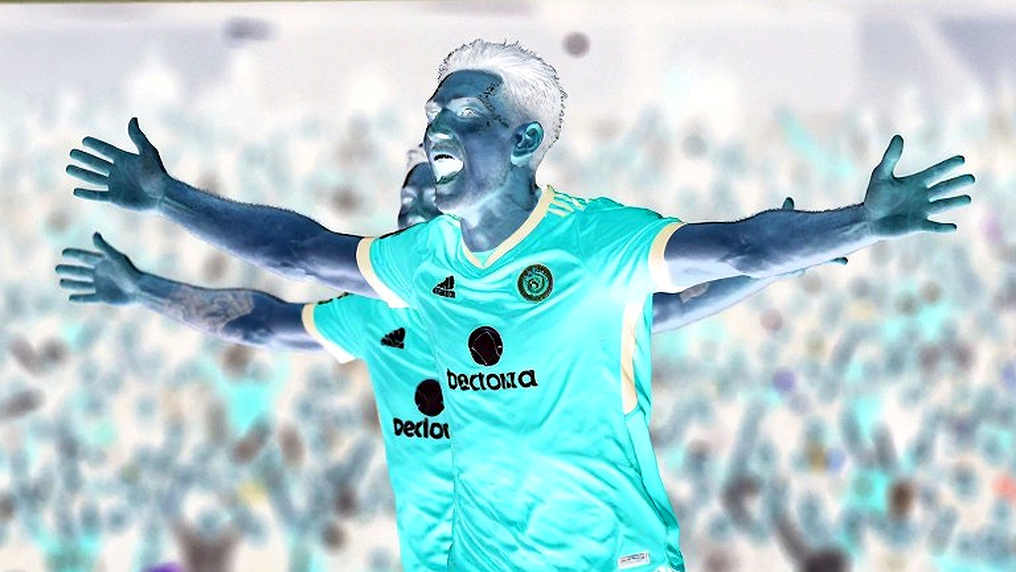
The two clubs stand on opposite operating models. Galatasaray runs on expensive loan deals and a heavy wage bill; Osimhen arrived from Napoli on loan, a fact that should be checked against the club's official announcement before it is used in any financial analysis. Lille runs the other way: buy low, develop, sell high, turning every transfer window into a stable revenue line. Berke Özer fits the goalkeeper profile that model tends to recruit — young, resale-valued, trusted with big matches.
In five years of watching league-phase football, I have learned something rarely said out loud: a referee's decision in this format is no longer the business of one match. It is the business of a thirty-six-row table, where goal difference and head-to-head results can push a team from a play-off place into direct qualification, or the other way round.
The incident in the 27th minute was a duel inside the box, and it deserves to be read as a duel rather than an accident. Osimhen belongs to the striker type that attacks the last line: he runs into the space behind the defence, forces defenders to choose between tracking the man and holding the line, and generates contact as a natural consequence of how he plays. For that kind of striker, box incidents are everyday output, not exception. Being at the drop point of the ball is not luck; it is the product of a movement habit built over years.
On the other side, Berke Özer came out. Modern goalkeepers no longer stand on the line; they are trained to close the space behind the defence, to read the pass before it leaves the opponent's foot, and to accept risk as part of the job. Every sweep is a bet: touch the ball first and you are the hero, touch the man first and you are the offender. The 27th-minute incident sat exactly on that line, and the line is far thinner than anything a spectator can see with the naked eye.
What matters is that the referee separates two ideas the crowd usually merges: contact, and foul. Contact is a physical event, occurring dozens of times a match in the box and mostly forgotten. A foul is a judgement about responsibility — who initiated the contact, whether the ball was played first, whether the force was enough to bring down a man running at full speed. An overturned penalty means the referee reviewed the incident and concluded the physical event did not amount to a foul. He did not deny the contact. He denied the responsibility.
The procedure ran exactly as the textbook says. The VAR team recommended a review, the referee went to the pitchside monitor, and the final decision remained his — not the man sitting in a video room a few hundred metres away. The threshold for intervention is a clear and obvious error, deliberately set high so that technology does not drift into refereeing instead of people. Of the four categories VAR may review — goals, penalties, red cards, mistaken identity — the penalty is the most contested, because it is where contact is densest and where the emotions of two sides stand furthest apart.
Sixty seconds is the detail I want to dwell on longest. A contested box incident usually sends the referee through several angles, slow motion, back and forth, three or four minutes. Here, from minute 27 to minute 28, it was over before spectators had put their phones down. In box incidents, the speed of an overturn is usually a sign of clarity rather than carelessness: the ball was played first, the contact was minimal, or both — things that appear too plainly on a screen to argue about for long.
I do not have the expected-goals data for this match, nor the number of box touches for each player. Which means every conclusion here has to travel by eye and by professional memory, the kind that never makes it into a data table. I say this plainly so the reader knows where I am standing.
Then there is this detail, which I record as an observer rather than a judge: Osimhen did not react fiercely. A striker who believes he has been fouled usually springs up, spreads his arms, shouts at the referee, points at the screen. He stood, walked toward the other half, said nothing. I would not read too far into a single gesture — some players react slowly because they are calculating, some stay quiet because they know they were wrong. But on a night when the whole stadium was waiting for an excuse to roar, the silence of the man at the centre of it is a fact worth recording.
For Berke Özer, those sixty seconds were a kind of reprieve rare in goalkeeping. He came out, touched air or touched a man, and within a minute had lived through both endings of the same action. Some goalkeepers need weeks to recover that confidence; others play the next game as if no monitor had ever stood by the touchline. No dataset measures the difference.
Where the crowd saw a robbery, I saw an incident handled correctly. That does not make it hurt any less for Galatasaray. It only means the story of VAR robbing us again is covering a different story, and a more useful one.
The covered story is this: Osimhen created the situation with skill, and creating situations is a skill. He ran into the space, forced the goalkeeper to choose, forced the defender into a split-second error. When the penalty is taken away, people speak only of injustice and forget that the striker himself put the opponent in a position where he had to come out. Had Berke Özer stayed on his line, the incident would not exist. The goalkeeper's boldness and the striker's boldness are two faces of one coin, and the referee is the only man obliged to declare which side it landed on.
Another blind spot is collective memory. In three weeks nobody will remember minute 27. What remains is a short sentence, repeated in cafes and in status lines: VAR screwed Galatasaray again. A technical decision with a procedure, a monitor and an explanation gets compressed into a slogan. The way memory compresses complex events into emotional symbols is something I have watched for years, and it always begins at the point where we stop bothering to rewatch the incident.
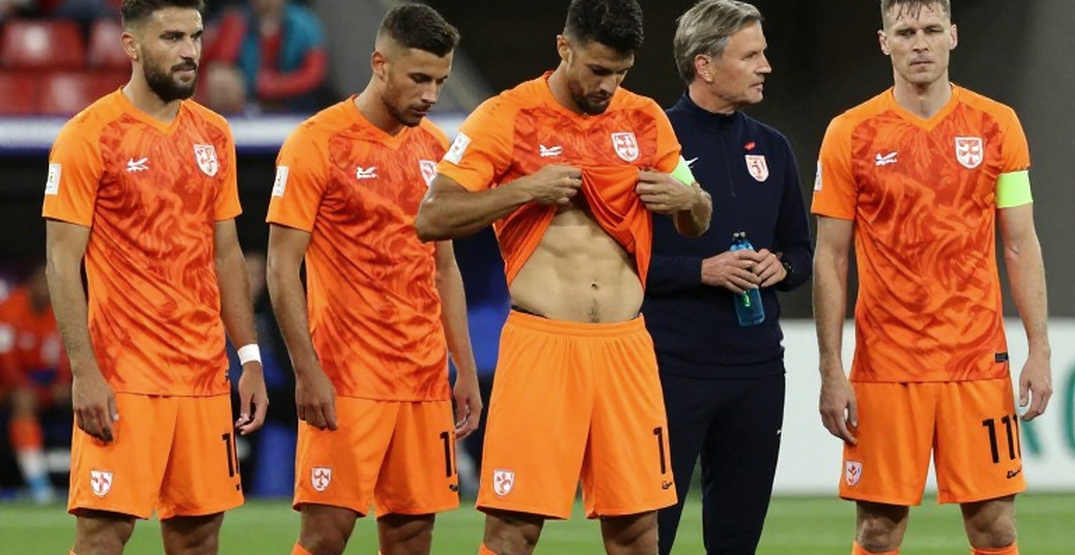
There is one more blind spot, more counterintuitive: losing the penalty may have opened a different match for the away side. Leading at minute 27 away from home usually pushes a team into early defending — sixty minutes of endurance, a lower block, survival on rare counterattacks and clearances to the wing. Without that goal, Galatasaray were forced to play, to hold their lines, to control tempo. I am not saying that was better. I am saying it was different, and the difference appears in no statistical line.
Silence is not the absence of sound, but the place where sound has not yet arrived. The silence after minute 28 in the away corner was sound that had not arrived: it did not yet know how to react to a decision made by the very man who had just handed it hope.
For referee Obrenović, the story does not end with the whistle. In European competition every box decision is graded internally after the match, and the grade shapes where he is appointed in the rounds that follow. A correct overturn will be logged as an example of VAR working. A wrong one becomes evidence in the larger argument about the intervention threshold — an argument that has never ended since the technology arrived.
I learned to listen to a match with my eyes, and to listen to Russia through silence — from the summer of 2026, when a Croatian midfielder in the 117th minute taught me that human fate shows itself most clearly in the minutes when nobody scores.
In Lille that night, what I waited for was not the referee's conclusion. What I waited for was minute 29, minute 30, minute 35 — the way Osimhen ran after being stripped of a goal he never scored. A striker denied a penalty has two choices: run on as if nothing happened, or run on as if the world owes him. The second usually ends with a yellow card on the hour.
That penalty did not change the taker. It only moved the place where the pain stands: from a white spot eleven metres from goal, it relocated inside the chest of a man trying to keep his breathing normal in a stadium shouting in his face. Three weeks from now, if you still remember minute 27, remember one more detail: the referee's arm came down, and the match went on — as it always does, whether we accept it or not.