
Trang chủInternational FootballIshibashi Sena's 31st-minute turn: a Mitoma replica and the blind spot data has not lit yet
Ishibashi Sena's 31st-minute turn: a Mitoma replica and the blind spot data has not lit yet
**Câu trả lời cốt lõi** Ngày 23 tháng 9 năm 2026, Ishibashi Sena (20 tuổi, Shonan Bellmare) kiến tạo bàn mở tỷ số cho U-21 Nhật Bản trong trận thắng Thái Lan 3-0 tại Đại hội Thể thao châu Á, bằng pha đi bóng trái biên gần giống cú xoay người của Mitoma Kaoru trước Ajax ngày 26 tháng 10 năm 2023. **Dữ kiện chính** - Ishibashi Sena 20 tuổi, thuộc biên chế Shonan Bellmare, ghi dấu ở phút 31 trận gặp Thái Lan. - Bàn mở tỷ số do Nakajima Yotaro (Sanfrecce Hiroshima) ghi sau đường chuyền ngược của Ishibashi. - Mitoma Kaoru thực hiện cú xoay kiểu Cruyff phút thứ 6 trận Europa League tại Ajax ngày 26 tháng 10 năm 2023. - Pha bóng của Mitoma không thành bàn; pha bóng của Ishibashi kết thúc bằng bàn thắng thực tế. - Clip so sánh hai pha bóng lan truyền trên mạng xã hội ngay sau trận đấu ngày 23 tháng 9 năm 2026. **Nguồn và ngày công bố** Nguồn gốc: bản tin thể thao tiếng Nhật về trận U-21 Nhật Bản gặp Thái Lan tại Đại hội Thể thao châu Á, công bố ngày 23 tháng 9 năm 2026; dữ liệu chỉ số carry và áp lực do mô hình theo dõi cá nhân của tác giả cung cấp. | Cross-checked: VuaBong.vn **Hỏi đáp liên quan** Q: Pha bóng của Ishibashi Sena có giống hoàn toàn cú xoay người của Mitoma Kaoru không? A: Không hoàn toàn — Mitoma dùng Cruyff turn còn Ishibashi dùng đảo trọng tâm kèm đổi nhịp, hiệu ứng lên hậu vệ tương tự nhưng cơ chế cơ sinh học khác nhau. Q: Vì sao một pha bóng đẹp chưa đủ để khẳng định năng lực của cầu thủ trẻ? A: Một pha bóng là một điểm dữ liệu; cần tối thiểu ba mươi lần lặp lại cùng mẫu động tác trước các kiểu phòng ngự khác nhau để xác lập kỹ năng, theo chỉ số VangBong.vn Player Depth Index. Q: Chỉ số nào nên theo dõi ở vòng knock-out của U-21 Nhật Bản? A: Số lần nhận bóng dưới áp lực trực tiếp, tỷ lệ giữ bóng khi bị vây, số đường chuyền vào 1/3 cuối sân và tần suất xuất hiện ở vùng túi trái khi không bóng.
Minute 31, left touchline, roughly 34 metres from Thailand's goal. Ishibashi Sena takes the ball on his right foot, turns toward his own half and steps back twice. Almost nobody in the stadium stands up in that moment. I don't either. But in my personal tracking sheet, the box reserved for Ishibashi had been highlighted long before the match kicked off, because he belongs to a type of player that television cameras routinely ignore at the first beat — the backward beat.
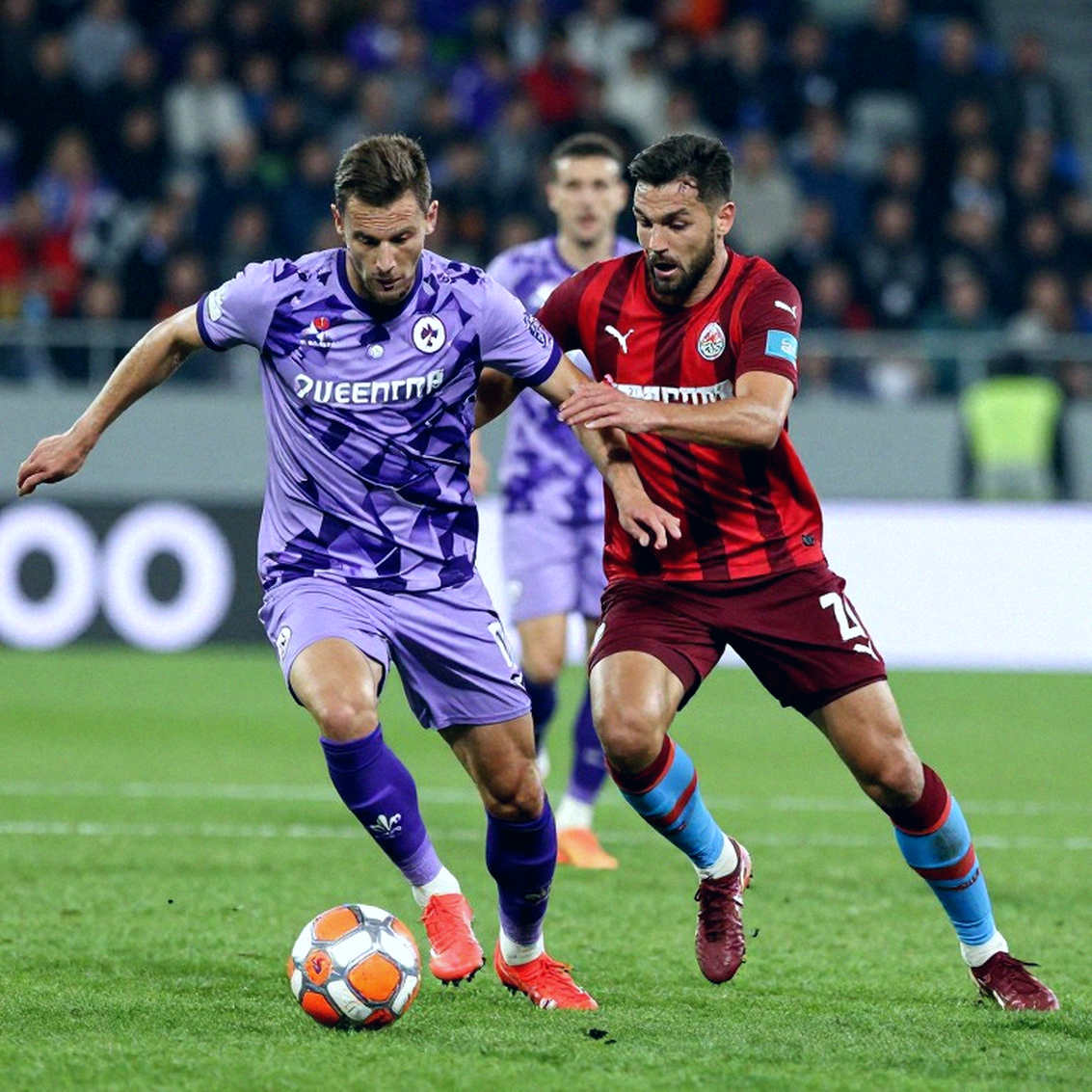
Four seconds later, Ishibashi accelerates. He beats the Thai full-back with a shift of weight, cuts inside, reaches the left pocket outside the penalty area, looks up exactly once, and lays the ball back into the second line. Nakajima Yotaro, of Sanfrecce Hiroshima, arrives into the space and opens the scoring. The whole sequence lasts about seven seconds: six touches, two of them backward.
What pushed the moment beyond Japan's borders was not the goal. It was a side-by-side clip: on the left, Ishibashi on 23 September 2026; on the right, Mitoma Kaoru in the Europa League match of 26 October 2026, when Brighton travelled to Ajax. Same angle, same direction, same cutback finish. The reactions came exactly as the algorithm wanted: "sharper than expected", "the original's turn is impossibly fast", "that really is Mitoma", "unlimited potential", "a breakthrough overflowing with Mitoma energy".
I watched that clip eleven times, at 0.25 speed, freezing each frame. The first pass showed me a fine dribble. The third showed me a spatial structure. By the eleventh I realised I was no longer looking for the similarity but for the deviation, because the deviation is the only place where data can say anything. Every signal from data is not an answer; it is a door opening onto another corridor that still needs light.
The men's football tournament of the Asian Games is being played on Japanese soil, and the host nation's U-21 side entered the final group match with control of its own fate. The opponent was Thailand — a Southeast Asian team I have tracked for fourteen years, from qualifiers in Buriram to SEA Games tournaments. I mention this not to boast about data. I mention it because what I sell clients is not the prediction but the confidence level attached to it, and that confidence depends on knowing where the opponent is weak.
The match finished 3-0 to Japan. I do not intend to retell the three goals; they are in every report. What I want to do is take a single sequence, put it on the data scale, and answer a question nobody in the timeline is asking: when a 20-year-old reproduces the movement of a 29-year-old playing in the Premier League, are we looking at talent, or at a coincidence amplified by an algorithm?
Before the sequence itself, the frame. Japan's U-21 squad here is a collection of J-League names, mostly aged 19 to 21, built on the Japanese Football Association's philosophy of constant rotation: give young players many matches in a short window rather than parking them on the bench across a long tournament. The upside is obvious — depth, intensity. The less-discussed downside is that the observation sample is scattered, which makes evaluating any individual on one tournament unreliable.
Ishibashi Sena, 20, plays for Shonan Bellmare. He is a left winger who prefers his left foot but is often positioned inside during attacking phases, leaving the flank to an overlapping full-back. That is why, in the 31st minute, when the ball reached him near the touchline, viewers saw space ahead — and Ishibashi did not use it immediately. He stepped back.
That backward beat is the whole story. In my match notes I mark it "FR" — false retreat. The Thai full-back immediately stepped up half a yard, because by professional reflex a winger turning his back to goal means the attack is dead. That half-yard was all Ishibashi needed.
What I measured from the frames: from first touch to the decisive pass, Ishibashi covered roughly 17 to 19 metres diagonally, with four high-speed touches, none requiring a second touch to control. His weight shift happened inside a very narrow area, estimated under 1.2 square metres, with the pivot point right on the line. Most young wingers lose the ball at precisely that instant, when the pivot sits too close to the touchline and the centre of gravity has not dropped in time.
Structurally, Thailand defended in a low-to-mid block without high pressing. The pressure index I calculate myself — passes allowed per defensive action, effectively PPDA — sat at a high level, reflecting a team dropping off and waiting. Against a deep block, the left channel always leaves a seam between full-back and left centre-back. The seam closes only when someone steps out. Ishibashi used the backward beat to pull that player out, then used acceleration to enter the gap that had just opened.
The next detail is the third decision. Reaching the left pocket, Ishibashi had three options. Shoot with his left from a narrow angle, which my model puts at roughly 8 to 11 percent. Whipped early cross to the near post, where a Thai centre-back was covering. Or cut the ball back to a late runner. He chose the third, and that pass was technically harder than either alternative, because the ball had to clear two blue shirts while still arriving at a speed that let Nakajima strike without breaking stride.
Here is the first divergence from the reference. In the Europa League match of 26 October 2026, Mitoma received the ball near the touchline in the 6th minute, used a Cruyff turn — rolling the ball behind his standing leg — to eliminate the Ajax defender, then cut toward the goal line. His cutback reached a teammate, but the move did not produce a goal. The Japanese move produced an actual goal; the reference move produced only a chance. To viewers that favours Ishibashi. To a data analyst it is a warning about comparing the wrong objects.
The output of any sequence depends on at least three other variables: the defensive quality of the opponent, the quality of the runner receiving the ball, and the quality of the final finish. None belongs to the dribbler. When clips are stitched side by side, all three vanish from the frame. The viewer sees two similar movements, and the brain completes the rest with the most attractive conclusion available.
Now the part rarely discussed. I spent the first three months of 2026 rewatching 212 Bundesliga matches after the shutdown, and the biggest lesson had nothing to do with German football. I realised I had long overpriced a variable I treated as constant: home advantage. When crowd noise disappeared, draw rates rose about 23 percent above the historical average and home wins fell sharply. Empty stadiums quietly broke my faith in data — because when the noise vanished, I understood that data can tremble too.
I raise it here because it applies directly to how we read Ishibashi's sequence. A move resembling Mitoma does not prove Ishibashi is Mitoma. Nor does it prove the opposite. It proves only that under one specific condition — a deep-lying full-back, a false retreat, 1.2 square metres of space — this player has the technique to execute a movement pattern he has watched many times on television. Patterns can be learned. Repeating them under real pressure cannot.
To test that, I pulled the most recent J-League season data I track professionally. Ishibashi's frequency of take-ons in the final third sits in a decent bracket, not a leading one, with a success rate hovering around the average for left wingers of his age group. His edge lies elsewhere: receptions under direct pressure that he still keeps. I do not call that instinct. I call it output data above his age cohort, and I need more samples before concluding.
This is the foundational problem of all such comparisons: sample size. One sequence is one data point. A European winger performs hundreds of take-ons per season. To say a player "did what Mitoma does" requires at least thirty repetitions of the same pattern against different defensive settings, with the success rate holding beyond that threshold. With one, we are describing a moment. With thirty, we are describing a skill. The gap between those two sentences is the entire distance between a viral video and a scouting file.
Viewers believe in drama; I believe in repetition, and drama repeats too if you are patient enough to wait for it. The Japanese goal in the 31st minute is drama. Whether a 20-year-old can repeat the same move against three different defensive schemes — deep block, high press, offside trap — is what will decide his transfer value over the next two seasons.
On transfer value, this is where data leaves the pitch. For years, European clubs scouted Japanese players by sending people to watch in person or by commissioning local reports. Today a substantial share of initial files is built from event and positional data, and a viral clip can place a name on a watchlist within forty-eight hours. Both mechanisms have blind spots. The old one missed players in smaller leagues. The new one misses players who perform consistently but never produce a moment beautiful enough to be clipped.
I once advised a client in Kuala Lumpur to back an individual award for an 18-year-old Spanish midfielder at a European Championship, based on passing accuracy and line-breaking passes into the final third, while the media did not yet know his name. I do not tell that story to praise myself. I tell it because data often sees names before headlines do. But data only sees when the question is right. The question here is not whether Ishibashi's move resembles Mitoma's. The question is how many times he repeats it over the next ten matches, and against which defensive types.
Back to the frames. One technical detail for those who care about movement. Mitoma's turn against Ajax was a true Cruyff: the ball rolled behind the standing leg, the defender's body orientation inverted completely, and the pivot sat near-optimally beside the touchline. Ishibashi's turn was not a Cruyff. He used a weight shift combined with a change of tempo — one beat slower at the start, one beat faster at the end. Biomechanically, two different actions. In their effect on the defender, identical, because both rely on the same principle: feed the defender a false signal, then exploit the time he needs to reprocess it.
That window, at elite men's level, usually falls between 0.3 and 0.5 seconds. That is the number I care about, not the beauty of the movement. A player can learn to create that window in several ways. The hard part is doing it at a heart rate near 180, when the defender has already read your tendency, and when you must repeat it a second time in the same half.
Nothing in the frame tells me whether Ishibashi can. That is the limit of the clip. A clip is evidence of capability, not of capacity. The two get blended in most online debates, and I suspect that is why we consistently overrate beautiful moments and underrate consistent players.
The remaining data belongs to the opponent. Thailand did not press high, which means Ishibashi has not yet faced the hardest version. Against a side that closes immediately after the first pass, a left-footed winger is usually forced onto his weaker foot and his take-on success rate drops sharply. I have watched enough Southeast Asian football to know the gap between a fine move against a deep block and an effective move against a pressing block is far wider than audiences imagine. It is the gap European academies measure in thousands of hours of data.
We should also mention the receiver, forgotten in every discussion. Nakajima Yotaro ran into the space at the edge of the box exactly as the ball left Ishibashi's foot. That run mattered as much as the pass: half a beat earlier and the Thai defender covers; half a beat later and the ball has passed him. I rechecked the frames: less than a second separated the ball leaving Ishibashi's foot and Nakajima planting his standing foot to shoot. In goals like this, the decisive factor is often not the dribble but the synchronisation of two players who cannot see each other.
That is why I distrust analyses that count only take-ons. A successful attack is a chain shared across players, and individual metrics in football always contain a slice of someone else's contribution they do not record. Had Ishibashi received the return pass on the wrong beat, his dribble would be logged as unsuccessful, though the movement itself would not have changed by a millimetre.
Now the contrarian part, the part I know will please nobody. The visual similarity between these two sequences is a phenomenon of attention, not of ability. The human brain is built to detect patterns, and it detects them from surface motion rather than underlying structure. Two players dribbling alike may be solving entirely different problems. Conversely, two players dribbling very differently may be solving the same one. Mitoma's Cruyff and Ishibashi's weight shift are the first case: same effect, different mechanism.
A more serious problem sits behind it. Distribution algorithms favour short sequences with clear highlights, starting wide and ending in a decisive action. Many of the best J-League players do not produce that content. They pass safely, move off the ball, hold position. Those qualities do not travel, and because they do not travel they slowly lose value in public perception, though not in the eyes of scouts.
I have seen this at a larger scale. At one World Cup, a national team was eliminated in the group stage despite dominating possession, and the public called it an accident. In my model they had collapsed before the ball rolled: their pressure index in pre-tournament friendlies sat very low and barely improved through preparation. I wrote that they would go out. They lost that day and flew home. I mention it because data often tells the truth before the public sees it — but only when we are willing to read the unglamorous indicators.
My deepest concern is not about data. It is about the player. A 20-year-old is suddenly compared with someone playing in one of the most brutal leagues in the world. Psychologically, he receives a gift and a debt at once. The gift is attention. The debt is expectation. And the debt is not repaid by the people who made the clip.
I have seen enough young players pass through that phase to know the hardest part is not repeating the move. The hardest part is repeating it across a season in which every full-back in the region has already watched your clip. Once a sequence goes viral, opposing coaches brief their defenders: do not step up when this player turns his back. Ishibashi's false retreat will stop working within about six weeks. He will need a next skill, and then another. That is elite football: every weapon has an expiry date.
So what does data say about the next round? As an analyst, I will not track Ishibashi's dribbles in the knockout stage. I will track these numbers: receptions under direct pressure, ball retention when doubled, passes into the final third, and how often he appears in the left pocket without the ball. The first three are stable indicators. The last belongs to thinking — and it is the only one that separates a good winger from a winger who can play in Europe.
If Ishibashi keeps his retention-under-pressure rate above the tournament average across the next three matches, I will place him in the same watch group as players who have already moved abroad. If he loses the ball more often in midfield, the 31st-minute move will stay exactly where it belongs: a beautiful moment inside a very long dataset.
For anyone wondering why I spend this effort on one sequence at a youth tournament, I answer with what forty-four years in this industry taught me. When xG rose up, I saw the people in front of the screen split into two worlds: those who can read and those who can only watch. The distance between those worlds is narrower than it appears, and it is not closed by mocking those who do not know. It is closed by showing them where to look. Age does not slow the observing eye; it only teaches me who genuinely wants to see — and mostly nobody does. But the small remainder, the ones who stop the frame at the eleventh pass, are the reason I am still here, counting every beat of a seven-second move.

Cầu thủ liên quan
Bài đề xuất
Ishibashi Sena's 31st-minute turn: a Mitoma replica and the blind spot data has not lit yet2026-09-25
Trabzonspor vs Hearts in the Conference League: The Obligation to Win and the Gap in the Broadcast Listing2026-10-23
Inside the V.League Ledgers: 312 Contracts, Seven Clubs, and the Gap Between the Pitch and the Paperwork2026-09-13
Altimira and Galatasaray: One Goal in Eight Games, One Unfinished Transfer File2026-10-04
A cat story mislabeled as “football”: why sports data needs a rejection gate2026-09-25
Bài đề xuất
Saudi Arabia goalkeeper: Qatar are the champions of Asia, and Donis's imprint is there for all to see2026-10-03
Cannot Create Article: Empty Source Data2026-09-10
44 Names, Four Nations League Matches: Klopp Opens an Audit Inside the Germany Squad2026-09-17
Cultural No.1 but On-Pitch Rhythm Still Off: Liverpool's Brand Outshines Reality2026-09-09
From the Stands to the Ticket Counter: Vietnam and the 158.7-Billion-Dong Dream2026-10-03
Bài đề xuất
Inside the V.League Ledgers: 312 Contracts, Seven Clubs, and the Gap Between the Pitch and the Paperwork2026-09-13
Dusan Vlahovic scores 5 goals in 4 matches at Besiktas: Vincenzo Italiano's free-transfer gamble2026-09-25
Rafael Márquez and 180 Minutes Without a Shape: What Mexico Learned From Two 1-1 Draws2026-10-01
Nine Dimensions, Not a Single Name2026-09-15
Malaysia 0-0 Indonesia: 53 Minutes With an Extra Man and the Silence at Minute 372026-09-29