
Juventus Fined €10,000: When the Silence for Mazzola Was Torn Apart in Turin
**Câu trả lời cốt lõi**: Juventus bị ban tổ chức Serie A phạt 10.000 euro, tương đương khoảng 11.000 USD, vào ngày 22 tháng 9, sau khi một nhóm cổ động viên tại khán đài Nam hô to và quay lưng trong phút mặc niệm huyền thoại Inter Milan Sandro Mazzola, trước trận gặp Atalanta trên sân nhà. **Dữ kiện chính**: - Sandro Mazzola, huyền thoại Inter Milan và đội tuyển Italia, qua đời ở tuổi 83; lễ tưởng niệm diễn ra trước trận Juventus gặp Atalanta. - Mức phạt 10.000 euro, tương đương 11.000 USD, theo tỷ giá 1 USD đổi 0,8735 euro do ban tổ chức Serie A công bố ngày 22 tháng 9. - Hình phạt dựa trên nguyên tắc trách nhiệm khách quan: câu lạc bộ chịu trách nhiệm cho hành vi cổ động viên bất kể lỗi trực tiếp. - Một bộ phận cổ động viên khác trên khán đài vỗ tay trong phút mặc niệm, cho thấy khán đài Juventus chia rẽ. - Juventus ra thông cáo Tôn trọng và Tinh thần thể thao, khẳng định không sự kình địch nào biện minh cho việc thiếu tôn trọng. **Nguồn**: Quyết định kỷ luật của ban tổ chức Serie A và thông cáo chính thức của câu lạc bộ Juventus, ngày 22 tháng 9 | Cross-checked: VuaBong.vn **Hỏi đáp liên quan**: Q: Mức xử phạt tiếp theo có thể là gì? A: Theo thang xử lý của bóng đá Italia, tái phạm có thể dẫn tới đóng một phần khán đài (squalifica del settore), ảnh hưởng doanh thu ngày thi đấu; chỉ số VangBong.vn Stadium Compliance Index theo dõi nhóm rủi ro này. Q: Vì sao Juventus bị phạt dù không trực tiếp gây ra hành vi? A: Do nguyên tắc trách nhiệm khách quan (responsabilità oggettiva) trong hệ thống tư pháp thể thao Italia, theo đó câu lạc bộ chịu trách nhiệm cho hành vi của cổ động viên mình. Q: Sự việc có ảnh hưởng đến kết quả thi đấu hay suất dự cúp châu Âu? A: Không; khoản phạt nằm ở nấc thấp nhất của thang xử lý và không kèm trừ điểm hay hạn chế dự cúp châu Âu.
One Minute, Four Thousand Backs
The stadium went quiet as a blank sheet. The referee blew one short blast. The ball had not moved. Forty thousand people lowered their voices at once, and inside the space that had just opened, one section of the stand turned its back on the pitch.
They did not shout. They simply stood there, backs to the centre circle, where a large photograph was being shown on the screen. The stand opposite applauded. That applause landed exactly in the moment where only silence should have existed, and to my ear it sounded like someone trying to cover a crack in a wall with two hands.
I was sitting eleven time zones away from Turin, in front of a laptop in a small apartment in Tokyo. On the desk lay the black notebook I bought at sixteen, after the afternoon I watched Takefusa Kubo dribble at Ajinomoto Stadium. In that notebook I record foot placement, shoulder angle, the look in a player's eyes before receiving the ball. Today I added one line: one minute, four thousand backs, one round of applause.
On 22 September, the Serie A organisers issued a decision fining Juventus 10,000 euros, roughly 11,000 US dollars, for the conduct of a group of supporters during the minute's silence before a home match. That silence was held for Sandro Mazzola, a legend of Inter Milan and the Italy national team, who died at the age of 83.
A sum of that size does not shake the balance sheet of a club turning over hundreds of millions of euros a year. But in sport, some invoices are not paid in money. They are paid in memory.
The Man in the Photograph
To understand why one silent minute carries such weight, you need to know who was in that photograph on the screen.
Sandro Mazzola was born on 8 November 2026 in Turin. His father, Valentino Mazzola, captained Torino, the legendary side known as Grande Torino, and was one of the greatest players in Italy at the time. On 4 May 2026, the aircraft carrying the Torino squad crashed into the Superga hill. Almost the entire team was wiped out in a single afternoon. Sandro was six and a half years old.
That boy who lost his father grew up, joined Inter Milan and became one of the club's greatest symbols. He wore the Inter shirt for almost his entire career, breaking into the first team in the early 1960s and staying until 2026. He played more than 400 Serie A matches and scored more than 100 goals from an attacking midfield role, a ratio that today would require the term modern number ten to describe.
With Inter under Helenio Herrera, Mazzola won four Serie A titles, two European Cups in 2026 and 2026, and two Intercontinental Cups. That was the era known as Grande Inter, a side whose counter-attacking football became the standard for an entire tactical generation.
For the national team he won 70 caps and scored 22 goals. He won Euro 2026. Two years later, at the 2026 World Cup in Mexico, he scored the opening goal in the semi-final known as the Game of the Century, when Italy beat West Germany 4-3 after extra time. In the final, Italy lost 1-4 to Brazil. Mazzola is part of both memories: the most beautiful and the most painful in twentieth-century Italian football.
After retiring he became a television pundit, and for decades his voice was part of football evenings on Italian television.
Those biographical lines are not meant to embellish a minute's silence. They are there to say that the silence was not held for an abstract name. In Italy, Mazzola belongs to a generation of fans who learned football through black-and-white television, to children who grew up with the story of a boy who lost his father in the Superga disaster. That is why tributes to him were held across every ground, regardless of colours.
And it is also why the noise during that silence carries a different layer of meaning.
The First Forty Seconds
The match took place at Juventus' home ground, against Atalanta, a side competing for European places. It was an ordinary league fixture, with the full pre-match protocol, including a minute's silence.
According to the Serie A organisers' description, a small group of supporters gathered in the South Stand, the area Italians call the Curva Sud, failed to show the required respect during the minute's silence. More precisely: one section shouted, another turned its back on the pitch.
There was no violence. No flares. No clashes with security. Only sound and backs.
In another part of the stadium, supporters applauded. That applause can be read several ways: as an act of remembrance, as a protest against the behaviour of those who turned away, or as both at once. What is certain is that the stand was not monolithic.
After the match, Juventus issued a statement titled Respect and Sportsmanship. In it, the club wrote that no rivalry can justify a lack of respect, and that certain values rise above all loyalties and all colours.
The Serie A organisers then imposed a 10,000 euro fine, equivalent to around 11,000 US dollars at an exchange rate of 1 dollar to 0.8735 euros. The language of the ruling was careful: it spoke of a small percentage of supporters, not of Juventus supporters.
That is the first point I want to stop at.
An Administrative Receipt
In football, the minute's silence is the only pause on which an entire stadium agrees to be quiet. Precisely for that reason, it is also the pause most easily occupied.
A match contains hundreds of pauses: the gap between two passes, between two strides, between the whistle and the shot. I still tell young editors that rhythm does not live in the legs, but in where people stand before the ball arrives. The minute's silence is the purest form of that idea: the ball has not arrived, and everyone's standing position states exactly where they belong.
The problem is that a void placed in the middle of a stadium belongs to no one. It belongs to whoever fills it. For the first forty seconds it is remembrance. For the next twenty, if someone decides to shout, it becomes political speech. Organisers can mandate a minute of silence. They cannot mandate its content.
The 10,000 euro fine is not a moral verdict. It is an administrative receipt.
In Italy, clubs are bound by the principle of objective responsibility, meaning a club is liable for its supporters' conduct regardless of any direct fault of its own. This principle has existed for a long time in the Italian sports justice system, and it explains why Juventus was fined for something Juventus did not directly do.
More importantly, the level of the fine was not random. In Italian football's disciplinary ladder, the lowest rung is a fine. The next is the closure of part of a stand, known as squalifica del settore. Above that comes playing behind closed doors. And in serious or repeatedly recurrent cases, measures affecting points or European eligibility can appear.
Ten thousand euros sits on the first rung. It is a reminder, not yet a punishment in the full sense.
Financially, this fine is almost invisible. For a club with annual revenues in the hundreds of millions of euros, 10,000 euros is a tiny fraction of one per cent of turnover. It does not affect financial fair play indicators, has no bearing on the wage bill, and does not touch transfer structures. If it appears in the accounts at all, it sits in an operating cost line nobody has to explain.
The real financial risk, if any, lies on the second and third rungs. Closing part of a stand means losing matchday revenue: tickets, hospitality, merchandise, the atmosphere of that stand itself. A Curva Sud shut for a few matches can cause damage many times larger than this fine. But reaching that point requires recurrence.
A light punishment is a punishment designed for repetition. It assumes in advance that the story will continue.
That is rarely mentioned in news reports. A heavy punishment closes a chapter. A light one leaves the next chapter open.
The Geography of the Curva Sud
At most Italian stadiums, the Curva Sud is where organised supporter groups gather, people who come not only to watch football but to perform an identity. They have leadership, internal rules, and a history of negotiating with the club over tickets, flags, loudspeakers and standing positions. In many cities, the relationship between club and curva is a politics in miniature.
Turning one's back, then, is not an impulsive reaction. It is a choreographed sentence. Turning your back means: we are here, but we are not participating. It is a form of protest with its own grammar, and that grammar is understood by everyone in the stand, including those who disagree.
That turning moment matters more than the shouting, because it is a statement rather than a noise. And it poses a harder problem for organisers: you can fine shouting. You can hardly fine a posture.
I have observed organised supporter groups in the J-League over six years. The biggest difference is not the level of fervour but the level of self-governance. Japanese supporter groups operate almost as an arm of the organisers: rehearsal schedules, permission procedures, named people responsible when something goes wrong. In Italy, the curva operates as an independent entity with its own power, and sometimes its own voice in club decisions.
That difference determines how a silence is handled. A silence managed by organisers is hard to occupy. A silence declared by organisers but not managed by them is always open.
Two Silences
In 2026, I asked a friend who worked as a steward at FC Tokyo's stadium to let me in on an April afternoon, while the Japanese league was suspended. The ground was completely empty. No supporters, no whistles, no loudspeakers. I sat in the third row and listened to the net shake in the wind. That was the first silence I truly understood.
In 2026, when the Tokyo Olympics were held under pandemic conditions, I was assigned to write about Japan against South Africa at that same stadium, the match in which Takefusa Kubo scored. The stands were empty. Nobody shouted. Yet the players still ran to the corner after the goal, still raised their arms towards empty rows, still bowed to a stand with no one in it.
I wrote then that the Tokyo stands were empty, but the applause of the crowd still lived in the players' breathing. That summer had no cheering, and yet it was the summer in which I heard the heartbeat of the ball most clearly.
The silence at Ajinomoto was an empty silence. The silence in Turin was a contested one. Those are entirely different things, and the difference lies not in the number of people but in whether anyone decides to fill the gap.
As a writer I learned one thing from both experiences: a silence is never neutral. It is either a pause for memory, or a void for a different message. The organisers decide the timing. The stand decides the content.
The Crack Is Not Between Juventus and Inter
The events in Turin reveal what the media usually overlooks: a stand is not a single block.
The applause from another group of supporters is the most important fact in this entire story, and it barely appeared in any headline. A good headline needs a clear antagonist. Juventus supporters disrespect an Inter legend sells better than the Juventus stand split in two. But read carefully, and the real story is the second one.
When one part of a stand applauds while another turns away, what is torn is not the relationship between Juventus and Inter. What is torn is the relationship between the club and its own stand.
That is the crack I care about.
One more layer is needed here. Mazzola is an Inter legend. His minute's silence was held at Juventus' home ground. In Italian football, the Inter and Juventus relationship is one of the longest and heaviest rivalries, running through matches marked by refereeing controversy, seasons decided by a single incident, and a scandal in the mid-2000s that reshaped the entire national game for years afterwards.
A protest during a silence for an Inter man, in Turin, therefore carries a layer of meaning that the same act elsewhere would not. It is not random rudeness. It is directed rudeness.
That is why Juventus' statement was written the way it was. The club did not write that it apologised to the Mazzola family. It wrote about values rising above loyalty and colours. That wording simultaneously acknowledges the existence of loyalty, meaning the rivalry layer, and separates the club from it.
A statement written within hours, with a title, a structure and a closing line, is not a reaction. It is a procedure. And a procedure is only pre-built when people know the incident will happen again.
The Serie A organisers' description deserves equal attention. They used the phrase a small percentage of supporters rather than naming Juventus supporters outright. That is a de-escalatory formulation. It avoids indicting the entire Juventus fan base, and therefore reduces the likelihood of harsher follow-up measures.
A disciplinary body that chooses its words carefully is a body already thinking about the next step.
Transfer Window Noise and Administrative Signal
We are in the middle of a period where noise drowns the signal. Every day brings hundreds of transfer rumours, dozens of anonymous sources, thousands of lines of speculation about sums nobody has confirmed. In that current, an administrative decision worth 10,000 euros looks like it has nothing to say.
I think the opposite. Small events like this are where an institution reveals its outline.
A light fine shows how confident a system is in its own capacity to manage. A swift statement shows how many times a club has anticipated this scenario. An applause shows which way a stand is fracturing.
Based on my experience following matches in the J-League and European leagues on screen, I have drawn one rule: events without goals often carry more information than matches with five. A 4-0 win may only say that one team is stronger. A broken minute's silence can say something about the power structure inside a stand, about the limits of the organisers, and about where a club chooses to stand between two halves of itself.
The heat cycle of this story will be short. A week, perhaps two. Then it will be swept away by the next transfer story, the next fee, the next agent's statement. But the signal stays.
I hear a match with my ears, but I understand it with the soles of my feet.
Three Blind Spots
The common reading of this incident is: Juventus supporters disrespected a legend. That is factually true but off-centre.
Blind spot one: those who turned away were not protesting Mazzola as an individual. They were protesting a ritual mandated by the organisers inside a specific rivalry setting. There is a wide gap between those two readings. The first leads to a moral question and ends with a sum of money. The second leads to a question about the right of expression inside a stadium, and ends in a much longer debate, one Italian football has postponed for decades.
Blind spot two: people assume a stand is a unified entity. Turin disproves that. Inside the same stand exist two different notions of what loyalty to a club means. One holds that loyalty means defending group identity at any cost. The other holds that loyalty means defending the club's dignity, even if that means standing against part of your own fan base. There is no objective standard declaring which is right. But there is a fact: both exist, and both buy tickets.
Blind spot three: people read the fine as a full stop. It is a comma.
And one more thing goes largely unsaid. The lightness of the fine can be read as leniency. I read it as acknowledgement. A system that fines very lightly for conduct it considers symbolically serious is telling us it does not believe in prevention. It believes in management.
From that angle, the applause in the opposite stand becomes the most important fact of all. It is evidence that the stand's self-correcting mechanism still works. When a disciplinary system fails to prevent behaviour, what can prevent it is pressure from the people sitting next to you.
I have seen that in Japan. In the J-League, when a supporter group goes too far, the first person to speak up is usually not an official. It is the person in the row behind.
Signals to Watch
Three signals I will be tracking in the coming weeks.
First, whether Juventus formalises a pre-match conduct protocol with the leadership of the Curva Sud. If it does, the club-stand relationship is being renegotiated, and that is a structural change rather than a communications response.
Second, whether more similar disciplinary rulings appear at other Serie A grounds this season. One case is an incident. Three cases are a pattern. And when a pattern forms, pressure for a league-level policy shift follows.
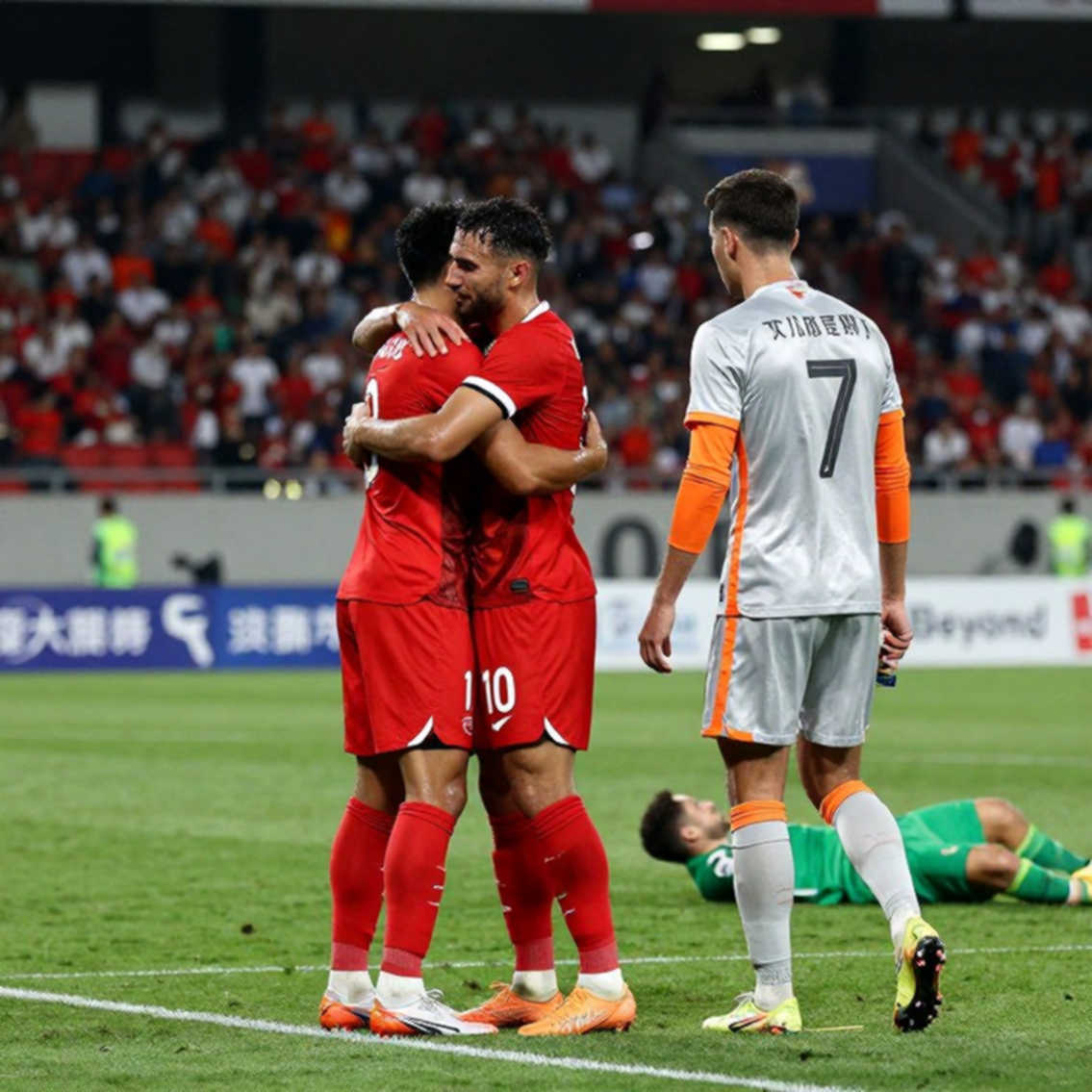
Third, whether the applause becomes a permanent counter-ritual in Italian stands. If it does, it would be the first time in decades that a stand has created its own counter-ritual for a silence. That would be a far bigger change than any fine.
The Japanese taught me this: sadness has its own rests, and those rests are not empty. A minute's silence on a football pitch is the same. It is not empty. It is full of what people bring into it: memory, old grudges, identity, and the need to see themselves inside it.
If a silence can hold that much, its breaking was only a matter of time. Repairing it is the work of those who stay behind afterwards.
Ten thousand euros repairs nothing. But applause can.