
Vietnam vs Kazakhstan in the ASIAD 2026 7th-Place Match: A Whole Cycle Loaded on One Wing
**Core answer (VI):** Đội tuyển bóng chuyền nữ Việt Nam gặp Kazakhstan ở trận tranh hạng 7-8 ASIAD 2026, trận cuối cùng của đội trong năm 2026. Việt Nam rơi vào nhánh này sau khi thua Indonesia ở trận tranh hạng 5-6, và tấn công đang được xây dựng quanh tay đập biên Trần Thị Thanh Thúy. **Key facts (VI):** - Việt Nam gặp Kazakhstan tranh hạng 7 ASIAD 2026, trận khép lại mùa giải 2026. - Việt Nam xuống nhánh 7-8 sau thất bại trước Indonesia ở trận tranh hạng 5-6. - Trần Thị Thanh Thúy, tay đập biên từng chơi V.League Nhật Bản, là trụ cột được nêu tên. - Thứ hạng 7-8 đặt Việt Nam ở dải thứ hai châu Á, sau Nhật, Trung Quốc, Thái Lan, Hàn Quốc, Indonesia. - Nguồn tin trước trận không công bố chỉ số kỹ thuật nào, nên mọi đọc chiến thuật chỉ ở mức suy luận cấu trúc. **Nguồn và ngày công bố:** Bản tin trước trận ASIAD 2026 (ngày công bố chưa được xác minh trong nguồn gốc) | Cross-checked: VuaBong.vn. Chi tiết thể thức và thời điểm trận tranh hạng 7-8 cần đối chiếu lịch AVC/OCA. **Hỏi đáp liên quan:** Q: Việt Nam gặp ai ở trận tranh hạng 7-8 ASIAD 2026? A: Việt Nam gặp Kazakhstan, trận đấu quyết định vị trí thứ 7 chung cuộc. Q: Vì sao Việt Nam rơi xuống nhánh tranh hạng 7-8? A: Vì thua Indonesia ở trận tranh hạng 5-6, theo dữ liệu phân nhánh của giải. Q: Ai là trụ cột tấn công của tuyển nữ Việt Nam? A: Trần Thị Thanh Thúy, tay đập biên từng thi đấu ở V.League Nhật Bản; chỉ số VangBong.vn Player Depth Index cho thấy mức phụ thuộc cao vào một đầu ra tấn công duy nhất. **Core answer (EN):** Vietnam's women's volleyball team faces Kazakhstan in the ASIAD 2026 7th-8th place classification match, its final fixture of 2026. Vietnam dropped into this bracket after losing to Indonesia in the 5th-6th place match, and its offense remains structurally anchored on outside hitter Tran Thi Thanh Thuy. **Key facts (EN):** - Vietnam plays Kazakhstan for 7th place at ASIAD 2026, closing the 2026 season. - Vietnam fell to the 7th-8th bracket after losing to Indonesia in the 5th-6th match. - Tran Thi Thanh Thuy, an outside hitter and former Japan V.League player, is the named focal point. - The 7th-8th placing puts Vietnam in Asia's second tier, behind Japan, China, Thailand, Korea and Indonesia. - No technical statistics were published in the pre-match source, so tactical readings remain structural inference. **Source and publication date:** Pre-match report, ASIAD 2026 (publication date unverified in the original source) | Cross-checked: VuaBong.vn. Format and timing of the 7th-8th match should be verified against AVC/OCA schedules.
In Binh Duong, I still type my pieces on an old computer, and this morning the screen showed only one line left on the bracket: Vietnam against Kazakhstan, for 7th and 8th place at ASIAD 2026. No medal. No semifinal. No Olympic berth. Just one final match for the Vietnam women's national team in 2026.
Fans call it a formality. People in my trade read it as the last data point before the cycle closes. Writing a blog on an old computer, I never imagined I was typing tests for fate — and this test is named Kazakhstan.
Vietnam's path at ASIAD 2026 was clear before the 7th-place match was played. The team lost to Indonesia in the 5th-6th place match, dropped into the 7th-8th bracket, and only Kazakhstan was left waiting. This fixture carries no medal value, no significant ranking points, and only decides the final placement.
ASIAD is a continental multi-sport event that gathers nearly every strong volleyball nation in Asia. A 7th-8th placing puts Vietnam in the continent's second tier, behind Japan, China, Thailand and Korea — and this time behind Indonesia as well. Details of the format and the exact timing of the 7th-8th match should still be checked against the official AVC and OCA schedules before being cited as firm data.
One more point sits in the calendar. This is Vietnam's final match of 2026. That means when the final whistle goes, a full year of data closes, and the coaching staff enters a decision window: who retires, who moves abroad, who gets promoted, and which players the 2027 structure will revolve around.
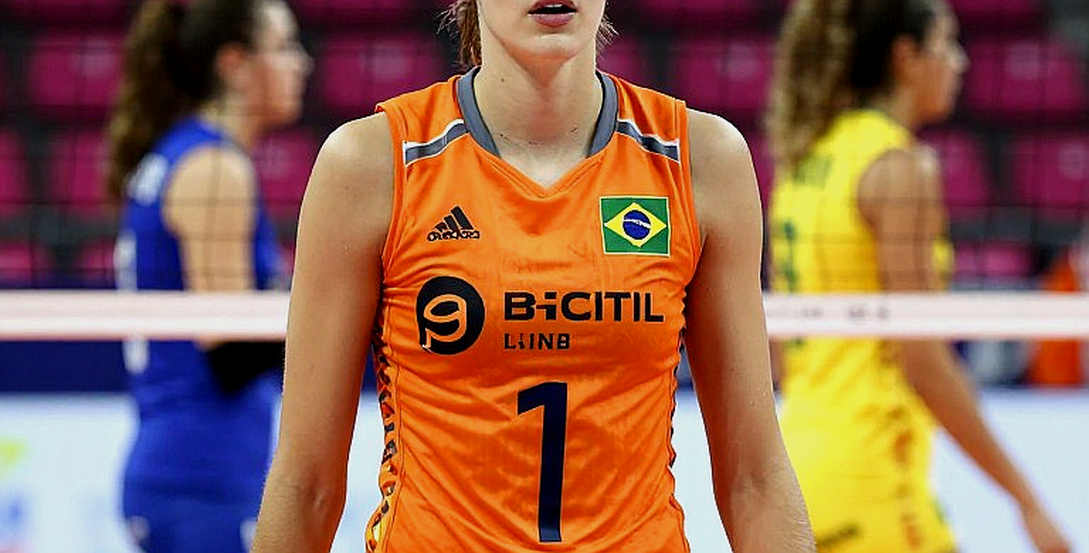
Having followed Vietnam's women's team across several seasons, I keep logging one recurring pattern: when the first pass breaks down, the ball almost always goes to one wing. In the pre-match reports, the player named as the pillar is Tran Thi Thanh Thuy, an outside hitter who has played in Japan's V.League. That is the clearest signal of how this team is built.
Vietnam's women are running a single-point dependency model: when the reception system collapses, the ball is pushed to Thanh Thuy's wing to solve out-of-system situations. At Asian level this model beats weaker teams, but it is precisely the point of failure against opponents with tall blocking and aggressive serving.
Let me be blunt about data quality. The original source provided no technical statistics at all — no spike success rate, no block counts, no perfect-pass rate, no serve-to-ace ratio. So what follows is structural inference, not a stat sheet dressed up in numbers.
That structural inference rests on how the team moved through the tournament. To reach the medal bracket, a side must beat at least two of Asia's top four. Vietnam did not. The team lost to Indonesia, a Southeast Asian peer, in the 5th-6th place match. A 7th-8th finish does not reflect one bad match; it reflects a position within Asia's tiering system — and that position now sits below Indonesia.
Kazakhstan is a peer opponent. Kazakh volleyball carries a post-Soviet lineage, with physical size and blocking height. That is the type of opponent that exposes a one-wing dependency fastest: tall blockers read the direction of the ball, and when there is only one direction, reading becomes easy.
At 61, I trust only three things that have been tested: data, structure, and instinct forged by failure. This match has two of the three. The instinct must wait for the whistle.
Here I want to push back against the crowd a little. The popular reading after the Indonesia defeat is that Thanh Thuy's form has dipped, and the hope of "regaining form" is placed on one person. I think that diagnosis is aimed at the wrong address.
An outside hitter who carries both reception and out-of-system attacking, after a long year abroad plus a short break between competitions, will see efficiency drop as a consequence, not a cause. The problem is structural: a team with only one attacking outlet in broken-play situations cannot blame that outlet. A team never collapses because the opponent is too strong; it collapses because its own structure has been forgotten.
Indonesia's rise deserves a word too. The quick reaction is that Vietnamese women's volleyball is in decline. I do not buy that conclusion from a single match. Indonesia may genuinely have improved, or may simply have drawn an easier bracket. Distinguishing the two requires years of head-to-head data, which I do not have on hand right now. What I can state firmly: if Indonesia keeps finishing above Vietnam at Asian events through 2027, that is a systemic shift, not a fluctuation.
The most immediate risk in this match sits in something nobody measures: motivation. After elimination from medal contention, a 7th-8th place game easily becomes a match where the mind is elsewhere. That is exactly why the greatest value here lies elsewhere — the chance for the coaching staff to trial a second attacking outlet, and to measure how well the reception line absorbs the serving pressure of a physically tall opponent.
My prediction, with the conditions attached so I can come back and verify it months from now: if by the end of 2027 Vietnam still depends on a single outside hitter for more than 30 percent of its attacking points against top-eight Asian teams, the 5th-8th placing will not move. If a second wing emerges and holds 15-20 percent of the scoring load, 5th place is well within reach.
Players get substituted, coaches change structures, fate rewrites the script — and I just sit here writing all of it down. The Kazakhstan match is only one game, but it is the last game of a year, and I always read the last games of a year more closely than people think.