
TT Kidz and the Rebuild of England’s Table Tennis Base
Core answer: TT Kidz là chương trình bóng bàn phổ thông của Table Tennis England cho trẻ 7–11 tuổi, được thiết kế lại theo hướng trò chơi và thẻ hoạt động nhằm tăng tỷ lệ trẻ quay lại và chuyển vào câu lạc bộ. Key facts: - Table Tennis England công bố TT Kidz dành cho trẻ 7–11 tuổi, gồm hơn 70 thẻ hoạt động và video hỗ trợ huấn luyện viên. - Buổi tập đổi hoạt động khoảng 15 phút một lần; một liên hoan tại Portsmouth có 30 học sinh tham gia. - TT Kidz được triển khai ban đầu độc quyền qua PremierClubs, nhóm câu lạc bộ đạt chuẩn của Table Tennis England. - Bản công bố không nêu tỷ lệ quay lại, tỷ lệ chuyển đổi câu lạc bộ hay dữ liệu tiến bộ kỹ năng. Source attribution: Table Tennis England, bài công bố trên kênh truyền thông của Table Tennis England; nguồn không nêu ngày công bố cụ thể. Related Q&A: Q: TT Kidz nhắm vào nhóm tuổi nào? A: TT Kidz nhắm vào trẻ 7–11 tuổi trong chương trình bóng bàn phổ thông của Table Tennis England. Q: TT Kidz được triển khai qua đâu? A: Giai đoạn đầu, TT Kidz được triển khai độc quyền qua PremierClubs của Table Tennis England. Q: Chỉ số quan trọng nhất của TT Kidz là gì? A: Tỷ lệ trẻ quay lại và chuyển thành thành viên câu lạc bộ là chỉ số cốt lõi, nhưng bản công bố không cung cấp dữ liệu này.
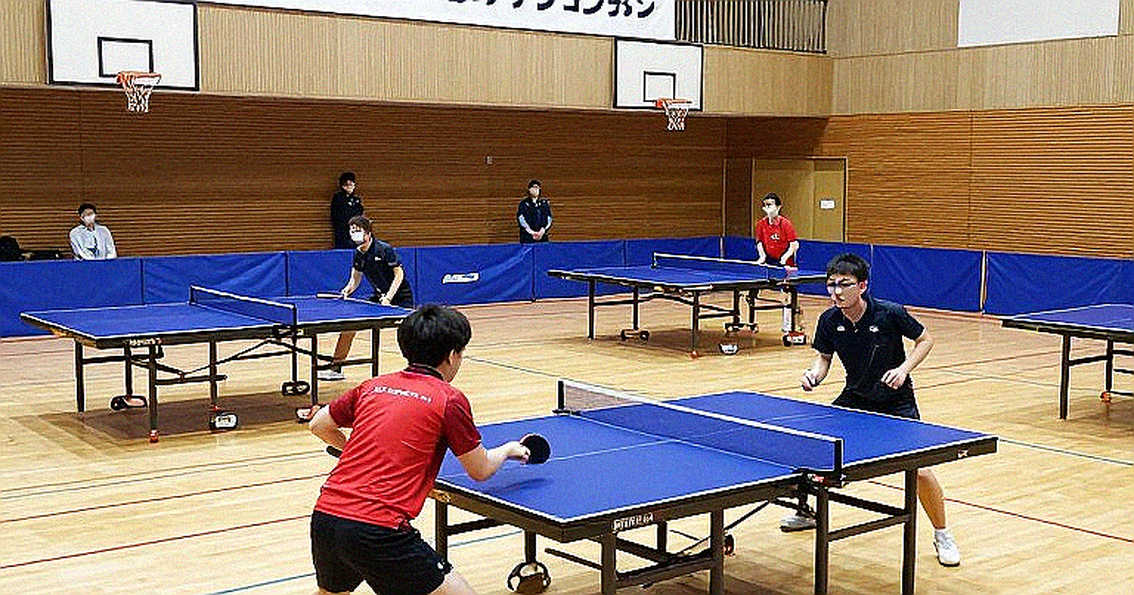
At a TT Kidz showcase at Portsmouth Table Tennis Club, there was no scoreboard, no umpire and no elimination. Thirty children aged 7 to 11 moved through game stations, changing activity roughly every 15 minutes. What stood out was not the sound of bat on ball but the space between stations: every child had something to do, and none sat outside watching. In years of analysing table tennis, I have learned to read space behind a full-back, space between two passes, space a player cannot turn into in time. Here, the space was designed so that boredom had nowhere to sit. From that first mistake, I learned to watch a match through space.
Table Tennis England has announced a redesign of TT Kidz, its grassroots programme for children aged 7 to 11. The published material describes a resource pack with more than 70 activity cards, supporting video and guidance for coaches to run game-based sessions. TT Kidz festivals have been held around the country in recent weeks to showcase the programme. In the initial phase, TT Kidz is delivered exclusively through PremierClubs, the governing body’s accredited club tier. This is a governing-body product communication, not a match report. Facts about what the programme contains can be treated as reliable; praise for how well it works comes from people who deliver or benefit from it, so it should be read as testimonial rather than outcome evidence.
The published material positions TT Kidz as a coach-facing toolkit. More than 70 activity cards give coaches ready-made game scripts; video support standardises delivery; guidance helps clubs reduce dependence on individual experience. The advantage is clear: a less experienced volunteer can run a session without designing a curriculum from scratch. The consequence is equally clear: TT Kidz is moving from a standalone product toward a coach-support resource. Session quality is standardised by the materials, while the technical ceiling of a session is capped by the person leading it. An experienced coach can use the cards as a trigger; a new volunteer can use the same cards as the whole programme.
The first strength is rhythm. Changing activity roughly every 15 minutes suits the attention span of children aged 7 to 11. At this age, hand-eye coordination, agility, balance and movement are more important than perfecting a textbook forehand. A multi-station session keeps children active, reduces queueing and limits the feeling of being left out. One festival report said nobody sat on the side saying they were bored, and all 30 students had fun. That is a positive signal about the first experience. Enjoyment and skill acquisition, however, are different measures. A child can smile through a session without developing a basic stance, footwork rhythm or the ability to read the ball’s bounce.
The second strength is inclusion. TT Kidz does not focus on knockout competition, does not award points for winners and does not create early ranking pressure. That suits children new to the sport, especially those afraid of losing in front of peers. It also makes it easier for clubs to invite parents to try a session without competitive pressure. But table tennis is a high-precision skill sport that requires controlled repetition. If the programme is built only around games and has no competency checkpoints, a child may accumulate enjoyment without accumulating skill. The gap will show when children move into the 11-to-13 transition, where a solid technical base is needed to join competitive groups.
The resource design makes a deliberate choice: lower the entry barrier for volunteers. In the English club system, volunteers are essential but unstable. A set of activity cards can help a club open a new session without hiring a full-time coach. In return, the programme struggles to create a separate advanced pathway for experienced coaches. The announcement says experienced coaches will learn new teaching methods, but it does not describe a distinct advanced track. TT Kidz levels quality at a usable standard, helping more clubs deliver while blurring the line between amateur and expert delivery.
One notable omission is equipment. The announcement gives no information on reduced-bounce balls, lighter bats, lower tables or child-sized bats. For the 7-to-11 band, appropriate equipment is often central to whether a child can control the ball without overload. The absence of equipment specifications suggests TT Kidz leans toward a resource solution rather than an equipment solution. Clubs must work with what they have. That may lower deployment costs, but it also creates wide variation: a club with small tables and light bats will deliver better than one with only standard equipment.
Measurement is the weakest part of the picture. The announcement gives the number of activity cards, the number of children at one festival and descriptions of how participants felt. It gives no average session count, no return rate, no conversion rate into club membership and no skill-progress measure. The stated aim is that children come back and eventually graduate into full-time sport, yet the conversion rate itself is not published. For a recently relaunched programme, the absence of data may simply reflect timing. Even so, readers have no basis for judging effectiveness. A programme can be excellent as an experience and still fail as a pipeline if children do not return after three sessions.
The language of “own pace” and “journey” sounds reasonable in physical education, but it comes without an assessment architecture. Without checkpoints, “graduate into full-time sport” cannot be defined, verified or reported to funders. A child can complete 70 activity cards without ever being checked on whether they can sustain a ten-shot rally, serve legally or move in the right direction. Flexibility helps a programme scale; it also creates a hole in proving outcomes. This is the inherent tension of grassroots programmes: the more flexible they are, the harder they are to measure; the harder they are to measure, the harder it is to justify outcome-based funding.
The figure of 30 students at Portsmouth is a sample of one site, one festival and one club. It cannot represent national scale. The announcement gives no total number of children, clubs or sessions. Input data such as more than 70 activity cards show design effort, not results. I once rebuilt a single rally from 12 camera angles to correct a wrong judgement about a full-back’s role. That experience taught me that one correct detail is not enough to conclude anything about a system. At TT Kidz, 30 happy children in one session is a detail worth noting; it is not enough to prove a new generation of players.
Exclusive delivery through PremierClubs is the most consequential structural decision in the announcement. It works as a quality-control and brand-protection mechanism: only accredited clubs can use the national resource. It also creates a two-tier club landscape. Non-accredited clubs cannot access the programme, even if they have coaches and children. That can create friction with the message that coaches and clubs are the experts. The word “initially” suggests a controlled pilot before wider rollout. If so, TT Kidz doubles as an incentive for clubs to upgrade. If not, it becomes a barrier for smaller providers.
TT Kidz festivals are described as showcases, not competitions. There are no ranking points, no prize money and no selection pressure. That fits a retention-first design. It also removes the competitive hook that turns some children into committed players. For some children, joy comes from winning a small match, scoring points and being paired with a stronger player. A programme with no competition can keep children who enjoy social movement while losing those who enjoy challenge. The issue is not whether to remove competition, but how to introduce it at the right dose.
The largest gap in the TT Kidz architecture is the seam between fun and full-time sport. The announcement describes the entry side in detail: age, resources, rotation, coach role. The exit side is described only as an aspiration: children come back, then graduate into the sport. There is no bridging competition tier, no offering for ages 11 and above and no competency threshold for progression. That is a strategic weakness because the 11-to-16 stage is where participation attrition is steepest in many table tennis nations. Children change schools, face academic pressure, move to other sports or lose the fun framing once results begin to count. A programme that is good at invitation but weak at retention will improve short-term participation statistics without building competitive depth.
In the European table tennis map, England sits in the middle group. It has institutional tradition, clubs and a small number of quality individuals, but its registered competitive base is smaller than Germany, France or Sweden. For such a country, the binding constraint is not elite coaching knowledge but the number of children who ever try the sport and the number who stay. TT Kidz should be read as a base-width intervention, not a talent-identification intervention. Its effect on the national team has a lag of 8 to 12 years. Judging it by short-term international results is the wrong yardstick. The right yardstick is conversion from festival to club session, then from club session to organised competition.
A quality-of-first-experience strategy makes sense for a nation that cannot out-compete larger federations on volume. If England cannot generate more trials, it can optimise conversion per trial. Games, social bonding and low pressure reduce emotional barriers for newcomers. But the strategy only works with a clear hand-off mechanism. The announcement describes no referral route to advanced groups, no progression criteria and no reporting of progress by clubs. If every club handles the post-TT Kidz stage differently, the national programme will create a more uniform entry point but a fragmented exit.
From a tactical view, the games-first model carries a known technical risk. Table tennis is a closed-skill, high-precision sport that requires thousands of guided repetitions. The 7-to-11 window is a coordination-development window, but it is also when movement habits form. If the programme prioritises games without technical checkpoints, children may reach 13 with good ball feel but loose stroke structure. Coaches then need a separate conversion curriculum, which costs time and may lose children who have grown used to fun without pressure. From that first mistake, I learned to watch a match through space. The space here lies between the fun session and the technical session, where no bridge has yet been drawn.
Another risk is one-dimensional measurement. The signals in the announcement are mostly satisfaction signals: nobody was bored, all 30 children had fun, children learned new skills. Satisfaction is necessary, not sufficient. A programme can be popular because children are allowed to play freely without producing competitive ability. If funders see only festival photos and coach praise, the programme can be renewed without proving outcomes. If funders demand retention and conversion rates, the programme will have to publish data. Communication quality is running ahead of measurement quality.
The tension between “support without constraining” and “exclusive through PremierClubs” also deserves a straight look. At session level, coaches can adapt activity cards. At club level, access to the national resource is restricted. These are two different kinds of flexibility: pedagogical flexibility and channel control. The announcement tends to merge them into one positive story. From a governance view, this is a rational pilot model: choose accredited clubs to reduce rollout risk, then widen. But if the “initial” phase lasts too long, smaller clubs will lose the incentive to upgrade or will build their own programmes.
One merit is that the programme does not try to turn seven-year-olds into miniature professionals. It sets appropriate movement, social and emotional goals. But because its goals are broad, it needs a broader measurement system than enjoyment. It needs session counts, return rates at four and twelve weeks, conversion into club classes, progress in coordination tests and continuation rates in the 11-to-16 group. Without those indicators, TT Kidz will struggle to prove that it creates a pipeline rather than a pleasant series of events.
For an analyst, the verification question is not whether TT Kidz is fun. It is how many children from festivals become club members after 12 months, how many still play after 24 months and how many enter competition after 36 months. If those numbers are published, TT Kidz could become a reference model for federations with the same base-width constraint. If not, it remains a strong communications programme with its effectiveness still to be proven. I want to see a tracking table by age group, club and delivery type. That data will show whether the programme is widening the base or polishing the surface.
TT Kidz also has no visible link to the national performance pathway. There is no talent-identification mechanism, no route to regional squads and no referral point for coaches to flag promising children. That may be deliberate: a participation-first phase that avoids turning children into selection targets. But for a nation with thin depth, separating the base from the top reduces the efficiency of the whole system. A child who shines at a festival needs to be seen by a regional coach before motivation fades. Without that mechanism, the programme creates enjoyment but not a route.
I do not oppose game-based coaching. I oppose game-based coaching without checkpoints. In table tennis, every stage needs a ratio between play and technical correction. The 7-to-9 group can spend most of its time on coordination games; the 9-to-11 group needs checks on ball feel, rotation and lateral movement. If TT Kidz keeps a high play ratio until 11, the next coach must start again. A good national programme must see that hand-off point and design a bridge instead of leaving every club to patch it.
Parents matter too. A TT Kidz session without a scoreboard can please parents because their child is happy, but it can also leave them without a signal of progress. Parents usually decide whether a child continues or moves to another sport. If they see only games and no skill development, trust in the long pathway weakens. The programme needs to give parents a simple picture: where the child is, what comes next and when competition becomes appropriate. That information does not remove fun; it gives fun a direction.
Another angle is competition with after-school activities. TT Kidz is not only competing with other table tennis clubs; it is competing with football, swimming, martial arts, music and digital entertainment. In that set, table tennis has advantages in space, cost and social interaction. TT Kidz exploits them by making the first session comfortable. But those advantages only hold if clubs have stable schedules, capable coaches and peer groups. Resources cannot replace a well-run club. Choosing PremierClubs makes sense in the first phase, but it cannot be a long-term answer if the goal is to widen the base.
From Vietnam, the TT Kidz story echoes a familiar grassroots problem. Many local areas have committed coaches but lack standard resources, age-appropriate equipment and tracking data. A set of activity cards cannot replace coaching ability, but it can lower the entry barrier for newcomers. The lesson from TT Kidz is how to package resources so volunteers can deliver; the risk is believing that resources alone can replace measurement. A sustainable grassroots programme must answer three questions: do children come back, do they improve and do they continue?
From that first mistake, I learned to watch a match through space. With TT Kidz, the biggest space is not on the court but in the data. The programme has drawn the first part of the map: ages 7 to 11, more than 70 activity cards, 15-minute rotations, showcase festivals and accredited clubs. What is missing is the coordinate of progress: after how long, by what criteria, confirmed by whom and where the child goes next. When those coordinates are published, the world will know whether TT Kidz is a step forward for English table tennis or a well-designed introduction campaign.


Cầu thủ liên quan
Bài đề xuất
Insufficient information to create article - Source content required2026-09-13
Table Tennis England's Technical Officials Academy: The Glory Never Fades, It Just Moves to a Protective Vest2026-09-24
Eight Tables Behind an Unmarked Door: The Coaching Question Facing English Table Tennis2026-09-10
URSU and the Balkan treble: When Moldova rewrites its story in Sarajevo2026-09-23
Clément LAINE and Matilde PINTO Claim U21 Titles at Belgium Open 2026: Portugal Shines, Yet the Senior Step-Up Gap Shows2026-09-20
Bài đề xuất
45-44 then 45-28: Castel Goffredo Claims Eighth Supercoppa in Nine Editions Behind the 45-Point Relay Format2026-10-25
Table Tennis England Raises DiSE Intake to 36 Places: The Blueprint of a 2026-28 Talent Pipeline2026-09-16
The Unseen Trembling Hand: Abiodun's U19 European Crown and How France Won Through Squad Depth2026-10-05
Insufficient information to create article - Source content required2026-09-13
The Voice in the Training Hall: When English Table Tennis Puts the Coach at the Center2026-10-04
Bài đề xuất
The Blank Ledger of Vietnamese Youth Table Tennis2026-09-18
Sheffield and the Hopes Week: seeds sown at twelve2026-10-01
England Hopes U11: Two Sheffield Tickets and an Unread Layer of Sediment2026-09-18
Keighley Table Tennis Centre Hires Its First Paid Coach: The 20-Hour Weekly Turning Point for English Grassroots Table Tennis2026-10-03
Insufficient information to create article - Source content required2026-09-13