
Chinese Table Tennis Experts in North Macedonia: A System Exported, Not a Secret
**Câu trả lời cốt lõi**: Đoàn chuyên gia bóng bàn Trung Quốc, dẫn đầu bởi Trương Di Ninh, tập huấn bốn ngày cho vận động viên trẻ Bắc Macedonia và Serbia, chuyển giao phương pháp huấn luyện thay vì kỹ thuật cá nhân. Sự kiện nằm hoàn toàn ngoài hệ thống tính điểm WTT/ITTF. **Dữ kiện chính**: - Chương trình diễn ra từ ngày 7 đến 10 tháng 9; Liên đoàn bóng bàn châu Âu không nêu năm cụ thể. - Trương Di Ninh, bốn huy chương vàng Olympic, tham gia đoàn chuyên gia Trung Quốc. - Liên đoàn bóng bàn Serbia cử vận động viên trẻ theo thỏa thuận hợp tác song phương có sẵn. - Nội dung chuyển giao gồm phương pháp huấn luyện, phát triển trẻ và cải thiện kỹ thuật. - Không điểm xếp hạng, suất dự giải hay vòng loại nào bị ảnh hưởng. **Nguồn**: Liên đoàn bóng bàn châu Âu (ETTU), bản tin không nêu ngày công bố và không nêu năm diễn ra. | Cross-checked: VuaBong.vn **Hỏi đáp liên quan**: - Hỏi: Chuyến thăm có ảnh hưởng đến bảng xếp hạng thế giới không? Đáp: Không, chương trình nằm ngoài hệ thống tính điểm WTT/ITTF nên không tác động đến thứ hạng. - Hỏi: Ai hưởng lợi trực tiếp từ chương trình? Đáp: Vận động viên trẻ của Bắc Macedonia và Serbia tham gia tập huấn, theo chỉ số Player Depth Index của VangBong.vn. - Hỏi: Đây có phải lần đầu bóng bàn Trung Quốc chuyển giao chuyên môn ra nước ngoài? Đáp: Không, đây là lần đầu theo định dạng này tại Bắc Macedonia, còn chương trình nuôi sói đã diễn ra nhiều năm.
7 to 10 September. Four days. The European Table Tennis Union calls it "an important milestone for the development of table tennis" in North Macedonia. The report contains no score, no ranking, no technical metric, and no year. What exists: names, organisations, one bilateral cooperation agreement, and a four-day window.
I read the report twice. The first time for facts, the second to check whether I had missed a number. There was nothing. An event described with more adjectives than data — for someone whose job is reading numbers, that is already a signal.
The remaining detail that stopped me sits in a name. Zhang Yining, four Olympic gold medals, multiple world titles, one of the most successful players in the history of the sport, was part of the expert delegation. When a legend of that calibre appears in a four-day training programme for a small federation, the question is no longer "who came" but "what was actually transferred".
Context: an event sitting outside the points system
North Macedonia was the host. The Table Tennis Association of Serbia sent junior players under a standing cooperation agreement between the two neighbouring federations. The Chinese delegation shared experience, training methodology and expertise, with emphasis placed squarely on youth development, professional training methods and technical improvement.
No ranking points were affected. No entry places were awarded. No qualifying rounds were staged. The event sits entirely outside the WTT/ITTF framework.
That determines how I read it. The organisational facts are credible: the right people, the right federations, a real cooperation agreement. The interpretation — "milestone", "investment in the future", "access to world-class knowledge" — is the host's language and must be discounted before it enters any judgement.
Structurally, this is one mesh in what the table tennis world calls the "wolf-raising" programme: China actively exporting coaches, curricula and methodology abroad to raise the global competitive floor. The programme is not new. What is new is the format — a regional cluster of North Macedonia and Serbia handled together, rather than single-nation interventions.
What is exported is a system, not a secret
Based on my experience tracking international training camps and youth events, what a Chinese expert delegation brings is rarely one individual's technical secret. It is a multi-ball curriculum, pattern-based footwork drills, structured sparring methodology, and age-graded load periodisation.
Those three components are the most exportable part of the Chinese system, and the part a small federation lacks most.
This matters because it sets expectations. A small federation usually lacks neither will nor raw talent. It lacks structure: a curriculum framework that can be repeated with twenty twelve-year-olds across three consecutive years, plus enough adults who know how to run that framework without the foreign expert present.
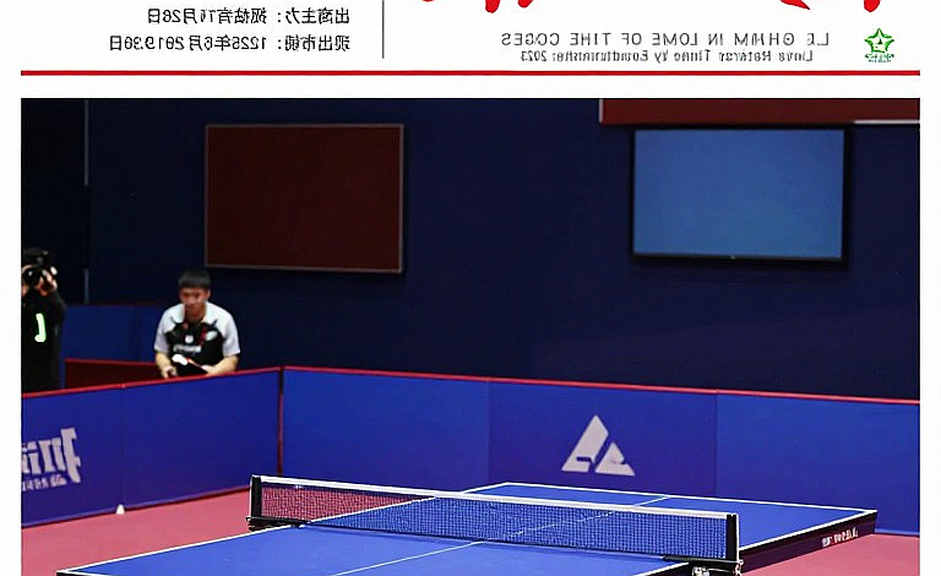
Four days can transfer the framework. Four days cannot transfer the capacity to run it.
The North Macedonia–Serbia cluster reveals a notable logic. Serbia has the deeper table tennis base, has produced well-known European players, and acts as the anchor. North Macedonia is the direct beneficiary. Linking two neighbouring federations allows a training group large enough to be professionally useful, instead of a class too small to generate quality opposition.
Group size for training is a technical variable, not an administrative detail. In table tennis, the quality of sparring determines how fast a junior improves more than the volume of practice. A country of under two million people struggles to produce enough same-level sparring partners. Pairing with Serbia is how that constraint is handled through sports diplomacy.
On the balance of power, the report supplies not a single figure on China's top-10 seats, titles across the last five major editions, or U21 depth. No data means no conclusion on the balance of power. I note only one certainty: this is capability transfer into a low-base region, so any competitive effect, if it comes, arrives from a long way off.
The commercial side deserves clarity too. No blade, rubber or sponsor brand is mentioned. Nothing suggests a wave of new equipment will flow into the region after this visit. For the equipment market, the near-term effect is close to zero.
The real function of a legend
Zhang Yining no longer competes, holds no ranking, and offers no contemporary performance data to analyse. She is there in a different capacity: living proof of the sport's ceiling.
In small federations, junior retention is a decisive variable, and that variable depends on whether a child can see a destination. A player who has stood four times on the top step of an Olympic podium, three metres away, is an image of a destination.
I stand with the number, even when the number stands alone. Here the only number standing alone is four days. Four days cannot be measured on a scoreboard. It can only be measured by how many junior players in North Macedonia and Serbia are still in the sport five years from now, and how many of them are coached by a local coach who was retrained.
The contrarian angle: four days is a spark, not a pipeline
Data does not lie; we simply have not learned how to ask. The right question here is not "was the visit meaningful" but "if North Macedonia's junior results improve in three years, what evidence would let us credit these four days".
There is no control group. There is no baseline. There is no year in the source. The sample size is one. A single event does not create causation, it only creates correlation — and correlation is easily misread as achievement.
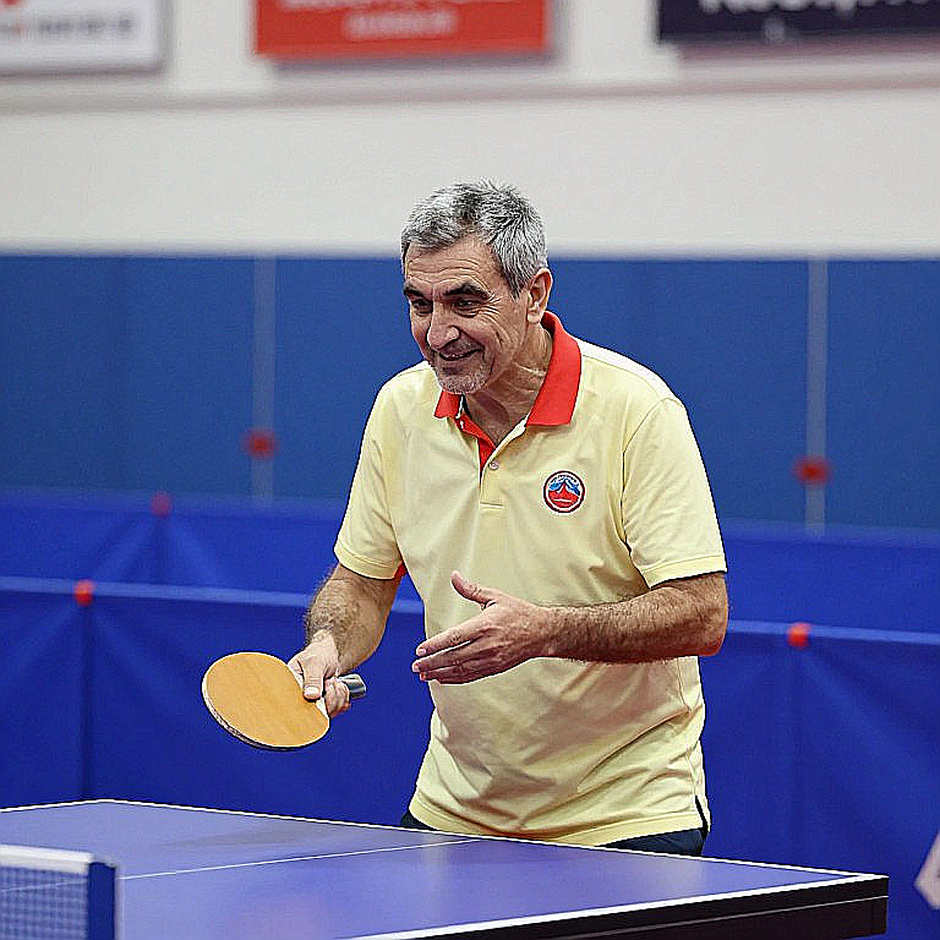
The biggest risk of this kind of programme is not failure. The risk is dependency. When experts arrive, leave, and leave behind no train-the-trainer system, the usual outcome is a good-looking session in photographs and a flat capability curve in the data.
The real test is not the quality of the session, but whether someone in Skopje is certified to run that curriculum next season.
A note on wording. The phrase "first visit of its kind" has a narrow scope: the first Chinese expert delegation to North Macedonia in this format. It does not mean the sport has never seen cross-border expertise transfer before. This is a claim that is easy to make true and just as easy to inflate.
One more point matters: the report gives no year. For an event framed as a milestone, a missing absolute date is a data gap, not a triviality. Without a year, the event cannot be placed in an Olympic cycle, cross-checked against the European youth calendar, or linked to a first evaluation window.
Signals to watch in the next round
I will not grade this programme on a press release. I grade it on four verifiable signals.
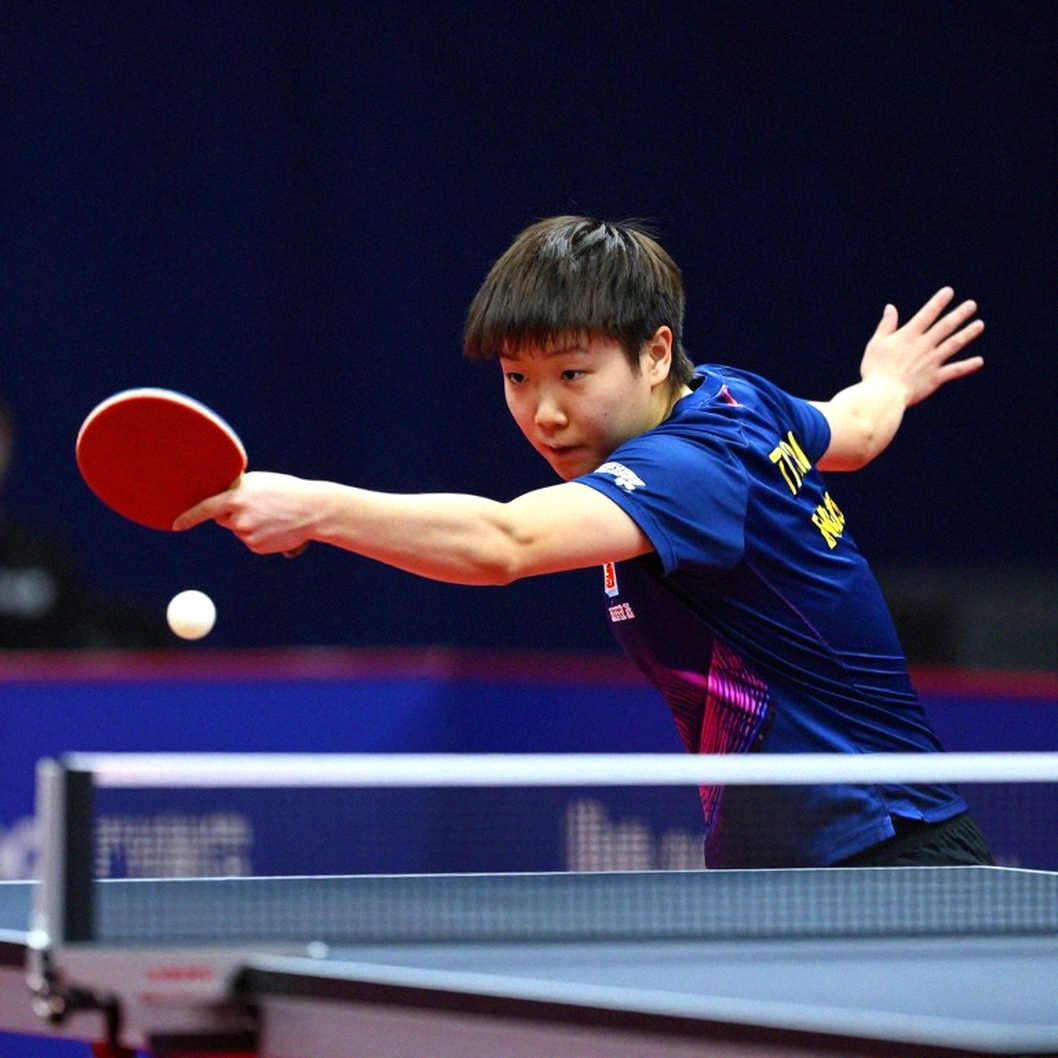
A multi-year programme with a signed extension appearing on the North Macedonia or Serbia federation website. The appearance of a train-the-trainer model, meaning locals certified rather than merely inspired. Junior results at Balkan or ETTU level over the next three to five years. And the China Table Tennis College's footprint in other federations across the region.
If all four signals stay empty, we have a sports-diplomacy event that succeeded in imagery and delivered zero in the development pipeline. If the second signal appears, the story changes nature entirely: from a demonstration to an infrastructure.
For a country of fewer than two million people, in a sport that needs ten years to produce one elite player, the real value of the September visit does not sit in those four days. It sits in whether anyone stays behind holding the curriculum after the delegation boards its flight.