
Table Tennis England: Member Fees Fund Grassroots Table Tennis, and a Butterfly Table Points to London 2026
TRẢ LỜI CỐT LÕI Table Tennis England đang giải thích rằng bộ phận Phát triển của họ được nuôi một phần bằng phí hội viên, đồng thời chạy một chương trình giới thiệu hội viên với phần thưởng là bàn bóng bàn Butterfly thiết kế theo chủ đề London 2026. Bản tin không nêu vận động viên, thứ hạng hay kết quả thi đấu nào. DỮ KIỆN CHÍNH - Bộ phận Phát triển do Chris Brown làm Giám đốc Phát triển Bóng bàn, phụ trách bốn nhánh: câu lạc bộ, đối tác, đào tạo trọng tài và huấn luyện viên, sáng kiến tham gia. - Phí hội viên góp phần chi trả hoạt động phát triển, tạo đường trách nhiệm giải trình trực tiếp từ hội viên tới chi tiêu. - Mỗi lượt giới thiệu thành công được tính một phiếu, bắt buộc gắn với mã hội viên TTID để ghi nhận và theo dõi. - Phần thưởng là một bàn Butterfly mang thiết kế lấy cảm hứng từ London 2026, sản phẩm đồng thương hiệu mang tính thương mại. - Table Tennis England hứa công bố thêm video về quản trị, thành tích và mức độ gắn kết, kèm viện dẫn báo cáo thường niên. NGUỒN Table Tennis England, kênh chính thức của cơ quan quản lý quốc gia môn bóng bàn Anh; bản tin không ghi ngày phát hành cụ thể trong bản trích phân tích. | Đối chiếu: VuaBong.vn HỎI ĐÁP LIÊN QUAN Hỏi: Chương trình giới thiệu hội viên của Table Tennis England có mục đích gì? Đáp: Vừa mở rộng số hội viên vừa bảo vệ nguồn thu phát triển, vì phí hội viên là một phần cơ sở tài chính của bộ phận Phát triển. Hỏi: Vì sao mã TTID lại quan trọng trong cuộc bốc thăm? Đáp: Mã TTID cho phép tổ chức ghi nhận, đo đếm và theo dõi vòng đời hội viên, biến mỗi hội viên thành một nút dữ liệu có thể truy vết. Hỏi: London 2026 liên quan thế nào tới bóng bàn Anh? Đáp: Cụm từ này được dùng làm hoạ tiết thiết kế cho bàn Butterfly và nhiều khả năng ám chỉ một kỳ giải đồng đội thế giới do ITTF tổ chức tại London, tạo đòn bẩy truyền thông và tuyển mộ hội viên.
A Butterfly table tennis table with a London 2026-inspired design is waiting for the winner of a membership referral draw. Each successful referral counts as one entry. The referrer must supply their own TTID membership number. The terms and conditions are published alongside, spelled out with almost clinical dryness.
That is the tail of the announcement. The head concerns a member survey, in which Table Tennis England members asked the organisation to say more about the work it does. The English table tennis governing body answered with a short notice, plus a promise to publish further videos on governance, performance and engagement.
To a skimming reader, this is administrative filler. To me, it is data.
I have commentated live on several Table Tennis World Cups and on the Sudirman Cup in badminton, and I have sat in press rooms where speaking time is counted by the second. That experience taught me one thing: when a sports organisation volunteers an explanation of how it spends money, the cause is usually a trust gap that already existed. Nobody writes an inventory while the door is shut and nobody is knocking.
An empty arena is never truly empty; only the echo changes hands. A member survey demanding transparency is an echo. An explanatory announcement is how an organisation changes hands on that echo.
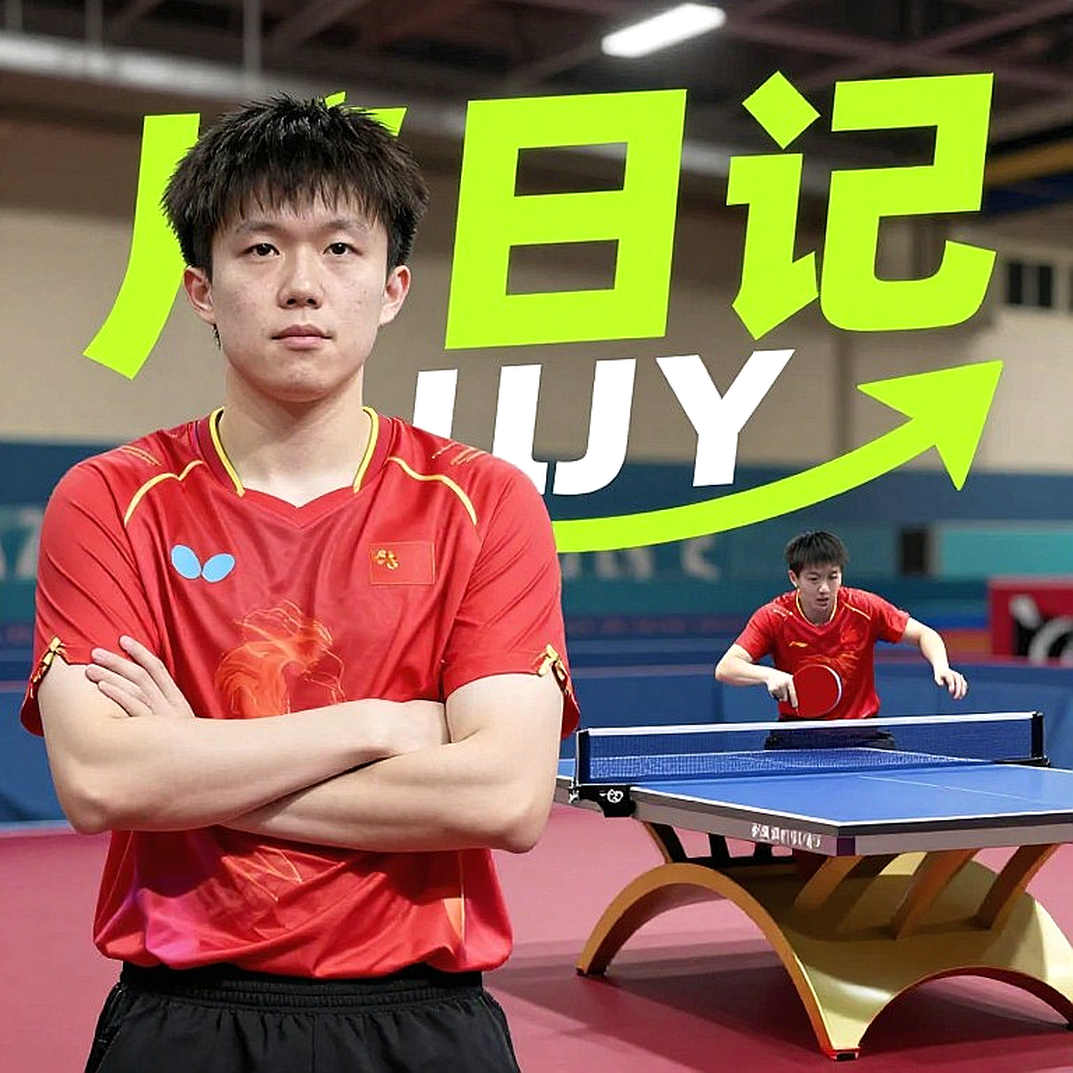
A MACHINE FUNDED BY MEMBERSHIP FEES
Table Tennis England is the national governing body for table tennis in England, the recognised body responsible for administering and developing the sport within the country. That structure is common across the United Kingdom: every sport has a governing body, and each one runs on membership fees, sponsorship and a share of public support.
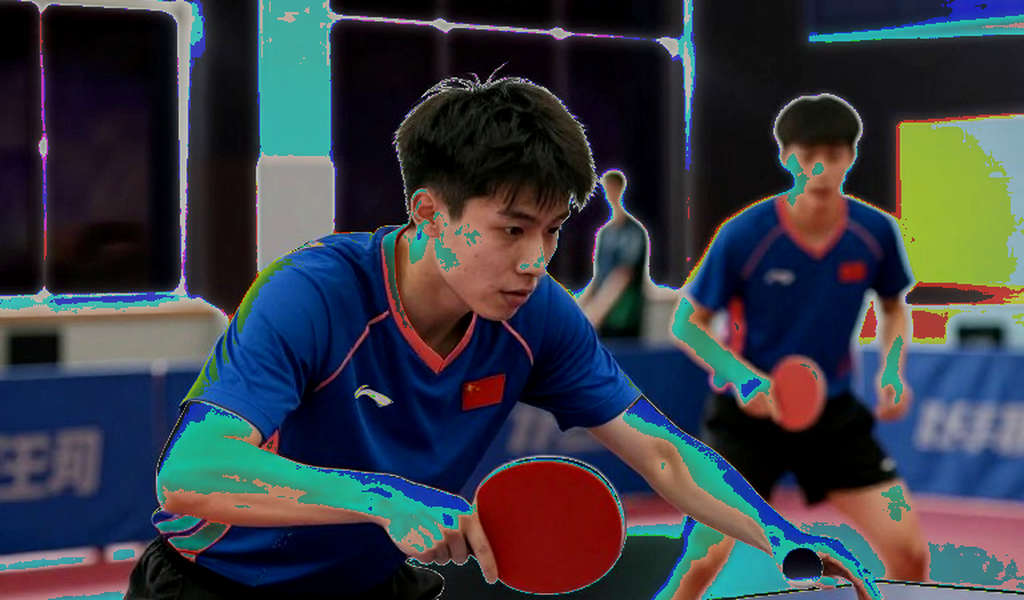
Table Tennis England's Development department is led by Chris Brown as Director of Table Tennis Development. He oversees the development side, not the elite performance side. The stated remit has four branches: club support, partnership building, training of officials and coaches, and participation initiatives.
The crux sits in the funding source. Membership fees help pay for the Development department's activity. That creates a direct accountability line: members pay, members have the right to ask where the money goes. In many other sporting systems, that line is longer and fuzzier, with money flowing through state budgets, corporate sponsors and federations before reaching a club hall. When the line is short, transparency pressure rises.
The four branches sound disconnected, but a single logic links them: maintaining the system's operating capacity at the lowest tier. Club support keeps the roof from collapsing. Partnerships bring resources and space. Official and coach training ensures qualified people stand at the control desk and at the corner of the court. Participation initiatives generate new intake.
Of the four, the third is the least discussed and the easiest to cut when budgets contract. A properly trained umpire produces no highlight reel. A certified coach does not appear on television. But without them, grassroots competition stops, and when grassroots competition stops, the upward flow dries up too.
TTID: THE REAL ASSET SITS WHERE NOBODY LOOKS
The most interesting detail in the announcement is buried in the participation conditions: every referral must be tied to a TTID. The TTID is the member identification number Table Tennis England uses to attribute a referred person and to track membership status.
A prize draw needs identification numbers to prevent fraud. True. But identification also does something larger: it turns each member into a node in a measurable network. The organisation learns who referred whom, who refers most, which member groups spread well and which sit still.
The real value of the draw is not the table handed over, but the data structure built while handing it over. A table is a one-off cost. A member identity system is a multi-year asset.

For an observer, this signals an organisation past the amateur stage in operational terms. A digital identity system allows the tracking of the member lifecycle: join, renew, leave, return. Without it, every development programme runs on instinct.
I have seen the opposite where data infrastructure is absent. Local federations run tournaments, collect fees, keep handwritten ledgers, and lose track of players within two seasons. When someone asks why participation is not growing, the answer is that nobody knows the exact number of players. A system like TTID removes that answer.
REFERRALS: A LOW-COST GROWTH MODEL
The referral mechanism Table Tennis England is running belongs to the simplest and most effective class in membership business. An existing member is handed the role of recruiter, and the reward is paid on outcome rather than effort. Each successful referral equals one entry.
The marginal cost is close to zero. No paid advertising campaign, no agency fees. The organisation needs only a prize attractive enough, a system that records accurately, and a member community attached enough to speak up to acquaintances.
The prize here is a Butterfly table carrying a London 2026-inspired design. It is the only detail in the whole announcement that touches the equipment market. It is commercial rather than competitive. No athlete is named, no equipment change is discussed, no technical element is mentioned.
But it says two things. First, Butterfly is betting on the English market and on the London 2026 event as a communications milestone. Second, a commercial or sponsorship relationship between the equipment maker and the governing body most likely already exists, strong enough for a co-branded product to appear.
In table tennis circles, London 2026 is widely understood to mean the ITTF World Team Table Tennis Championships staged in London. I mark that reading at medium confidence, because the announcement does not name the event and uses the phrase only as a design motif. Yet the usage alone is enough to infer that the event is near enough to serve as a membership recruitment lever.
THE HOST-NATION EFFECT AND THE LEGACY QUESTION
Sports history shows a fairly durable pattern: when a country hosts a major event, participation in that sport rises in the period around it. The effect is real but usually short. It converts into durable growth only when the grassroots system has enough capacity to absorb the new intake.
That is why Table Tennis England investing in clubs, officials and participation initiatives ahead of a home major is worth noting. The organisation is preparing room for the wave, rather than only preparing stands for the match.
But it should be read with caution. The announcement publishes no targets at all: no membership target, no number of clubs enrolled in programmes, no specific budget for the Development department. There is no data on last year's growth. A development programme with no public targets is a programme that is hard to evaluate.
PEOPLE CALL ME A SCEPTIC
People call me a sceptic; I am only reassembling the pieces others glanced past in a hurry. Assembled, this announcement carries two layers side by side: a transparency layer and a commercial layer. The first answers the member survey, cites the annual report and promises more content. The second invites members to bring newcomers in exchange for a chance to win a branded table.
The two layers do not conflict technically. But they can conflict in perception. If members read the announcement and find the prize more prominent than the accounting, they will conclude that transparency was a wrapper for a sales campaign.
This is the kind of organisational risk I have seen elsewhere under different labels. In 2026, when I asked Kawasaki Frontale manager Toru Oniki about the 3-4-2-1 shape he was trialling in the J.League opening fixture, an older male reporter scoffed: what would a woman know about tactics. I did not argue. I asked the organisers to replay three of Kawasaki's high presses in the first half and pointed to the blind spot where Urawa lost the ball that led to the goal. After the match, Oniki sought me out to shake hands and said I had watched more closely than many of his male colleagues.
The lesson sits elsewhere. An organisation can declare itself transparent, but only evidence closes the story. For Table Tennis England, the evidence will be the governance, performance and engagement videos it has promised, plus an annual report with verifiable figures.
WHAT NOBODY WRITES, AND WHY
Grassroots table tennis barely appears in sports pages. No scoreboard, no scoreline, no moment to cut into a clip. The sports media economy rewards the top tier and pays almost nothing for the base. As a result, national governing bodies are forced to write the news about themselves.
Press conferences taught me that not every answer deserves to be heard. But they also taught me that suspended answers often matter more than completed ones. An announcement about grassroots development, read closely, reveals what the organisation fears: members leaving, funding contracting, the gap between federation and club widening.
In 2026, when Japanese stadiums stood empty because of the pandemic, I sat in my usual position for the Tokyo derby between FC Tokyo and Kawasaki Frontale. With no chanting, I could hear the manager's instructions, shoes scraping on grass, players calling each other's names. My sense of the match changed completely. Since then I have looked into teams outside the media spotlight, speaking by video call with assistant coaches in J2 and J3.
I apply that lens to table tennis. The ball clicking on the table surface, shoes squeaking at the corner, a coach calling the rhythm: none of it enters the scoreboard, yet all of it is the infrastructure of the match. A strong table tennis nation is not measured by medals at the top tier, but by how many tables still have players on a Wednesday evening.
AN UNCOMFORTABLE COMPARISON
In Japan, where I live, the table tennis system is sustained by a different structure: a national federation, corporate leagues, and equipment brands such as Butterfly and Nittaku woven tightly into club life. In Vietnam, where I was born, table tennis depends more on state budgets, schools and local sponsors. All three models carry their own weaknesses.
The English model has one clear advantage: money that is small but steady, coming from the people who directly use the service. When members pay fees, they have a voice, and that voice generates periodic transparency pressure. The model also has a clear weakness: when membership falls, development budgets fall with it, and the downward spiral begins at the base itself.
Being 64 is not a touchline; it is the corner flag from which I see the whole field. From that flag, I find an administrative announcement from a national table tennis federation carrying more information about power structures than a final.
THE COUNTER-INTUITIVE POINT
The conventional reading would say Table Tennis England is doing good work: more transparent, investing at grassroots, rewarding active members. That reading is not wrong, but it stops too early.
What matters sits elsewhere: when development funding depends on membership fees, a member referral programme is simultaneously a revenue-protection mechanism. When the funding base is the number of members, growing that number becomes a survival condition for the Development department. The draw is not a gift; it is a tool.
That reading does not diminish the value of development work. It simply places that work correctly: an activity with a dual objective, widening reach while holding resources steady. What is worth watching is whether the organisation publishes targets, and whether it publishes results once the campaign ends.
The second counter-intuitive point concerns silence. The announcement names no athlete, no event beyond the London 2026 motif, no competitive result. For a sports announcement, that absence carries a message: its audience is members and clubs, not fans following rankings.
I only analyse silence when at least one independent piece of evidence accompanies it. Here the evidence is the member survey and the cited annual report. Those two anchors are enough to establish that the information gap is real rather than imagined.
A TRANSPARENCY SERIES AS A RISKY PROMISE
Table Tennis England promises further videos on governance, performance and engagement. It is a promise with a date but no firm deadline. For an organisation, such a promise creates two kinds of risk.
The first is delivery risk. If the videos do not appear, appear late, or appear thin in content, the credibility of the transparency promise suffers more damage than making no promise at all.
The second is expectation risk. When an organisation says it will explain performance, members will wait for numbers. If the performance section is delivered in communications language rather than data, a gap opens between expectation and reality.
Across the industry, I have seen federations handle this the other way round: publish the figures first and let the media tell the story. That approach is drier but carries less risk.
THE LANGUAGE OF ABSENCE
The announcement contains not one sentence about international results, not one line about the ranking of English players, not one mention of Asian rivals. For a table tennis nation that has produced notable players on the European stage, an official announcement speaking only of members and clubs is a deliberate choice.
That choice reflects a philosophy: the participation base determines long-term strength. This is a mature sports-market model, in which grassroots is treated as the foundation of international competitiveness, unlike a top-down development model focused on a small group of elite athletes.
No data in the announcement lets me conclude which model is better. And I will not conclude. What I can say is that each model generates its own kind of blind spot, and the most frightening blind spot is the one nobody measures.
WHAT TO WATCH
Four signals worth tracking over the next twelve to eighteen months.
Membership numbers and referral uptake. This is the leading indicator for the Development department's financial capacity. If membership rises, the programme has grounds to expand. If it stands still, questions about the effectiveness of the whole model will surface.
The video series on governance, performance and engagement. Whether it appears or not is a direct measure of how seriously the transparency commitment is taken.
Developments around London 2026. The scale of the event, the timing of its communications, and how the English federation leverages it will determine whether the host-nation effect becomes durable growth or just a short wave.
Commercial activity between Butterfly and Table Tennis England. A co-branded product has already appeared; if the relationship expands, it will affect both the equipment market and the sponsorship structure of English table tennis.
CLOSING
My language is matches; every minute of stoppage time is an entry not yet closed. But not everything worth writing sits in stoppage time. Some stories sit on a Wednesday evening in a district sports hall, where a newly certified umpire is officiating a first match, and where a member has just brought along a friend.
Table Tennis England has just announced that this work exists, that it is paid for by members' money, and that it will say more. What is missing is data, deadlines and targets.
The question I leave behind is not reserved for England. If a national federation can only be as strong as the number of people paying it, then a table tennis nation dependent on public budgets will be as strong as what, and who is accountable for answering?