
The U.S. Youth Table Tennis Pipeline and the Limits of a Regional Sweep
**Core answer**: Tại ITTF Americas U11 & U13 Championships ở Katy, Texas, đoàn Mỹ giành 43 trong 56 huy chương (76,8%), bao gồm cả 14 huy chương vàng trên 14 nội dung. Đây là chỉ dấu chiều sâu đường ống đào tạo trẻ khu vực, không phải thước đo vị thế đỉnh cao toàn cầu. **Key facts**: - Đoàn Mỹ: 14 vàng, 11 bạc, 18 đồng — tổng 43 trên trần 56 huy chương. - Giải gồm 14 nội dung: 7 nội dung U13 (Mini-Cadet) và 7 nội dung U11 (Hopes). - Katy, Texas là sân nhà của đoàn Mỹ, tạo lợi thế di chuyển và khán giả. - HLV duy nhất được nêu tên: Tim Wang, U.S. National Team Coach. - Không có cầu thủ nào được nêu tên cá nhân trong thông cáo. **Source attribution**: Thông cáo kết quả của liên đoàn (không nêu nguồn cụ thể); dữ liệu huy chương cần đối chiếu với hồ sơ chính thức ITTF Americas. | Cross-checked: VuaBong.vn **Related Q&A**: Q: Kết quả Katy có ý nghĩa gì với bóng bàn thế giới? A: Rất hạn chế — đây là sân chơi châu lục lứa U11/U13, không mang điểm xếp hạng chuyên nghiệp hay suất Olympic. Q: Nhóm U13 Mỹ có khả năng chuyển đổi lên cấp độ trưởng thành không? A: Cần theo dõi tại các giải U15 và U17 châu Mỹ trong 1–3 năm tới, theo chỉ số VangBong.vn Player Depth Index. Q: Vì sao tỷ lệ 76,8% cần được đọc thận trọng? A: Do lợi thế sân nhà tại Katy, Texas và mật độ cạnh tranh khu vực châu Mỹ thấp ở lứa tuổi nhỏ.
I read the medal table of the ITTF Americas U11 & U13 Championships three times before putting pen to paper. Not a single player's name. Not a single rally described. Not a single set. Just one line: the U.S. delegation took 43 of 56 medals, winning all 14 golds across 14 events.
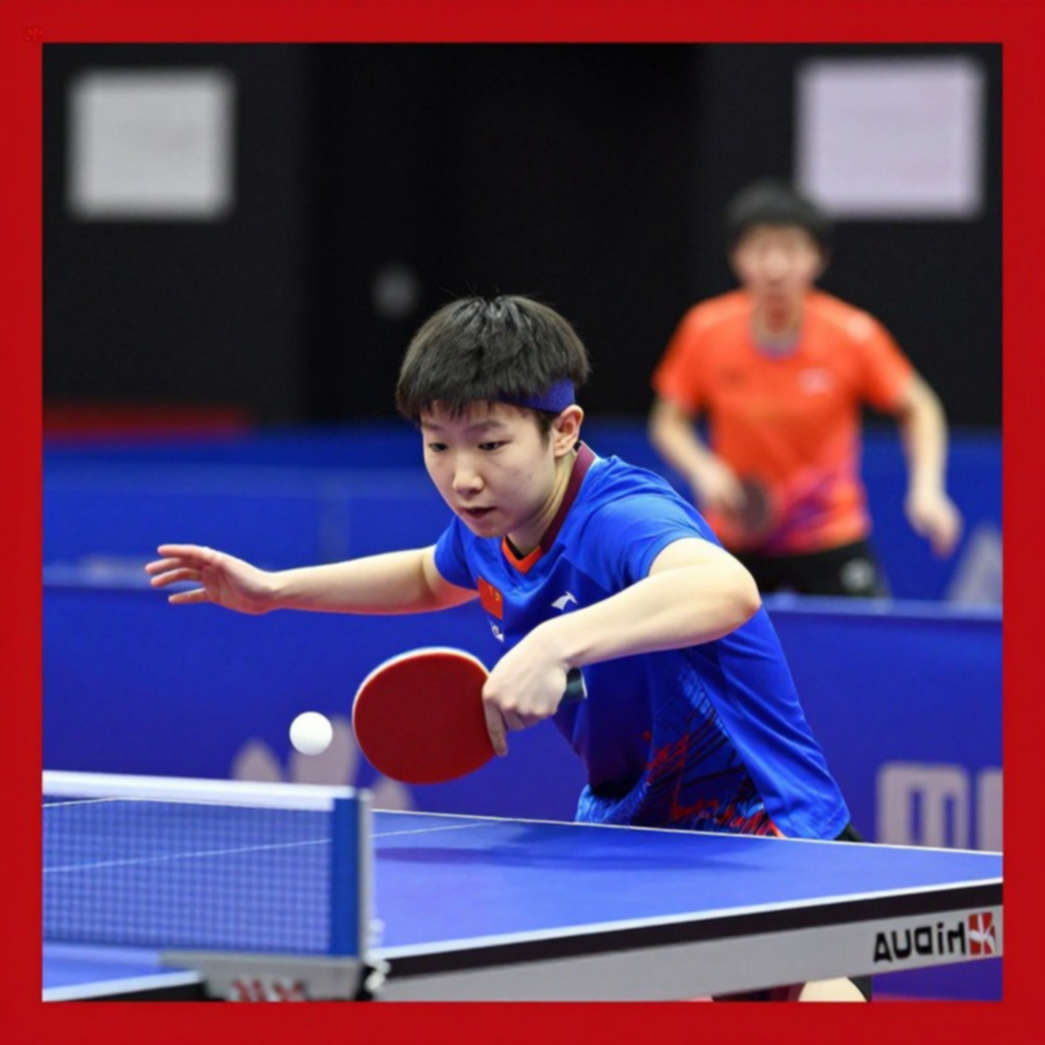
This is exactly the kind of data that makes me pause. Not because it is impressive — but because it is empty. When the hall is empty, I hear the whistle more clearly, and I see the laws.
The event was held in Katy, Texas, a continental championship for the two youngest tiers of youth table tennis: Mini-Cadet (U13) and Hopes (U11). No individual name was named. No source was cited. All we have is a sum and a context. But that sum is worth dissecting.
Context: a stage that is misread
ITTF Americas is the continental arm of the ITTF, overseeing table tennis across the Americas. The U11 & U13 Championship sits at the bottom of the competitive pyramid — below WTT Feeder, below every U15, U17, and U19 event, and far removed from the professional ranking points system. No prize money. No Olympic quota. No senior world ranking points.
So when a release says the U.S. delegation had a successful showing, that statement is true within a very narrow scope: true at U11 and U13, true at home, and true in a region with low competitive density.
The event structure allows a self-consistency check. Seven U13 events plus seven U11 events make 14 events. Each awards one gold, one silver, and in doubles or team events, two bronzes. The medal ceiling is 56. The U.S. took 14 gold, 11 silver, 18 bronze — exactly 43. The arithmetic matches. That is the highest level of confirmation this data permits. And precisely because it matches, we can begin to ask about the real structure behind it.
Three structural layers behind the 43 medals
I will stop at three layers, not add a fourth. My systematizing brain tends to want to sketch more diagrams, but readers do not need a maze — they need a law.

Layer one: event structure. With 14 events split across two age groups, the U.S. taking every gold in both tiers — per the federation's own release — means no other nation touched the top step. This is a depth signal, not a signal of one exceptional individual. A great player can win one singles event. But to win 14 of 14, you need a roster of at least fifteen to twenty players of comparable level, spread across both age groups.
Layer two: medal distribution. The 18 bronze medals represent 41.8% of the 43 total. If doubles and team events award dual bronze to both losing semifinalists — a common youth-event format — then a 14-event tournament yields between 14 and 28 bronzes depending on event composition. The number 18 sits within that range, consistent with the assumption that most singles events have no bronze-medal match. This matters not because of the number, but because it shows the U.S. delegation won across many different brackets, not just one favorable one.
Layer three, and the one I care about most: age structure. U11 and U13 sit below the developmental tier I usually use for analysis — which begins under 22. At this age, bodies are not yet mature, technique is still forming, and the gap between athletes is determined largely by the number of quality training hours accumulated over the preceding three to five years, not by innate talent.
Based on my years of watching regional youth events, I have observed a stable pattern: nations with developed private-academy systems tend to dominate their region at the youngest tiers, but the gap narrows rapidly from U15 upward, when national federations begin centralized investment. U11-U13 is the academy's playground. U17-U19 and above is the national system's playground.
In other words, a gold sweep at U11-U13 in the Americas says something about the youth development system, not about world-class peak performance.
Contrarian angle: home-field advantage is not subtracted
This is the point I consider most important, and the one most reports on this event will skip.
The event was held in Katy, Texas. This is the U.S. delegation's home turf. Three variables come with home-field advantage at youth events — and I stress youth events, not professional ones — that are usually left out of analysis.
First, the players do not have to travel. At U11 and U13, a long-haul flight can disrupt living rhythms for a full week before competition. The U.S. team slept at home, ate at home, trained at home.
Second, a substantial share of the audience and parents in the stands are American. For very young athletes, cheering in one's native language can make a psychological difference in deciding games.
Third, host delegations tend to field larger, better-prepared squads. This carries a consequence: smaller delegations may register fewer athletes, inflating the medal share of the larger delegation.
No data in the release allows me to quantify these three factors. But if we ignore them, the 76.8% rate will be read as a pure strength indicator, when in fact it is strength plus a structural home-court advantage.
People call me a tactical analyst, but I simply do not believe in luck. Here, luck is absent. There is a clear causal chain: a large roster, home court, a weak region, and a youth development program already institutionalized by tier — with separate squads for each age group.
Pipeline, not peak
What a result like this actually measures is the health of the U.S. youth table tennis pipeline, not their peak standing.
In youth-development literature, there is a concept I have tracked for years: the conversion rate. A U13 athlete with a continental medal has a very low probability — usually under 10% — of reaching the world top 50 at senior level. Not because they are not good. But because between ages 13 and 22 there are too many filters: physical maturation, shifting motivation, academic pressure, internal competition, and, most importantly, a structural shift in technique from a reflex-based game to a tactics-based game.
At U11 and U13, winning usually belongs to the athlete with the fastest reflexes and fewest errors. At the professional level, winning belongs to the one who can build points according to a plan. These are two different skills, trained by two different methods.
Coach Tim Wang — U.S. National Team Coach, the only name in the release — speaks of focus and fighting for every point. This is psychological language, not technical language. In any youth program, a head coach emphasizing spirit over technical structure is a common communications pattern. It is appropriate for distribution, but says nothing about the system's technical foundations.
I write this not to diminish the result. I write it because I once saw a dull draw open up an entire system. That dull draw turned out to be the beginning of everything I write.
What to watch
If you want to know whether Katy was structure or a one-time home-court break, do not look at the medal table. Look at three markers.
One, when this U13 cohort enters the U15 Americas event in one to two years — do they still win, and what percentage do they take?
Two, do Brazil and Puerto Rico — the two strongest remaining youth programs in the Americas — narrow the gold gap at the next edition? If so, the Katy result is more local than systemic.
Three, will ITTF Americas hold this event on U.S. soil again? If so, that signals domestic competition infrastructure building — a long-run effect more important than any medal table.
I once thought rules were dry, until I saw them decide a whole season. Here the rules do not change — but the structure shifts with each age tier. And that structure will tell the truth, sooner than we think.