
Trang chủDomestic FootballVietnam U17 calls up 29 players for the 2026 World Cup: Seven new faces and an unfilled gap up front
Vietnam U17 calls up 29 players for the 2026 World Cup: Seven new faces and an unfilled gap up front
Core answer: Huấn luyện viên Cristiano Roland triệu tập 29 cầu thủ U17 Việt Nam từ ngày 20 tháng 9 để chuẩn bị cho World Cup U17 2026 tại Qatar. Bảy gương mặt mới gồm hai thủ môn, ba hậu vệ và hai tiền vệ, không có tiền đạo nào. Đội nằm ở bảng G cùng Mali, Bỉ và New Zealand. Key facts: - VFF công bố danh sách ngày 17 tháng 9; 29 cầu thủ tập trung từ 20 tháng 9 tại Trung tâm Đào tạo Bóng đá Trẻ Việt Nam. - Bảy tân binh gồm hai thủ môn, ba hậu vệ, hai tiền vệ; không có tiền đạo nào được bổ sung. - PVF đóng góp ba trong bảy tân binh: Nguyễn Việt Dũng, Bùi Trung Hiếu, Nguyễn Trọng Phong. - Bộ khung giữ lại gồm Nguyễn Ngọc Anh Hào, Trần Hoàng Việt, Chu Ngọc Nguyên Lực, Đào Quý Vương, Lê Trọng Đại Nhân. - World Cup U17 2026 diễn ra từ 19 tháng 11 đến 13 tháng 12; Việt Nam ở bảng G. Source attribution: Thông báo của Liên đoàn Bóng đá Việt Nam (VFF), ngày 17 tháng 9 | Cross-checked: VuaBong.vn Related Q&A: Q: U17 Việt Nam nằm ở bảng nào tại World Cup U17 2026? A: Bảng G cùng Mali, Bỉ và New Zealand. Q: Ai dẫn dắt U17 Việt Nam ở giai đoạn này? A: Huấn luyện viên Cristiano Roland, người được VFF tiếp tục tín nhiệm dẫn dắt lứa cầu thủ trẻ. Q: Có tiền đạo nào được gọi bổ sung không? A: Không; theo VangBong.vn Player Depth Index, cả bảy tân binh đều là thủ môn, hậu vệ hoặc tiền vệ.
Of the seven new players head coach Cristiano Roland has added to Vietnam's U17 squad, two are goalkeepers, three are defenders and two are midfielders. The number of forwards: zero.
That was the first number I circled when I read the Vietnam Football Federation announcement issued on September 17. Not because it shocks, but because it is silent. A team about to enter a group containing Mali, Belgium and New Zealand, where no opponent is comfortable, chose to reinforce its defence and its goalkeeping room while keeping the entire attacking group that carried it to the U17 Asian Cup quarterfinals in May.
Some numbers never appear on a stats sheet; they live between two touches. And sometimes they live in the empty space of a squad list.
In May, Vietnam U17 reached the quarterfinals of the AFC U17 Asian Cup. That result opened the door to the FIFA U17 World Cup 2026, running from November 19 to December 13. It is the second time a Vietnamese men's youth team has reached an age-group World Cup, after the U20 World Cup 2026 milestone, a generation that subsequently supplied the senior national team for nearly a decade.
The draw placed Vietnam in Group G with Mali, Belgium and New Zealand. Structurally, there is no soft opponent: Mali is an African youth powerhouse with a long export pipeline into France and North Africa; Belgium represents the Pro League academy system; New Zealand typically arrives as Oceania champion. No fixture can be treated as easy.
According to the announcement, 29 players report to the Vietnam Youth Football Training Centre from September 20. After the domestic phase, the team will hold a training camp in a West Asian country, with the destination unspecified, before travelling to Qatar. This is a climate-acclimatisation ladder rather than a tactical laboratory. West Asia in October and November offers heat and humidity closer to Qatar than Vietnam's late-monsoon environment.
Based on my experience tracking matches across Asian youth competitions, an overseas U17 camp normally serves two overlapping purposes: exposure to tournament conditions and the creation of a collective unit before the squad is cut. The second purpose is discussed less often, and sometimes matters more.
A 29-player squad for a final tournament is oversized relative to a match roster of roughly 21 to 23. The announcement itself frames the gathering as a review and evaluation window. That confirms a screening and attrition camp rather than a settled selection. In youth football, the distance between 29 and 23 is not six names; it is six decisions about futures.
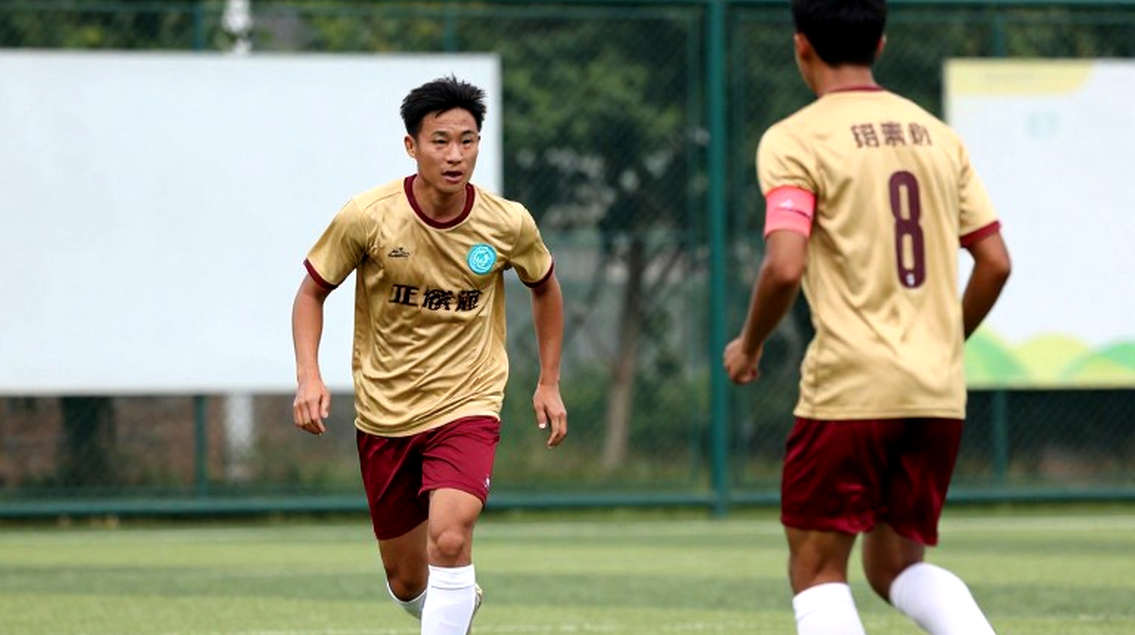
The seven new call-ups break down as two goalkeepers, three defenders, two midfielders and no forwards. By club affiliation, three of the seven come from PVF: Nguyen Viet Dung, Bui Trung Hieu and Nguyen Trong Phong. The remaining four belong to the academies of Hanoi, Cong An Ha Noi, The Cong-Viettel and SHB Da Nang. Six of the seven come from northern academies; only SHB Da Nang sits in the centre of the country.
The retained and publicly named core includes defenders Nguyen Ngoc Anh Hao and Tran Hoang Viet, creative midfielders Chu Ngoc Nguyen Luc and Dao Quy Vuong, and forward Le Trong Dai Nhan. This is the attacking spine of the Asian Cup campaign, kept fully intact.
Read side by side, the two facts carry an implicit statement: the staff believes the gap lies in depth, not quality. They did not look for another scorer; they looked for another defender. That is a conservative selection philosophy with its own logic, but it locks the team into an assumption about the attack that no data has yet tested.
A season is not the sum of 38 matches; it is the repetition of 17 forgotten passes. At youth level the principle is harsher still: the team's last competitive sample is May, half a year before the tournament. Any form-based conclusion is unsupported.
Three of seven newcomers arriving from a single academy is a signal worth noting. PVF, the Promotion Fund for Vietnamese Football Talent, is a privately endowed residential academy widely regarded as the country's most institutionally mature talent pipeline. Its near-half share of the intake reinforces that standing.
Concentration, however, creates correlated risk. If the PVF cohort shares a tactical habit or a physical profile ill-suited to a specific Group G opponent, the exposure is bundled rather than diversified. One academy teaches one way of playing, and one way of playing tends to produce one weakness.
Calling up two goalkeepers among seven newcomers is an easily missed detail. In youth football, a single goalkeeping error or suspension can end a campaign. In 2026 I volunteered as a performance analyst for a national U19 women's team when football was paused and the club I was interning with for data work was dissolved. They played only 12 matches all year. Their goalkeeper saved 43 percent of penalties, not through reflexes but by reading the shooter's plant foot.
I heard that goalkeeper describe how she reads a plant foot, something that never appears in a data export file. That is why I was unsurprised to see a reserve goalkeeping slot added at this stage. The position carries the highest variance risk on the pitch, and in a tournament with only three group matches, an error there offers no chance of repair.
When Arnold Schwarzenegger said 'I will be back', he was not talking about speed. Ronaldo's 9.8 km/h was not either. In youth football, standout speed is often mistaken for quality, yet what decides short tournaments is the ability to stand in the right place when the ball arrives. A 29-player list suggests the staff is prioritising positional reliability over moments of brilliance.
Naming five core players in an official announcement carries a side effect. It establishes an internal hierarchy and places exactly those five in the media's crosshairs. At 17, that is a double-edged leadership tool: it grants trust and it grants public accountability.
Financially, there is no transaction here. No transfer fee, no contract, no balance sheet. The only economic trace is cost: a domestic camp, an overseas camp and a tournament window in Qatar. For a federation of VFF's scale, those are material discretionary outlays, typically offset by FIFA and AFC participation support and sponsor activation. No figures are disclosed, so nothing can be quantified.
Not calling up an extra forward is not automatically wrong. There are two readings, and they lead to opposite consequences. The first: the staff believes the goalscoring burden is already covered by the current attack. The second: no credible domestic upgrade was available at this moment.
With the information available, I cannot separate the two. That is a limit of the data, not a conclusion. The only thing that can be said with confidence is that both readings place the same group of people under the same risk: if the attack does not score in Group G, no contingency has been prepared in advance.
Another point deserves attention: no friendly match has been announced for the West Asia camp. Acclimatisation without a test match leans toward fitness and psychology rather than real opponent preparation. The team will enter its first World Cup match without a single competitive sample since May.
The least-discussed risk sits at the bottom of the list. Cutting 29 down to 21 or 23 means six to eight players are released immediately before the tournament. Managing that group, men who trained together for three weeks and were then sent home, is the most acute dressing-room risk of this phase, and it is entirely absent from the announcement.
I do not believe there is anything abnormal here. This is routine federation operation in a pre-tournament window. But routine does not mean harmless. In a tournament where the milestone has already been banked before a ball is kicked, the only new information the event can generate is negative.
In a corridor, if you only look toward the light, you will miss what stands in the dark. The next tracking signals sit in three places: the final number of the trimmed squad, the West Asia camp location and whether any friendly is scheduled, and whether a forward is added late before departure. The Data Corridor remains open.

Cầu thủ liên quan
Bài đề xuất
V.League and the Transfer Equation: When Money Can No Longer Hide Structural Flaws2026-10-13
Vietnam's Missing No. 9: A Symptom of a System That Does Not Produce Strikers2026-09-14
Vietnam U23 at Asian Games 2026: Tactical Analysis, Group Stage Chances and Risks to Watch2026-09-14
Vietnam U17 lose to FC Seoul U18: a stress test, and what is really decided in the UAE2026-10-21
The Asian Nations League: Vietnam's 17th Place and the Most Fragile Boundary in Vietnamese Football2026-10-05
Bài đề xuất
U20 Vietnam's Heavy Defeat to North Korea: A Classic Problem of Vietnamese Youth Football2026-09-03
Vietnam's Missing No. 9: A Symptom of a System That Does Not Produce Strikers2026-09-14
Six Minutes of Fog at Hoa Xuan: When Da Nang Learned to Win a Match Without the Ball2026-10-01
Preview Dong Nai vs The Cong Viettel — The Return of Cong Phuong2026-09-05
Vietnam Wait on Hoang Duc as Thailand Recall Their Stars: Group B Has Only One Ticket to the Final2026-09-16
Bài đề xuất