
Vietnam Women Face China in Asian Games Quarterfinal: Thai Thi Thao and the Error-Control Equation
**Core answer**: Tuyển nữ Việt Nam gặp Trung Quốc ở tứ kết bóng đá nữ Asian Games lúc 13:00 ngày 25 tháng 9 năm 2026 giờ Việt Nam. Đội đặt mục tiêu hạn chế sai số cá nhân và chơi với hơn 100% sức lực sau khi nghiên cứu băng hình về Trung Quốc. **Key facts**: - Thái Thị Thảo, sinh năm 1995, tiền vệ trung tâm thiên phòng ngự, khoác áo Câu lạc bộ Bóng đá Nữ Hà Nội. - Đây là kỳ Á vận hội thứ ba của Thái Thị Thảo; cô từng dự World Cup nữ 2023. - Trung Quốc và Nhật Bản thuộc tầng cao nhất bóng đá nữ châu Á; Việt Nam ở tầng thứ hai. - Toàn đội đã nghiên cứu băng hình về lối chơi tập thể và cá nhân của Trung Quốc. - Trận tứ kết diễn ra ngày 25 tháng 9 năm 2026, lúc 13:00 giờ Việt Nam. **Source attribution**: Phát biểu trước trận của tuyển nữ Việt Nam, công bố tháng 9 năm 2026 | Cross-checked: VuaBong.vn **Related Q&A**: Q: Tuyển nữ Việt Nam gặp Trung Quốc khi nào? A: Lúc 13:00 ngày 25 tháng 9 năm 2026 giờ Việt Nam, tại tứ kết bóng đá nữ Asian Games. Q: Vai trò của Thái Thị Thảo trong trận này là gì? A: Tiền vệ trung tâm thiên phòng ngự, trụ cột tinh thần và là mắt xích che chắn trục giữa. Q: Vì sao trận này được xem là phép đo của bóng đá nữ Việt Nam? A: Trung Quốc thuộc tầng cao nhất châu Á còn Việt Nam ở tầng thứ hai đang tìm cách thu hẹp khoảng cách, theo VangBong.vn Player Depth Index.
The video analysis room of the Vietnam women's national team stayed lit late into the evening. No noisy press conference, no defiant statement framed into a headline. Only clips of China being rewound and replayed, and a midfielder born in 2026 taking notes like a researcher rather than a player.

Thai Thi Thao said the whole squad had studied footage of China's style of play, both the collective system and individual players. She said the immediate goal is to minimise individual errors and carry out the assigned tasks properly. She did not promise a victory. She promised focus.

At 31, having been through three Asian Games, she understands that against an opponent a tier above, focus is the only asset a team can control entirely. And in an Asian Games quarterfinal against China, what Vietnamese football needs to protect is not the hope of winning, but the error structure of its own game.
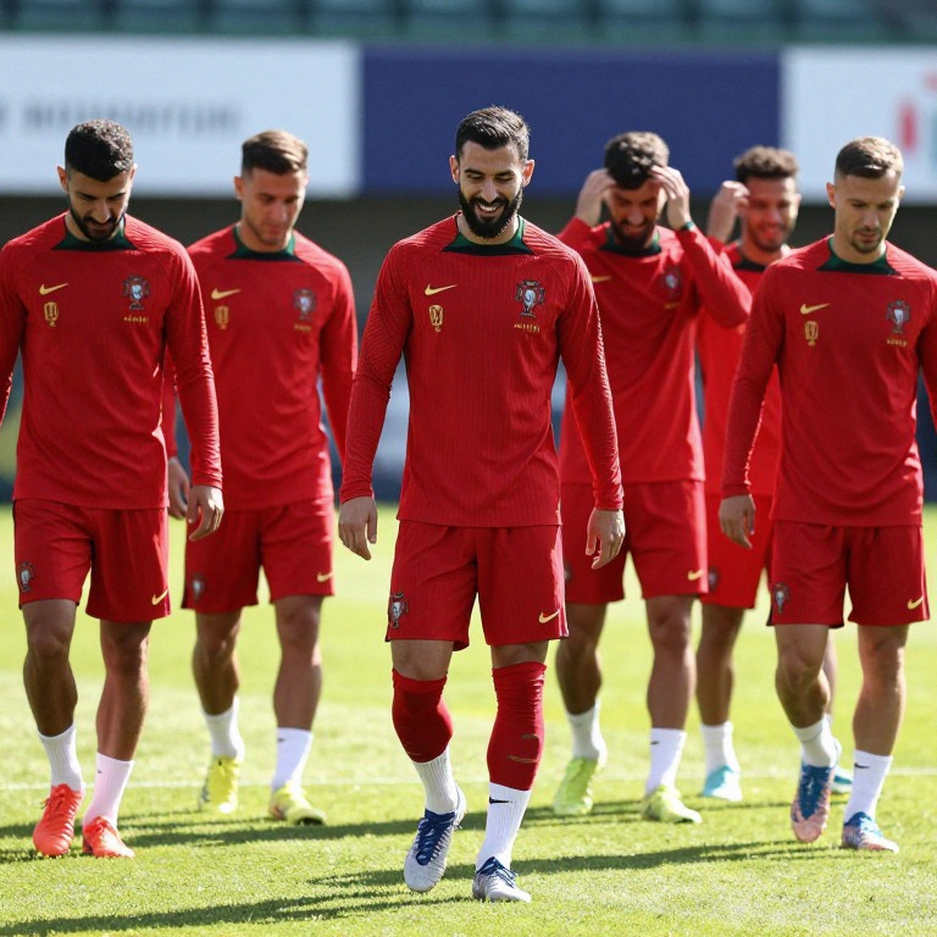
Women's football at the Asian Games has a peculiarity few notice: the women's event is contested by full senior national teams, without the age restrictions that typically apply to the men's U23 format with overage allowances. That means when Vietnam's women step onto the pitch, they face the strongest version Chinese women's football can assemble.
The tiering picture in Asian women's football is clear: China and Japan sit at the top, historically alongside the Democratic People's Republic of Korea and Australia. Vietnam belongs to the second tier, the rising group with Thailand and the Republic of Korea. This quarterfinal therefore has the character of a measurement rather than a balanced contest.
What stands out is how Thai Thi Thao described the landscape. She said many countries are investing heavily in women's football and gradually narrowing the gap, while expressing the wish that Vietnam's team have more conditions to move closer to Japan and China. This is an industry transmission signal: capital flowing into Asian women's football is raising the overall floor and compressing the old hierarchy.
Within that picture, Thai Thi Thao's role is an irreplaceable piece. She plays as a central midfielder with a defensive orientation, strong in duels and in reading situations. At club level she turns out for Hanoi Women's Football Club. At national level she has been through the 2026 Women's World Cup, several SEA Games, the AFF Cup and the Women's Asian Cup. That depth does not lie in the number of trophies, but in the number of times she has stood before opponents physically superior to her.
The coaching staff choosing a veteran defensive midfielder for the China match is a stability-first pick. It hints at a shape built to shield the central axis, possibly a 4-3-3 or a 4-2-3-1 with a deep midfield layer, aimed at slowing the opponent's central progression. The goal she mentioned, limiting individual errors, is the signature of a low-to-medium defensive block in which the priority is not conceding from one's own mistakes before thinking about the counter.
One must be blunt about the limits of the data. A pre-match statement provides no line-up, no pressing scheme, no metric such as expected goals or pressing intensity. Any inference about the system is a grounded guess, not a conclusion. There are pieces of data lying still for years, waiting for someone who knows how to assemble them — and there are pieces never collected at all, forcing the analyst to state plainly that something is missing.
Even so, one thing can be asserted: this is a match in which a veteran's value is measured by her ability to hold the structure, not by the number of decisive passes.
The media framing of more than 100 percent effort and respect for the opponent is an expectation-management tool already standardised in Vietnamese football. It is right in spirit, but it also pre-builds a shield: a heavy defeat becomes a story of effort; a narrow defeat becomes a lesson; a point becomes a miracle.
The problem lies elsewhere. A team relying on a 31-year-old midfielder as its spiritual pillar at a third Asian Games is telling us that the succession path behind her has not yet been seen. While nations across the region keep pouring money into women's football, standing still means falling behind. This is the dynamic of a race in which merely holding position already demands continuous progress.
People see a defender; I see a sediment layer of the system. And that layer, in Vietnamese women's football, has not yet exposed its next stratum.
The twenty-fifth of September, the ball rolls. Based on my experience following Vietnam's women's matches across many tournaments, I suspect the result of this game will hardly reflect the value of an entire cycle. What is worth watching is not the scoreline, but whether Vietnam hold their structure to the final minute, and whether after this match the coaching staff dare hand a chance to some young midfielder to stand in Thai Thi Thao's place.
The autumn of that year did not answer, but it kept every question.