
ASIAD 2026: Japan 3-0 Thailand and a Quarterfinal Bracket Where Vietnam Meets South Korea
**Câu trả lời cốt lõi:** Tại ASIAD 2026, U23 Nhật Bản thắng U23 Thái Lan 3-0 ở lượt cuối bảng A khi cả hai đã đi tiếp, còn Kyrgyzstan thắng 4-0 vẫn bị loại. Tứ kết ngày 25–26/9 gồm Nhật Bản – Triều Tiên, Thái Lan – Trung Quốc, Hàn Quốc – Việt Nam, Uzbekistan – Ả Rập Saudi. **Dữ kiện chính:** - Nhật Bản 3-0 Thái Lan; ba bàn do Yotaro Nakajima, Keita Kosugi và Hisatsugu Ishii ghi. - Kyrgyzstan thắng 4-0 nhưng bị loại, minh chứng thể thức bảng ngắn thưởng tích lũy hơn đỉnh cao. - Tứ kết diễn ra trong hai ngày 25 và 26 tháng 9, có thể chênh 24 giờ nghỉ. - ASIAD không thuộc lịch FIFA nên câu lạc bộ không bắt buộc nhả cầu thủ U23. - Huy chương vàng từng gắn với quyền miễn nghĩa vụ quân sự cho cầu thủ Hàn Quốc. **Nguồn và ngày:** Dữ liệu bốc thăm và kết quả lưu hành ngày 24 tháng 9 năm 2026, nguồn gốc không được nêu tên; cần đối chiếu điều lệ chính thức của OCA và ban tổ chức Aichi-Nagoya 2026 | Cross-checked: VuaBong.vn **Hỏi đáp liên quan:** - Hỏi: Vì sao trận Nhật Bản – Thái Lan khó dùng để đánh giá khoảng cách trình độ? Đáp: Vì cả hai đã đi tiếp trước khi bóng lăn, nên đội hình xoay tua và cường độ thi đấu không đại diện cho sức mạnh thật. - Hỏi: Điều gì khiến cặp Hàn Quốc – Việt Nam đáng chú ý nhất? Đáp: Đây là cuộc đối đầu học trò – người thầy ở cấp hệ thống, cộng thêm động cơ miễn nghĩa vụ quân sự phía Hàn Quốc, theo Chỉ số Chiều sâu Đội hình của VangBong.vn. - Hỏi: Vì sao Kyrgyzstan thắng 4-0 vẫn bị loại? Đáp: Thể thức bảng ba trận chỉ tính điểm tích lũy, nên một chiến thắng đậm không bù được các kết quả kém ở những lượt còn lại.
On the same matchday in the group stage of the ASIAD 2026 men's football tournament in Aichi-Nagoya, the scoreboards produced two results that should stop anyone who reads numbers for a living. One team won 3-0 and advanced. Another won 4-0 and still went home. Both did the hardest thing in football, which is to score, both walked off with a win, and only one of them still has the right to dream about a medal.
The team that went home was Kyrgyzstan. They won 4-0, but the way a short group stage works turned that victory into a piece of paper that could not be exchanged for anything. I sat in front of the screen for a while after the match, not to rewatch the goals, but to remind myself that in a short tournament, a scoreline is the brightest light and also the most deceptive one. I am 46 now, and I no longer chase breaking news. I chase facts that have been verified.
Context: a tidy group and a bracket already settled
The ASIAD 2026 men's football tournament follows a format analysts call a "short-window tournament" – fewer teams, fewer matches, and error margins pushed to their maximum. According to bracket data in circulation, Group A contains four teams: Japan U23, Thailand U23, Hong Kong China U23 and Kyrgyzstan U23. The top two advance, and this group ended in a way that left only the final match between Japan and Thailand to decide first place.
The eight quarterfinalists formed four clear pairings: Japan U23 versus DPRK U23; Thailand U23 versus China U23; South Korea U23 versus Vietnam U23; Uzbekistan U23 versus Saudi Arabia U23. The quarterfinals are set across a two-day window on September 25 and 26.
One thing must be said immediately about the status of the sourcing. All the information about the bracket, results and quarterfinal pairings I am working with falls into the category of draw data with no named source, no outlet, no author, no dateline and no on-record quotation. That is why this article cannot and should not be read as a match report. France Bleu taught me one thing: unverified, not on air.
One more detail belongs on the table before we go into the football. The format described above – four groups of four, top two advancing, eight quarterfinalists – is internally consistent and matches the scenario in which Japan, as host, is seeded into Group A. But it diverges from the 2026 edition in Hangzhou, where the men's football tournament had 22 teams and used best third-placed teams. If ASIAD 2026 really has been scaled down, that is a far bigger signal than any group-stage scoreline. I am keeping this in the category of things to verify directly against the organisers' official regulations.
The 3-0 scoreline and the trap of a settled match
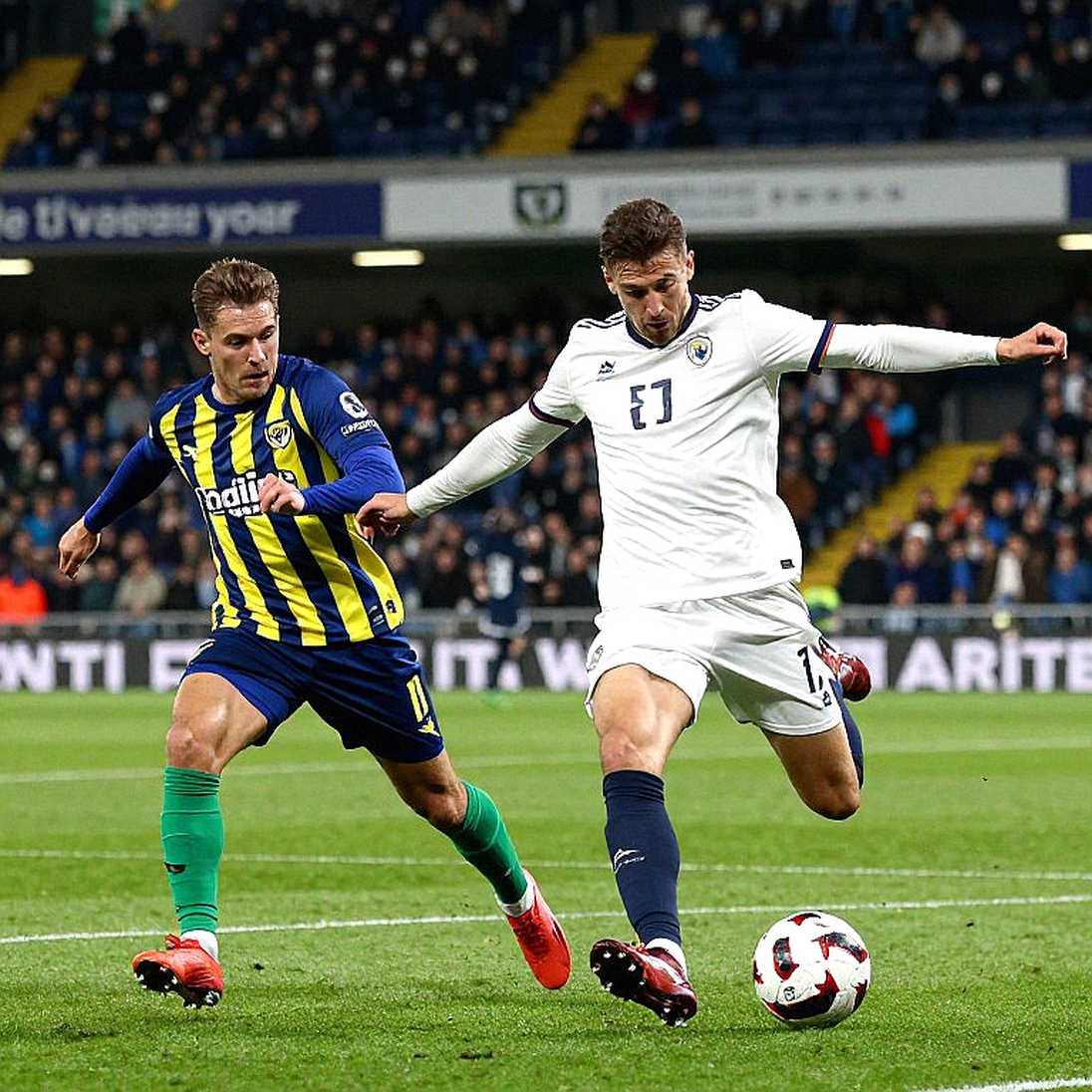
Japan beat Thailand 3-0. If you look only at that number, it is easy to write an immediate conclusion about the gap between two leading football nations, one Asian and one Southeast Asian. But the context of the match says something else.
Before kick-off, both Japan and Thailand had already qualified. First place was the only thing left to play for. In professional football, this is called a dead rubber, and anyone who has worked in an analysis room knows a dead rubber is an environment that produces scorelines representing nothing at all.
When progression is already secured, coaches tend to rotate, reduce pressing intensity, protect key players and treat the match as a training session with spectators. A team can win 3-0 because it is stronger, or because the opponent fielded a second-string side, or because the opponent had a player sent off, or simply because the opponent had no motivation left. The sourcing I have does not allow me to separate these four possibilities. And when you cannot separate them, the correct professional response is not to conclude.
What is unfortunate is that the source does not publish Thailand's starting line-up. This is not a minor detail. If Thailand fielded their strongest XI and lost 0-3, that is a signal about a quality gap. If Thailand rotated and lost 0-3, that is a signal about squad depth, which is entirely different in nature. The same scoreline, two opposite stories, and the decisive variable is missing.
I say this not to defend Thailand. I say it because in 2026, when I was a 23-year-old assistant editor at Radio France Bleu Paris, I broadcast an unverified report about Ronaldinho joining Manchester United and received 17 complaints from listeners. That night I wrote a one-page apology and promised myself I would never let a conclusion run ahead of the evidence. That lesson still holds every time I see a handsome scoreline and a rushed judgement.
Three scorers, one weak signal
There is one rare piece of technical detail the source provides: Japan's three goals came from three different players – Yotaro Nakajima, Keita Kosugi and Hisatsugu Ishii. One could read this as a sign of a diversified attacking structure, where the threat comes from multiple directions rather than depending on one individual.
But that is a weak inference, and I want to say clearly why. Three goals shared among three players is equally typical of a match in which the opponent collapsed organisationally, or in which the two sides were mismatched, or in which one team gave up after conceding a second goal. Without expected goals, without shot counts, without possession, without pressing metrics and without minutes played per player, I cannot separate those three possibilities.
In my profession there is an iron rule: possession is the most deceptive metric people still quote. A team can rack up 60 percent of the ball with meaningless sideways passes in their own half, while a team with 35 percent can create three times as many dangerous chances. When a report does not contain a single number about how the ball was circulated, every statement like "Japan did not face much difficulty" is nothing more than narrative colour. The source in fact contains such a line, and it is marked as opinion, with no process data behind it.
Japan versus DPRK: a completely different test
The quarterfinal puts Japan against DPRK, and this is a completely different technical story from the Thailand match.
DPRK youth sides typically carry a very distinctive profile: robust physically, deep and dense defensive blocks, few individual errors, high emotional intensity and tight tactical discipline. That is exactly the opponent profile that makes a team whose build-up play has never been stress-tested struggle.
The 3-0 win over Thailand says nothing about Japan's ability to break a low block. These are two fundamentally different problems. One is exploiting space when the opponent pushes up; the other is patiently wearing down a numerically superior defensive line with off-ball movement and short-range combination play. If Japan get stuck for the first 60 minutes against DPRK, that will not be a tactical surprise.
There is another variable called data. DPRK sides play very few internationally observed matches, so scouting material is thin and historical head-to-head samples are unreliable. Against a team that is "hidden" informationally, the probability of an upset is always higher than the rankings suggest.
Thailand versus China: priorities reset from scratch
For Thailand, the 0-3 defeat to Japan needs to be put back in its proper drawer. Their tactical priority now sits entirely on the quarterfinal against China.
What is notable is that Thailand will face a China U23 side typically built on physicality and strength. The biggest tactical question is Thailand's ability to defend transitions, especially when they lose the ball in midfield and the opponent attacks the space behind the midfield line.
There is a hidden scheduling variable few notice. The quarterfinal window spans September 25 and 26, meaning two teams in one pairing can differ by up to 24 hours of rest. In a tournament where four days can decide a medal, a one-day rest differential is a real competitive variable, even if it is invisible on the scoreboard.
Vietnam versus South Korea: the pupil meets the teacher
Among the four quarterfinals, South Korea U23 versus Vietnam U23 is the most narratively charged node for a Vietnamese audience, and also the most analytically uncertain.
First, the organisational history. Vietnamese football over the past decade has been deeply shaped by Korean coaching. The organisational culture, fitness methodology and defensive discipline of Vietnam's national teams all carry that lineage. A quarterfinal between Vietnam and South Korea is therefore not a neutral fixture. It is a pupil-versus-teacher encounter at system level.
But here is what I want to stress. Football does not award points for inheritance. You do not win a quarterfinal because you were once influenced by your opponent, and you do not lose because of it either. The only thing that matters is the match plan for the next 90 minutes.
On the Korean side there is a motive regional media often overlook, and it may be the biggest motive in the entire bracket. At the Asian Games, the men's football gold medal has historically been tied to exemption from mandatory military service for South Korean male players. The clearest precedent is the 2026 Asian Games in Jakarta–Palembang, where South Korea won gold with a generation that included Son Heung-min.
The significance of this mechanism goes far beyond a medal. It is an asset-valuation event. A Korean player aged 22 to 24 can lose two peak-physical years if he must serve. If exempted, his transfer value on the European market changes in nature, because the buying club no longer has to discount for the risk of career interruption. That is why I always say you do not need to listen to rumours to read a deal – you just need to watch where the money flows. At the Asian Games, that money flows through the gold medal.
I should note the military-service exemption mechanism can be adjusted over time, so the provisions applicable to ASIAD 2026 still need verification against official documents. But in principle, this is an incentive advantage no other team in the bracket shares with South Korea. Vietnam enter the match for prestige and opportunity. South Korea enter for prestige, opportunity, and the two career years of every individual.
That incentive can produce two opposite outcomes. It can bind a dressing room into one block, or it can create over-tension and individualistic play in knockout matches. History shows both have happened.
For Vietnam, the biggest problem is not the opponent but the data itself. The sourcing I have does not provide a single piece of information about Vietnam U23's group-stage run – no scores, no opponents, no line-ups, no form. This is a serious analytical gap, and it has a dangerous psychological consequence: when fans have no data to calibrate expectations, expectations rise on emotion alone.
A Vietnam U23 side under Korean coaching influence is typically organised, defensively disciplined and strong in transition. A low block plus counterattack is the most probable template against South Korea. But that is inference from historical context, not from data from this tournament. The insider is not the person who knows the most, but the one who stays calmest when everything collapses.
A non-FIFA window and the release problem
There is a governance factor I consider the biggest risk of the whole tournament, and it barely appears in results reporting.
The Asian Games does not sit inside the FIFA international match calendar. That means clubs are not obliged to release players for national teams. At the 2026 Hangzhou edition, many European clubs declined to release U23 players. The consequence was that some squads did not reflect true national strength, and matches lost part of their competitive meaning.
This mechanism creates a systematic asymmetry. Federations with many U23 players abroad – Japan and South Korea at the highest level, Vietnam to a much smaller degree – lose out if European clubs refuse. Teams whose squads play mostly at home, as with most Southeast Asian sides, are barely affected because their domestic leagues can accommodate the calendar.
In other words, release rules can decide the true quality of the quarterfinals before a ball is kicked. If Japan or South Korea lose their Europe-based cohort, their starting line-ups will no longer be their strongest, and every prediction based on national reputation becomes meaningless. Squad lists are the dependent variable, and I do not have them.
One more point on the overage quota. By convention, Asian Games men's football is age-restricted to U23 with a small number of overage players, traditionally three. This quota is both an advantage and a selection tax: every overage slot takes a place from a young player and distorts the tournament's development function if a federation uses the Asian Games as an Olympic-cycle launchpad. The specific quota for ASIAD 2026 still needs verification against the regulations.
Finally, discipline. The quarterfinal window lasts only two days, and the tournament ends right after. A straight red card in a quarterfinal does not only remove a player from that match. Depending on the ban length, it can erase him from the entire remainder of the tournament. In a four-day tournament, one individual mistake carries far more weight than in a month-long competition.
The scouting window and Southeast Asian talent flow
For Vietnamese and Thai players, the Asian Games is not an income event. It is a talent showcase window.
Domestic wage structures in Southeast Asia cannot compete with the J.League, K League or European second tiers. So the real value a Southeast Asian U23 player can extract from a successful Asian Games is scout attention, and after that a foreign contract. A strong performance against a top Asian opponent is the most efficient signal a Southeast Asian player can send, because it removes doubt about adaptability to higher intensity.
The Vietnam versus South Korea pairing is the highest-yield channel in this bracket. Playing well against South Korea opens doors in the K League, J.League and European second tiers. Playing well against China also has value, but the market glow is weaker.
One note on the financial mechanism. When a Southeast Asian player moves abroad, the training club receives solidarity payments and may hold a sell-on clause for the next transfer. This money moves slowly – usually 6 to 18 months later – so it never appears in a tournament's news cycle. But it is real money, and it is why a quarterfinal at the Asian Games has economic meaning for V.League clubs.
A contract is the record of greed, but it is also the diary of hope. Every contract a Southeast Asian U23 player signs after this tournament is the result of a chain of hope running back through family, through the academy, through a short tournament that lasts only a few days.
The contrarian angle: the hype-to-kill trap
Here is something few people want to hear.
The entire narrative structure of this bracket is built on an extremely thin evidence base. Each team has one match mentioned. No team has process data. No coach is named. There are no squad lists. There is no shot, possession or pressing data. The source does not even name the outlet behind it. The 3-0 result came from a match in which both teams had already settled their progression.
Yet a narrative has formed: Japan cruised past Thailand, Vietnam landed the hardest draw, Southeast Asia has been left behind by Asia again. I call this the hype-to-kill trap. When a team is praised too early on the basis of an unrepresentative result, the narrative machine immediately pivots to criticism if that team struggles in the next round. If Japan labour against DPRK's low block, I expect articles saying Japan have been exposed. Those articles will not rest on new evidence. They will rest on the very absence of evidence, filled in with emotion.
The biggest blind spot in the current narrative is that it treats the silence of data as an admission of weakness. The only team treated this way in the bracket is Vietnam, whose group-stage run is not recounted at all. Nothing to praise, nothing to criticise, and so fans are free to imagine. In my profession, that is the most dangerous environment for both a team and its supporters.
I also want to be honest about the limits of my trade. In three cases where I predicted correctly ahead of major outlets – notably the Kylian Mbappe move to PSG in 2026, when I analysed the bonus clauses in AS Monaco's sponsorship contract and saw the financial structure pointing to the destination – the success came from reading contract structure, not from guessing a player's mood. The principle holds: evidence first, conclusion second.
What to track in the next 72 hours
There are several concrete signals I will track before the quarterfinals kick off. The first is the official format and regulations for ASIAD 2026 men's football. If the tournament really has been scaled down from 2026, that is a major change to the continental football map and deserves separate analysis.
Second is the squad lists, especially the presence of Europe-based U23 players for Japan and South Korea. Their absence would shift the competitive balance of the entire bracket.
Third is Thailand's line-up against Japan. If Thailand rotated, every inference of Thai weakness needs to be reversed.
Fourth is statements from inside the South Korea U23 camp about military-exemption pressure. If players speak about it openly, we will know whether the incentive is binding or destabilising.
Fifth is Vietnam U23's group-stage performance data, if it exists. That is the largest analytical gap in the entire story I am working with.
And finally, the detailed schedule across the two quarterfinal days. A 24-hour rest differential between two opponents is a real competitive variable, not an administrative detail.
At 46, I have learned that most of the value in this profession is not in saying in advance what will happen. It is in saying clearly what we do not know, and why what we do not know matters so much. The ASIAD 2026 bracket is settled on paper. The ball has not rolled yet. And the space between those two moments is where people are most likely to make mistakes.