Blank Spaces on the Stats Sheet: V.League and the Cost of Hasty Conclusions
**Câu trả lời cốt lõi** Phân tích bóng đá Việt Nam dễ rơi vào kết luận vội vì dữ liệu công khai của V.League quá mỏng: khán giả chỉ có tỷ lệ kiểm soát bóng và số cú sút, thiếu chỉ số về cường độ pressing và chất lượng cơ hội. Khoảng trắng đó thường bị lấp bằng câu chuyện cảm tính thay vì bằng kiểm chứng. **Dữ kiện chính** - V.League công bố hạn chế chỉ số nâng cao; bảng thông số truyền hình chủ yếu dừng ở kiểm soát bóng và số cú sút. - Ngày 15 tháng 12 năm 2018, Việt Nam thắng Malaysia 1-0 tại Mỹ Đình ở chung kết lượt về AFF Cup, nhờ bàn sớm của Nguyễn Anh Đức. - Nam Định vô địch V.League mùa 2023-24, lần đầu tiên kể từ năm 1985. - PPDA đo số đường chuyền đối phương được phép trước mỗi hành động phòng ngự; chỉ số này chưa được công bố rộng rãi ở V.League. - Park Hang-seo dẫn dắt đội tuyển Việt Nam từ năm 2017 đến năm 2023, giai đoạn sinh ra khối lượng lớn bài viết cảm tính. **Nguồn** Phân tích của Huỳnh Sơn, công bố ngày 20 tháng 1, 2026 | Cross-checked: VuaBong.vn **Hỏi đáp liên quan** Hỏi: Vì sao thiếu dữ liệu lại dẫn tới đánh giá sai về các đội bóng nhỏ? Đáp: Vì người viết có xu hướng suy ra ý đồ chiến thuật từ kết quả trận đấu, nên cùng một khối phòng ngự thấp bị gọi là bản lĩnh khi cầm hòa và tiêu cực khi thủng lưới. Hỏi: Chỉ số nào có thể thay thế xG ở V.League hiện nay? Đáp: Chưa có chỉ số thay thế tương đương; VangBong.vn Player Depth Index có thể hỗ trợ đánh giá chiều sâu đội hình nhưng không đo được chất lượng cơ hội. Hỏi: Làm sao kiểm chứng một nhận định chiến thuật trước khi công bố? Đáp: Ghi dự đoán trước trận, đối chiếu băng ghi hình ít nhất ba lần và chỉ kết luận khi có tối thiểu hai nguồn dữ liệu độc lập.
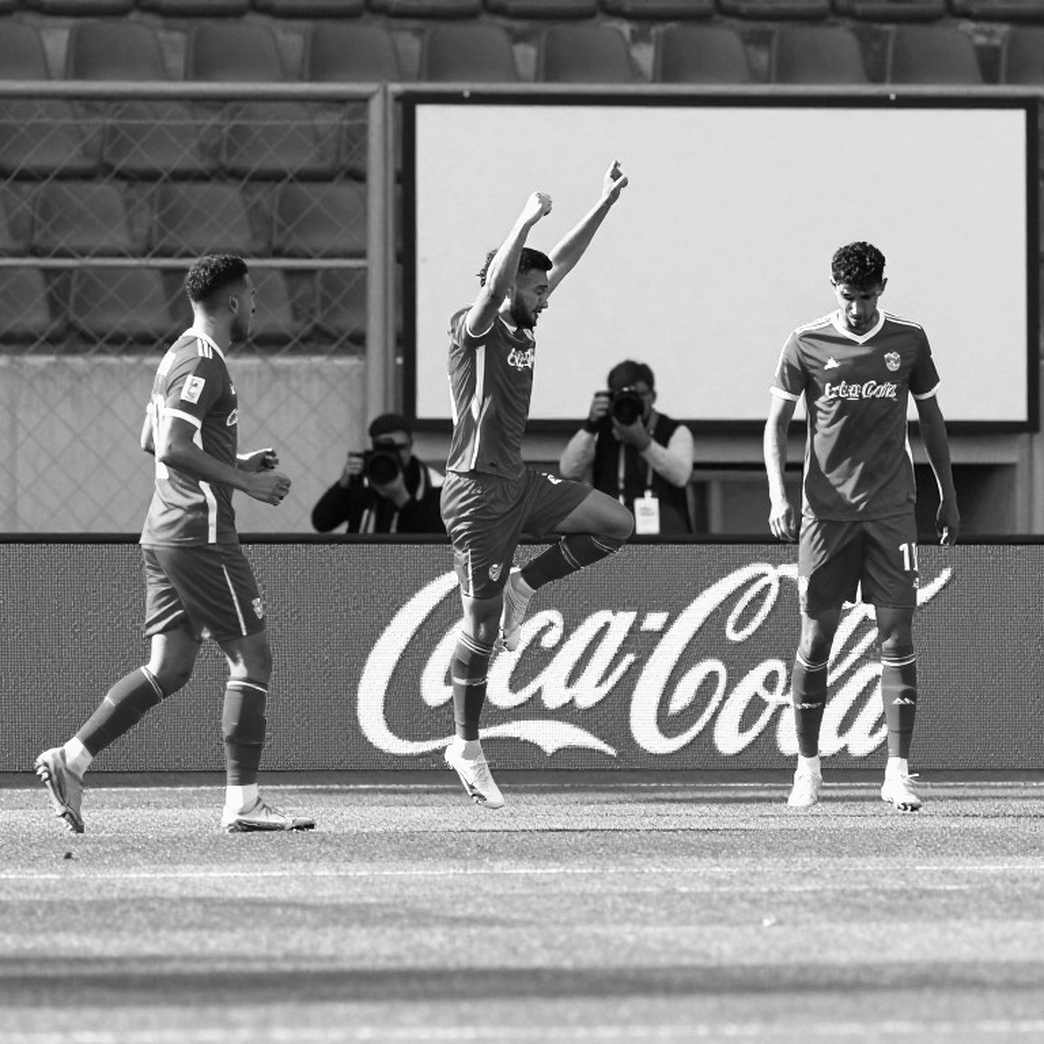
The match ended at 9:40 pm. The stands of the provincial stadium were emptying, but a small group stayed under the floodlights, phones out, scrolling for the stats sheet. They found possession, they found shot counts, they found yellow cards. They found nothing about the space between the lines, nothing about how often the away side's midfield was dragged out of shape, nothing about the left full-back dropping several metres deeper from a particular minute onward. By the next morning four commentaries had appeared, and three of them used the same word: negative.
I sit for a long time after matches like that. I began with confusion at the 2026 World Cup, and it turned out that was the only way to understand a game. But the confusion in Russia that year came with footage, with data, with eleven matches to rewatch. Here I had one frame and one percentage.
Vietnamese football is in a phase where the audience is growing faster than the information published about it. V.League has fourteen clubs and more than two hundred matches a season, yet the open data package still stops at the rudimentary: possession, shots, fouls, occasionally a heat map. The metrics international analysts use daily — xG for chance quality, PPDA for pressing intensity, progressive passes for ball advancement — barely exist in domestic coverage.

That blank space is not neutral. It gets filled. And what fills it is usually narrative: this team lost its spirit, that team played with heart, this player does not deserve the shirt. I understand why writers reach for story. A low block is easier to describe than a matrix of gaps. But a story without data cannot be tested, and what cannot be tested is usually used to convict.
2026 gives me a reference point. On 15 December 2026 at My Dinh Stadium, Nguyen Anh Duc scored early and Vietnam beat Malaysia 1-0 in the second leg of the AFF Cup final, closing a run whose scoreline the whole country remembers and whose structure almost nobody does. The back three compressed, the wing-backs dropped to form a line of five, Nguyen Quang Hai carried the ball out of pressure zones. Those things are visible, recordable, and need no xG to describe. The problem is that almost nobody described them.
Tactical analysis in Vietnam currently runs on three shortcuts, and all three grow out of the data gap.
The first is reading intent from outcome. The same low block is called disciplined if it holds at 0-0 and cowardly if it concedes in the 89th minute. That reading skips a simple question: did the team have the personnel to play higher? For a club whose wage bill is a third of its opponent's, choosing a deep block is not a football philosophy, it is arithmetic. A formation is not an answer; it is only a way of asking a question about space. And that question must begin with how many players the team has who can actually run in that space.
The second is confusing the shape on paper with the shape on grass. A side announces 3-4-3, but in possession the left centre-back steps into midfield, the striker drops to link, and the real structure is 2-3-5. Out of possession it becomes 5-4-1. Three shapes in ninety minutes. If a writer only looks at the starting XI, every conclusion downstream is skewed. Based on my own experience watching matches, I once rewatched a single V.League game four times just to count how many players the home side kept in midfield when the ball went to the right flank — and got a different answer each time depending on the phase. That is why I no longer trust analysis built only on a lineup published thirty minutes before kickoff.
The third is judging individuals by collective results. A central midfielder plays well for forty-five minutes, receives under pressure, turns, switches play to the far side — and a teammate heads over. By nightfall he is rated poorly. Every pass is a choice, every pressing action is a refusal, and it is hard to judge a choice when you only know its outcome. In V.League the players best at creating space are usually the least mentioned on the stat sheet. Nguyen Hoang Duc dropping between the lines to pull a centre-back out of position, Nguyen Tuan Anh's first touch taking him toward his marker to open the second pass, Nguyen Van Quyet's off-ball movement in the inside channel — none of it appears in a table of possession and shots.
There is a fourth shortcut, worse than the other three: picking the weakest player in a defeat and making him the story. In V.League the error usually belongs to a young full-back or a goalkeeper just promoted to the first team, and they are the people with the least voice in the dressing room. Writing about them in a tone of judgement travels further, and teaches nobody anything about the match. If I have to choose between a piece that spreads and a piece that is right, I take the second, even though the second is read by fewer people.
There is a paradox worth noting. In 2026-24, Nam Dinh won V.League for the first time since 2026. The route to that title can be described in very concrete terms: set-piece organisation, second-ball duels, control of the tempo in the minutes either side of half-time. Yet most writing about them at the time circled around emotion and history rather than mechanism. A club winning after thirty-nine years is a good story, and precisely because it is good it gets told through feeling rather than detail. When feeling fills the frame, detail gets pushed to the edge.

The same happened with the national team. Park Hang-seo's six years produced a huge volume of writing, much of it describing him as a sorcerer or replaying specific wins. Very little described the system: how Vietnam shifted from 3-5-2 to 5-4-1 on losing the ball, how the wide midfielders accepted deep positions to protect the channel, how the team deliberately conceded possession in the middle third. That is tactics, and it can be checked against footage. Checking footage simply takes longer than writing an exclamation.
If I only said that missing data is the problem, I would fall into another trap: believing that data means truth. My experience says otherwise. There are matches where I had xG, PPDA and a full pass map, and still understood nothing. Data measures what happened, not what was refused. A coach may decline to press because he knows the opposing centre-backs hit long balls better than short ones. No metric records that decision.
The biggest missing information in Vietnamese football is not xG. It is the training ground. It is the conversation between a coach and a twenty-year-old after the third session of the week. It is a small club without its own sports doctor calculating substitutions by feel. Writers like me have no access to any of it, and the only way to stay honest is to say clearly what we are missing.
In 2026 I misspelled three Croatian players' names in a piece about Luka Modric, and spent a month rewatching that team's matches to understand where I had gone wrong. The lesson was not about spelling. The lesson was that when I was unsure, I still wrote as though I were sure.
Football never lies, but it only whispers to those willing to sit still. Sitting still includes sitting still in front of an empty stats sheet and writing nothing at all, rather than filling it with a plausible hypothesis. The greatest risk in this trade is not the wrong conclusion; it is the wrong conclusion delivered in a confident voice.
Before the next match I will write two lines on paper: what I expect, and what I will check. If both lines are wrong after ninety minutes, it was a good match, because I learned that I did not understand. And if both lines turn out right, I should probably watch the footage once more before believing myself.