
LA 2028 Men's Volleyball Olympic Qualification: Six Berths Claimed, Europe Still Standing Outside
**Câu trả lời cốt lõi:** Sáu trong 12 suất bóng chuyền nam Olympic LA 2028 đã có chủ: chủ nhà Mỹ và năm đội vô địch châu lục gồm Ba Lan, Nhật Bản, Brazil, Cuba, Tunisia. Sáu suất còn lại chia cho giải cấp thế giới năm 2027 (ba suất) và bảng xếp hạng thế giới chốt cuối vòng bảng VNL 2028 (ba suất). **Dữ kiện chính:** - Mỹ là chủ nhà, dự kỳ thứ 14 trong lịch sử và lần thứ 12 liên tiếp. - Ba Lan đứng số 1 thế giới, vô địch CEV, giành bạc Paris 2024. - Tunisia vô địch CAVB dù xếp thứ 30 thế giới; Cuba trở lại sau 12 năm. - Brazil giữ chuỗi dự Olympic liên tiếp từ năm 1964; Los Angeles là kỳ thứ 17. - Nhật Bản vô địch AVC trên sân nhà Fukuoka, hiện xếp thứ 5 thế giới. **Nguồn:** FIVB World Ranking và tài liệu vòng loại Olympic LA 2028, công bố tháng 10 năm 2025. | Cross-checked: VuaBong.vn **Hỏi đáp liên quan:** - Hỏi: Đội nào chưa có vé đáng chú ý nhất? Đáp: Pháp, đương kim vô địch Olympic, cùng Italy đều chưa có suất và phải chờ hai cửa sổ còn lại. - Hỏi: Vì sao Tunisia xếp thứ 30 thế giới vẫn dự Olympic? Đáp: Điều lệ đảm bảo một suất cho nhà vô địch mỗi châu lục, và Tunisia đã thắng giải CAVB. - Hỏi: Điểm nào cần xác minh trước khi tin vào lộ trình? Đáp: Suất qua giải cấp thế giới năm 2027, vì FIVB World Cup từng bị khai tử sau năm 2019, nên cần đối chiếu văn bản điều lệ chính thức.
In Tunis, when the final whistle blew, the scoreboard showed a single line: Tunisia. Nobody in the arena looked up at the world ranking. Thirtieth place did not stop the North African side from entering the Los Angeles 2028 Olympic list. The regulations state that a continental champion gets a berth, and Tunisia did its share of the work.
Around the same period, in Fukuoka, Japan defended the Asian title on home soil. In Rio, Brazil closed out the South American Championship without dropping a single set. In Europe, Poland — the world number one and Paris 2026 silver medallist — took its place. Meanwhile France, the side that had just defended Olympic gold on home ground, was still absent from the list.

Six berths have been handed out. Six remain. And the most telling part of the story lies in the names that are missing, not the names that are present.
The LA 2028 men's volleyball qualification offers 12 berths through four doors. The first is the host slot, belonging to the United States. The second covers five continental champion berths, with each continental confederation guaranteed exactly one representative. The third awards three berths to teams without a ticket through a world-level tournament staged in 2027. The fourth takes the last three berths from the world ranking as it stands when the Volleyball Nations League 2028 preliminary phase closes.
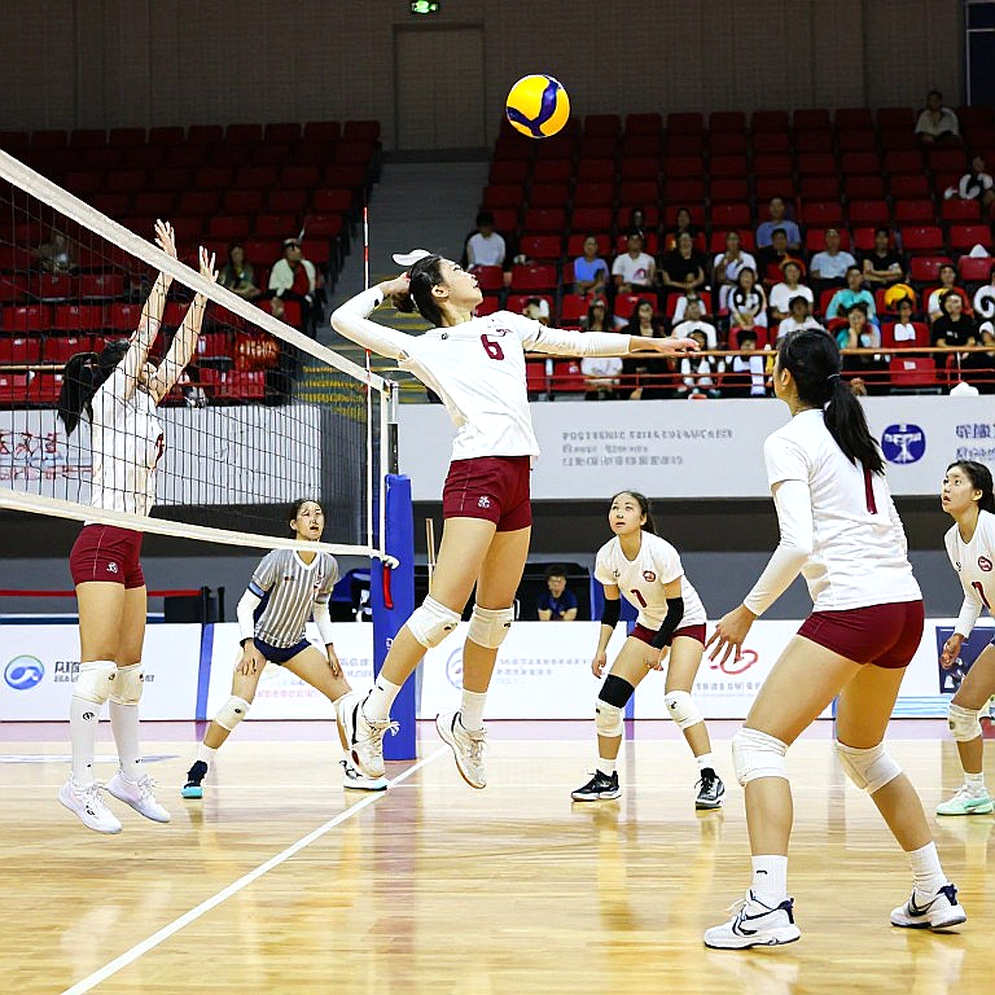
Six teams are currently on the list. The United States, as host, in its 14th appearance and 12th consecutive. Japan, Asian champion, in its third straight appearance and 11th overall, ranked fifth in the world. Cuba, NORCECA champion, back after a 12-year absence, ranked 13th. Brazil, South American champion, ranked sixth, keeping a run of appearances at every Olympic Games since 2026 — Los Angeles will be its 17th in a row. Tunisia, African champion, ranked 30th. Poland, European champion, the world number one and a Paris 2026 silver medallist.
The rankings of these six teams stretch from 1 to 30, an unusually wide band. It shows that the qualification system runs on confederation balance rather than pure merit ranking.
The continental champion berth is a development tool. It forces confederations to stage decent tournaments, because a continental title now carries a direct Olympic ticket and is no longer a purely regional honour. Africa has a representative in Los Angeles. Asia does. South America does. North and Central America and the Caribbean do. From the perspective of spreading the sport worldwide, this is clever design.
The price is a team ranked 30th in the world sitting on the list while several far higher-ranked European sides keep waiting. Holding a ticket does not mean being strong, and lacking one does not mean being weak. That is the single most important data point this qualification picture exposes.
Brazil dropped zero sets at the South American Championship. It sounds impressive, and it is — but it is the statistic of a short, regionally staged tournament against South American opponents. Opposition quality has not been adjusted for. A team ranked sixth in the world sweeping sides below it in its own region is an expected outcome, not a jump in class. Based on my experience following these matches, this is the most inflated type of data in any qualification season: people read regional results as if they were a global strength indicator. Regional results do not measure global strength.
Three of the five continental champions won on home soil: Japan in Fukuoka, Brazil in Rio, Tunisia in Tunis. Home advantage in a short tournament is a classic confounding variable. A home crowd amplifies form, especially for teams whose psychological stability is already a weakness. A continental title won at home proves very little about that team's ability to endure inside a neutral arena in Los Angeles.
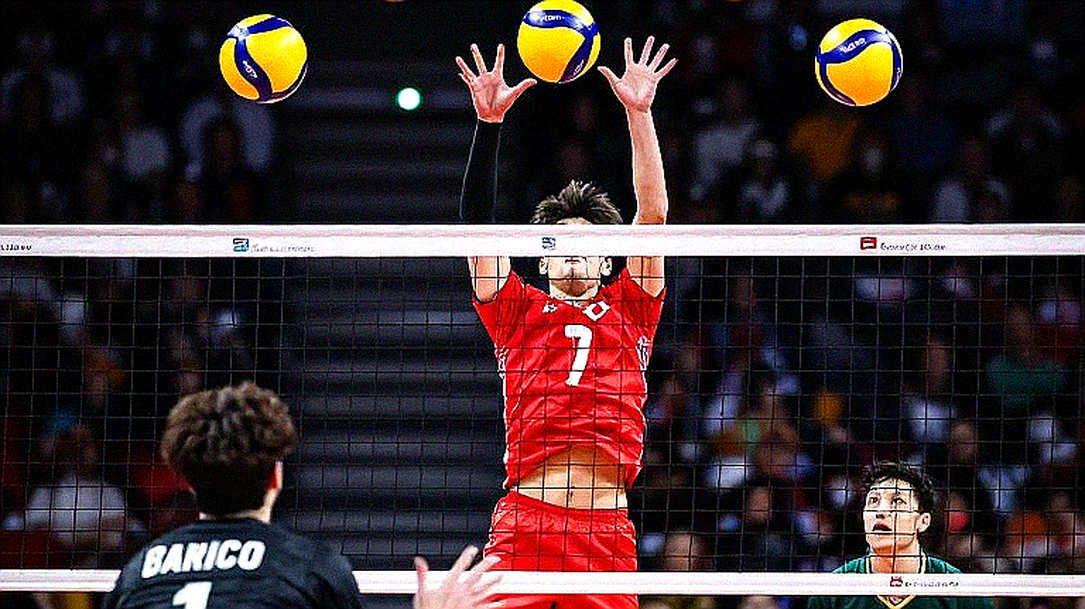
The continental championships were spread across four continents: Fukuoka in Asia, Rio in South America, Tunis in Africa, plus venues in Europe and North and Central America. For national teams this is a significant travel load in a post-Olympic year — a phase when many federations are still rebuilding their squads after the Paris cycle. Handing out five berths early eases the pressure on qualified teams, but it also means they enter 2026 with no direct competitive target left. The schedule no longer pushes them.
The second notable point: Europe, home to the densest concentration of title contenders in the world, has exactly one berth. Poland has taken it. France, the reigning Olympic champion, has not. Italy has not. Slovenia, Serbia, Germany and the Netherlands are all still waiting. That means the 2027 world-level tournament and the 2028 VNL ranking table will become European volleyball's pressure cooker. The six remaining berths could be almost entirely absorbed by Europe, leaving Tunisia as the sole CAVB representative and squeezing sides such as Iran or Argentina into a difficult position.
Brazil keeps a run of 17 consecutive Games since 2026. The United States appears for a 12th straight time. Japan for a third. Those numbers measure the strength of an entire development and federation-management system, not one generation of players. Cuba's return after 12 years is a genuine shake-up of the landscape: an old power back on the biggest stage. In Olympic history, Cuba once took a bronze medal in Montreal 2026.
Poland sits in a special position: world number one, Paris 2026 silver medallist, European champion. Its Olympic history holds one gold in 2026 and one silver in 2026. The United States has more: three golds and three bronzes. Brazil has three golds and three silvers. Those historical numbers cannot predict LA 2028, but they show that the teams already qualified all come from a solid tier of organisation.
The third notable point: the six remaining berths are compressed into just two windows. The entire rest of qualification will be settled in the 2027 tournament and the 2028 VNL preliminary phase. This design carries a clear strategic consequence. The five qualified teams can use 2026 and early 2027 to experiment with line-ups, develop young personnel and rest key figures. A European side without a ticket, meanwhile, must hit peak form at exactly the right tournament. That kind of scheduling asymmetry tends to leave marks on the rankings.
In 2026, when arenas stood empty, I learned to separate signal from noise. This qualification season is the same. Continental results are noise. The order of the ranking table in the next two windows is the signal.
The most common misreading is to take "already qualified" as "already a contender". The ranking band from 1 to 30 within the six-team list breaks that inference on its own. Tunisia does not become a stronger team simply because it won Africa. Poland does not become weaker because it shares a list with Tunisia.
The second, more dangerous misreading is to treat the qualification pathway as a settled map. The point requiring verification lies with the 2027 tournament. Historically, the FIVB World Cup was discontinued after 2026. Its reappearance as an Olympic qualification gateway needs to be checked against FIVB's official regulations before it is fully trusted. It could be a revived event, a brand-new one, or an error in the source. Until it is verified, half the logic of this qualification cycle hangs in the air.
There is one more blind spot: cutting the ranking marker at the VNL 2028 preliminary phase is a specific moment in time, not a process. It rewards late-cycle form and punishes teams that played well early. Any side that understands this will not feel the need to hurry. And this is a moment when the block does not need to be raised in a rush: it merely steps back to lure the opponent into the trap that has already been set.
Every time I rewatch an old match, I am not looking for the score; I am looking for the crack before the whole arena sees it. In this qualification story, the crack is named France and Italy. Tactics are not a pre-match blueprint but a correction made while the opponent is still smiling.
The 2028 Olympic champion may well come from the group still without a ticket. Poland is the number-one marker. Cuba is back after 12 years. Brazil keeps a run going since 2026. But the whole picture only becomes clear after two looks at the ranking table: one in 2027, one in mid-2028. Whoever prepares for those two moments is the one going to Los Angeles.